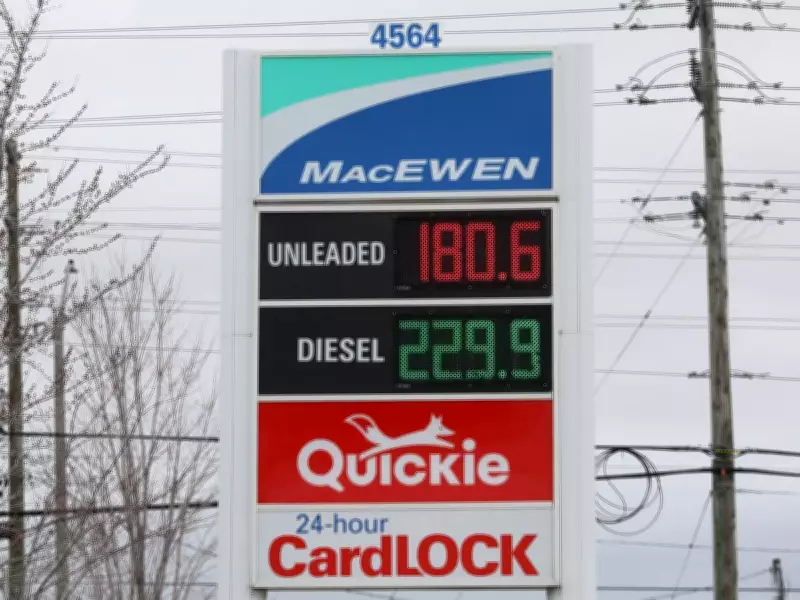
Gas prices in Ottawa have surged past the $1.80 per litre mark, reaching a significant high that is straining consumers' budgets. This increase, observed on April 1, 2026, reflects ongoing volatility in the fuel market, driven largely by geopolitical tensions.
Middle East Tensions Fuel Price Spikes
The continued unrest in the Middle East has been a primary catalyst for the dramatic rise in gas prices this week. Observers noted that these tensions are expected to push prices up by an additional nickel per litre, potentially elevating the cost to 183.9 cents per litre. This trend underscores how international conflicts can directly impact local economies and everyday expenses.
National and Local Price Comparisons
According to the CAA, the average price of gas across Canada stood at 177.8 cents per litre on Wednesday, highlighting that Ottawa's rates are notably higher. Dan McTeague, president of Canadians for Affordable Energy, predicted on his website that prices in the capital would climb again on Thursday, April 2, by approximately two cents per litre to 185.9 cents. This forecast suggests that the upward trajectory is far from over, with consumers bracing for more financial pressure.

Recent Increases and Historical Context
The latest hikes follow a sharp jump of 11 cents per litre at Ottawa gas stations over the previous weekend. Since the U.S.-Israeli invasion of Iran in February, gasoline prices have soared by about 45 cents per litre, reaching levels not seen since July 2022. This steep rise has made fuel one of the most significant household expenses, affecting everything from commuting to goods transportation.
Industry Insights on Crude Oil and Diesel
Industry experts point to specific events exacerbating the situation. The closure of the Strait of Hormuz and the destruction of oil production facilities in the Persian Gulf have caused crude oil prices to spike, which in turn has led to higher gas prices. Interestingly, while gasoline costs surge, diesel fuel prices have experienced a slight reprieve, dropping about 13 cents per litre in the last two days to around 225.9 cents per litre. This contrast highlights the complex dynamics within the energy market.
Broader Implications for Consumers
The escalating gas prices in Ottawa are part of a larger national trend, with implications for both individual budgets and broader economic stability. As prices continue to climb, consumers may need to adjust their spending habits, potentially reducing travel or seeking alternative transportation methods. The situation also raises questions about long-term energy policies and the need for sustainable solutions to mitigate such fluctuations.
In summary, the surge past $1.80 per litre in Ottawa is a stark reminder of how global events can ripple through local markets. With further increases predicted, staying informed and prepared is crucial for navigating these challenging economic times.