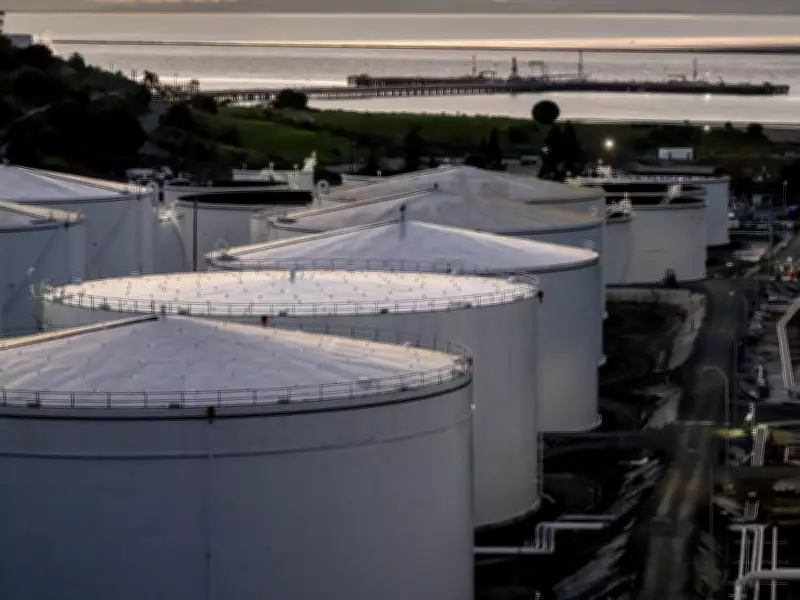
Plans to release hundreds of millions of barrels of crude from emergency stockpiles are unlikely to calm volatile crude prices for an extended period if the conflict in the Gulf continues, according to oil market analysts. Finance ministers from the G7 announced on Monday their readiness to take necessary measures, with ongoing discussions about tapping into strategic reserves to address a crisis that has reduced oil and refined product flows through the Strait of Hormuz by up to 20 million barrels daily.
Market Reactions and Historical Context
Oil prices initially dropped on Monday following a Financial Times report that the G7 was considering a strategic release of reserves. The decline deepened after United States President Donald Trump suggested the war could end soon, with benchmark Brent crude falling from a peak of US$119 per barrel to below US$90. Historically, there have been only five releases of strategic stockpiles, starting with the first Gulf War in 1990-91 and most recently after Russia's invasion of Ukraine in 2022. However, none of these releases were on a scale sufficient to significantly impact the current crisis.
Analyst Skepticism on Price Impact
Martijn Rats, global oil strategist at Morgan Stanley, noted that evidence regarding the effectiveness of government reserve releases in lowering prices is distinctly mixed. He explained that prices often continue to rise because such releases signal heightened market stress and severity of the situation. Additionally, releasing strategic reserves may not alter market behavior, as buyers are likely to continue bidding up prices to secure available crude flows rather than relying on limited government stocks.

Paul Horsnell from the Oxford Institute for Energy Studies emphasized the difficulty of replacing continuous oil flows with static reserves, stating that markets are never comfortable with such substitutions. This sentiment underscores the challenges in using stockpiles to mitigate supply disruptions caused by ongoing conflicts.
Reserve Capacity and Limitations
Members of the International Energy Agency collectively hold approximately 1.2 billion barrels of public emergency stocks, alongside a much larger quantity of industry stocks that can be mobilized to smooth market fluctuations. The IEA mandates its members to maintain 90 days' worth of reserves against supply disruptions, with countries allowed to include stocks held by oil companies and traders. At the end of last year, governments in OECD countries held just over 900 million barrels of crude and about 300 million barrels of refined products like gasoline and diesel in state-controlled reserves.
A further 2.8 billion barrels of oil and refined products were held by industry members such as oil companies, traders, and refineries, with 600 million barrels technically under government control. However, Horsnell pointed out that a portion of these counted reserves may be part of normal commercial operations, such as oil in pipelines, and cannot be fully released without risking system collapse.
Broader Implications and Market Outlook
The ongoing Gulf conflict has led to significant supply disruptions, raising concerns about long-term price stability. While G7 efforts to release reserves aim to alleviate immediate pressures, analysts warn that without a resolution to the conflict, any price relief may be temporary. The interplay between geopolitical tensions and market dynamics continues to pose challenges for global energy security, highlighting the need for comprehensive strategies beyond reserve releases to address underlying supply issues.