Ontario Premier Mobilizes Auto Sector Against Proposed China EV Agreement
Ontario Premier Doug Ford has intensified his campaign against Canada's emerging trade agreement with China concerning electric vehicles, joining forces with automotive industry representatives to voice strong opposition. The Premier warned that allowing Chinese automakers to establish manufacturing operations in Canada could severely undermine the domestic automotive sector and lead to significant job losses across North America.
Economic Concerns and Job Protection at Forefront
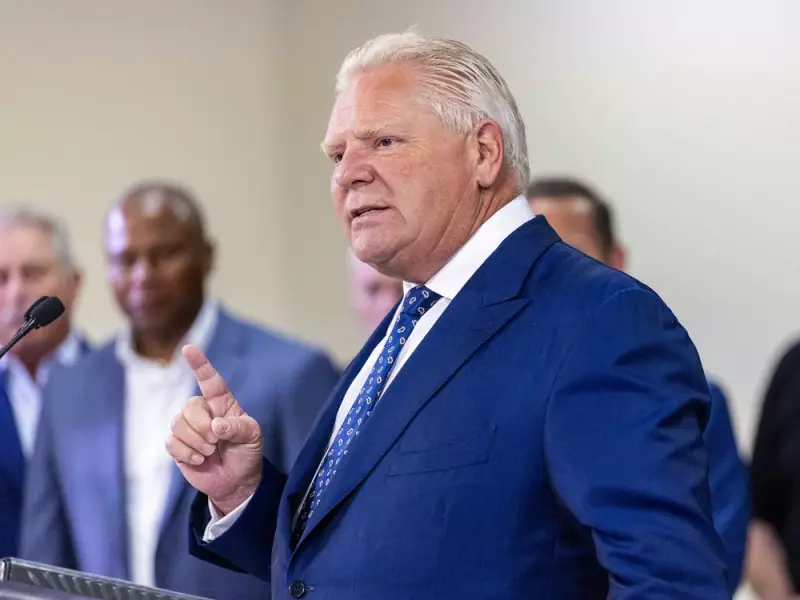
During a press conference in Toronto, Ford emphasized the potential negative consequences of the proposed trade deal, arguing that it would provide insufficient economic benefits for Canadian workers and communities. "Even if Chinese companies begin vehicle assembly here, they would likely import most components from China," Ford stated. "That does little to support our local supply chains or create meaningful employment opportunities for Canadians."
The Premier specifically called on Canadian consumers to avoid purchasing Chinese-made electric vehicles, regardless of potentially lower prices. "Boycott Chinese EV vehicles," he urged. "Support companies that are building vehicles here in Canada. It's as simple as that."

Details of the Controversial Trade Agreement
The proposed Canada-China arrangement would permit approximately 49,000 Chinese electric vehicle imports under reduced tariff conditions—approximately six percent instead of the current rate exceeding 100 percent. In exchange, China would ease restrictions on Canadian canola exports. Additionally, the agreement would enable Chinese automotive companies to establish vehicle assembly operations in Canada for the first time, though with certain restrictions that might include requirements for Canadian software integration and joint ventures with domestic firms.
This development comes as Prime Minister Mark Carney's administration seeks to navigate complex international trade relationships while supporting domestic industries. The automotive sector has already faced challenges from factory closures and workforce reductions linked to previous trade policies, including tariffs implemented during the Trump administration.
Industry Leaders Echo Concerns About North American Integration
Brian Kingston, Chief Executive of the Canadian Vehicle Manufacturers' Association, expressed similar reservations about the potential impact on Canada's relationship with its largest trading partner. "Chinese automotive manufacturing benefits from substantial government subsidies," Kingston noted. "This presents real risks for our ongoing relationship with the United States and could further weaken the integrated North American supply chain."
Kingston emphasized that Canada should instead focus on supporting existing automotive manufacturers operating within the country, including General Motors, Stellantis, Ford Motor Company, Toyota, and Honda. Recent years have seen production challenges within the sector, with General Motors closing one Ontario plant and threatening reductions at another facility, while Stellantis relocated planned Jeep production from Ontario to Illinois.
International Perspectives and Domestic Strategy Development
United States Trade Representative Jamieson Greer commented on the situation from the World Economic Forum in Davos, Switzerland, suggesting that concerns about Canada shifting away from its traditional trade partnerships might be "overblown." However, he acknowledged potential complications, stating, "I'm not sure that Chinese investment into Canada is healthy for the North American relationship. We'll be looking at that closely."
Ford expressed agreement with this assessment, noting, "If there's anyone who understands the auto sector, it's Jamieson Greer, and I agree with him. This arrangement could be harmful to the North American auto market regardless of whether we're talking about Canada, the United States, or Mexico." This perspective is particularly relevant given that most vehicles manufactured in Canada are ultimately destined for the American market.

The Canadian government is currently developing a new automotive strategy expected to provide improved market access for companies that establish manufacturing operations within the country. This policy framework is anticipated to be unveiled in February as officials work to balance international trade opportunities with domestic economic priorities.