

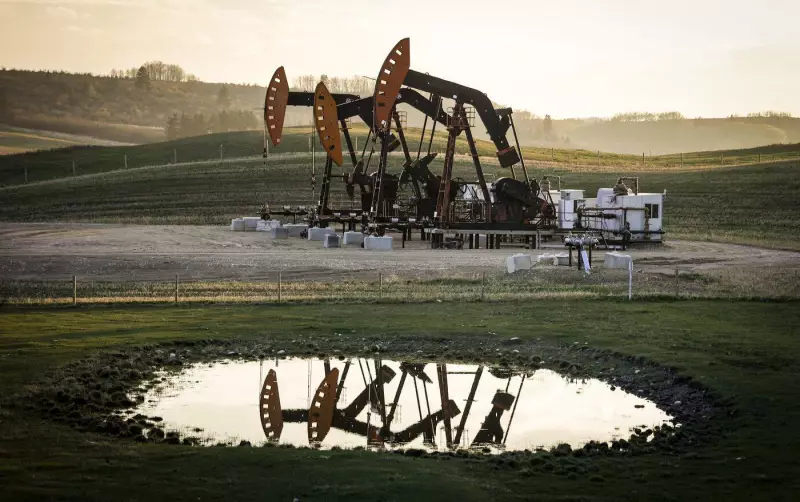
Industry analysts are expressing confidence in the robustness of Canada's energy sector, stating it is well-positioned to endure a period of sluggishness in global crude oil markets. This outlook comes despite ongoing price volatility and broader economic uncertainties.
Foundations of Financial Resilience
Experts point to several key factors underpinning the sector's stability. Years of disciplined capital spending and debt reduction have fortified balance sheets across many major Canadian producers. This financial prudence, adopted after previous market downturns, has created a buffer against price fluctuations. Companies are now prioritizing shareholder returns and operational efficiency over aggressive expansion, which has led to a more sustainable business model.
Furthermore, strategic pipeline developments and increased export capacity are providing more reliable market access for Canadian crude. While challenges remain, these infrastructure improvements help mitigate the price discounts historically faced by landlocked producers in Alberta and Saskatchewan.

Navigating the Current Economic Landscape
The assessment was highlighted in a report by The Canadian Press on December 17, 2025. The analysis suggests that while the near-term forecast for crude prices may be muted, the sector's consolidated state allows it to maintain operations and weather the storm. This resilience is crucial for the provincial economies of Alberta and Saskatchewan, as well as for national economic output.
Operational advancements also play a significant role. The adoption of new technologies to reduce production costs and environmental footprints is enhancing competitiveness. From carbon capture initiatives to AI-driven efficiency in extraction, innovation is becoming a cornerstone of the modern Canadian oilpatch.
Long-Term Outlook and Strategic Positioning
Looking ahead, experts caution that long-term success will depend on continued adaptation. The global transition towards lower-carbon energy sources remains a dominant trend. However, the consensus is that global demand for oil and gas will persist for decades, and Canada's ethically produced, increasingly lower-emission barrels are positioned to meet a portion of that demand.
The sector's ability to withstand the current "doldrums" is seen not as a sign of stagnation, but as evidence of maturation. By focusing on financial health, operational excellence, and responsible production, the Canadian oil and gas industry aims to secure its role in the evolving global energy mix.






