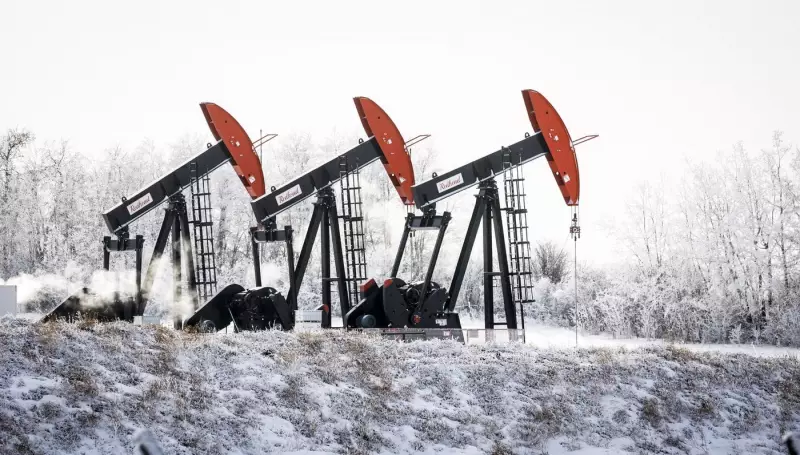
Global consulting firm Deloitte has released a sobering forecast for the oil sector, projecting that crude prices will hover around an average of US$58 per barrel throughout 2026. This prediction, issued on January 06, 2026, points to a continuing global supply surplus that is dampening market prices.
The Persistent Supply Glut
The central factor behind Deloitte's subdued price outlook is a persistent oversupply in the global oil market. Despite geopolitical tensions and production cuts from some major players, aggregate supply continues to outpace demand growth. This glut is expected to keep a firm lid on any significant price rallies in the near term, anchoring the benchmark price in the high-US$50 range.
This environment presents a continued challenge for producers, particularly in high-cost jurisdictions. Canada, as the world's fourth-largest oil producer and holder of the third-largest proven reserves, remains a key player in this complex market. The industry must navigate these price levels, which test the economic viability of some projects and influence investment decisions across the sector.

A Contrast in Alberta's Energy Markets
While the outlook for crude oil appears constrained, Deloitte's analysis highlights a diverging trend for natural gas within Alberta. Contrary to the oil forecast, gas prices in the province are experiencing an upward trajectory. This rise is attributed to a combination of regional supply dynamics, increased domestic demand for power generation, and stronger export volumes to neighboring markets.
This dichotomy underscores the increasingly complex and fragmented nature of North American energy markets. Where a global commodity like oil is swayed by international inventories and OPEC+ policies, regional natural gas can be influenced by local weather patterns, pipeline capacity, and shifting consumption patterns.
Implications for Canada's Energy Heartland
The forecast carries significant weight for Alberta's economy and government revenues, which are heavily tied to resource royalties. A prolonged period of oil prices in the US$58 range would necessitate continued fiscal discipline and diversification efforts. However, the concurrent rise in natural gas prices offers a partial counterbalance, providing a revenue stream for gas producers and supporting related service industries.
For consumers, the trends have mixed implications. The predicted oil price stability may contribute to less volatile gasoline prices at the pump over the medium term. However, the rising cost of natural gas could translate into higher heating and utility bills for Alberta households and businesses, especially during peak winter demand.
Analysts suggest that Deloitte's outlook reinforces the need for the Canadian energy sector to focus on cost competitiveness, technological innovation, and market access to remain profitable in a lower-price environment. The report serves as a critical data point for policymakers, investors, and corporate strategists planning for the year ahead.