Carney's Beijing Diplomacy Reopens Door to Comprehensive Energy Cooperation with China
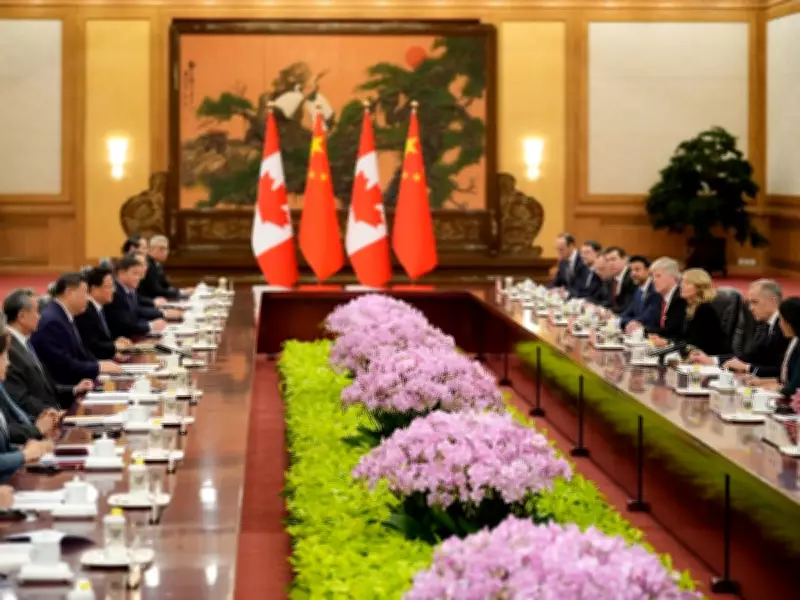
Prime Minister Mark Carney's recent diplomatic mission to Beijing has quietly initiated what could become a transformative chapter in Canada-China relations. While media coverage has predominantly highlighted the mutual tariff relief agreements and potential for Chinese electric vehicle imports, the most substantial development may well be the significant expansion of bilateral energy cooperation that has largely flown under the radar.
A Strategic Recalibration of Economic Relations
The agreements signed during Carney's Beijing visit, particularly the Enhanced Energy Co-operation Memorandum of Understanding, represent a deliberate and strategic recalibration of the Canada-China relationship. This development holds immense promise for Canada's economic future, with Western Canada standing to benefit substantially from renewed energy collaboration.
Historical context reveals striking parallels between the current moment and the watershed period following Prime Minister Stephen Harper's 2009 visit to China. In both instances, diplomatic cautiousness gave way to pragmatic recognition of economic realities. Following the 2008 financial crisis and delays to the Keystone XL pipeline, Canada urgently needed to diversify its energy markets, leading to Harper's outreach that unlocked substantial Chinese investment.

Learning from Past Successes
The previous wave of Chinese investment into Canada's energy sector, predominantly concentrated in Alberta, surged to approximately $45 billion over four to five years following Harper's diplomatic efforts. This capital infusion served as a critical lifeline for both provincial and national economies during a challenging period.
Contrary to initial concerns and fears, these investments demonstrated remarkable stability and commercial focus, operating without significant national security controversies. Major Chinese energy companies including CNOOC, Sinopec, and CNPC established themselves as entrenched partners, providing sustained employment opportunities and contributing meaningfully to local economies throughout Western Canada.
Expanding Beyond Traditional Energy Sectors
Today's agreements represent an evolution beyond previous energy cooperation models. The Carney government has articulated a clear vision to double exports to non-U.S. markets, creating a necessary hedge against over-reliance on a single trading partner. The new energy agreements with China form the cornerstone of this diversification strategy.
These agreements extend well beyond traditional oil and gas trade relationships, encompassing several forward-looking dimensions:
- Comprehensive clean energy collaboration
- Joint climate cooperation initiatives
- Formal invitations for increased Chinese investment across the entire energy spectrum
- Technology sharing and development partnerships
A New Era of Mutual Benefit
The current moment represents a significant inflection point with even greater potential than previous cooperation periods. The Chinese companies involved in previous energy investments have operated as responsible corporate citizens, demonstrating that well-managed economic engagement can be both mutually beneficial and secure for all parties involved.
As Canada seeks to navigate complex global energy transitions while maintaining economic stability, the renewed energy cooperation with China offers a pragmatic pathway forward. The agreements signed in Beijing suggest a mature recognition that economic diversification and strategic partnerships are essential components of Canada's long-term prosperity in an increasingly multipolar world.