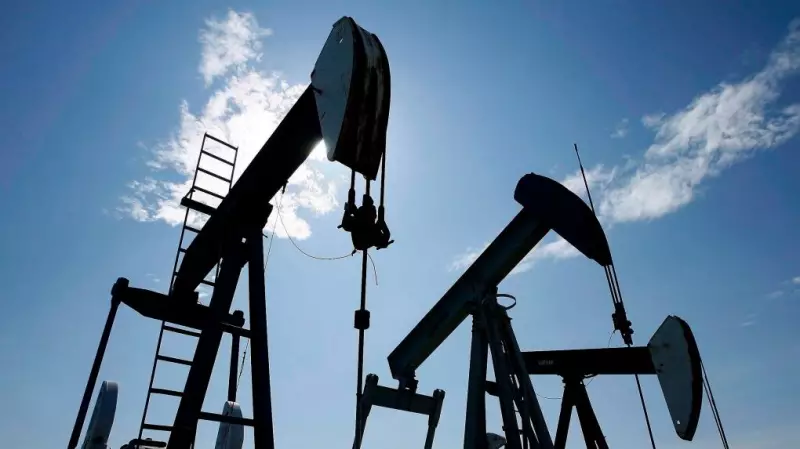
Prime Minister Mark Carney has expressed confidence in the resilience of Canada's energy sector, stating it will maintain its competitive edge in global markets despite recent geopolitical shifts, including the ouster of Venezuelan leader Nicolás Maduro. His comments come as analysts, including those from Deloitte, project oil prices to hover around US$58 a barrel amid a persistent supply glut, while highlighting a contrasting rise in Alberta natural gas prices.
Market Outlook and Political Dynamics
Carney's assessment was delivered against a backdrop of complex international developments. He linked the situation in Venezuela, a major oil producer, to broader market stability. "Canadian oil will be competitive after Maduro ouster," Carney stated, suggesting that changes in Caracas could recalibrate global supply dynamics without undermining Canada's position. Simultaneously, the financial world is watching a rally in Venezuelan debt, a move that belies a tangled web of creditors and ongoing political uncertainty.
This political commentary was intertwined with other significant announcements from the Prime Minister. He confirmed that former Deputy Prime Minister Chrystia Freeland's resignation from cabinet was "consistent" with her taking on a new role as a special adviser on Ukraine. Furthermore, Carney outlined Canada's commitment to building specialized forces aimed at supporting peace efforts in Ukraine.

Industry Analysis and Price Forecasts
While political leaders project confidence, industry analysts present a nuanced picture. The consulting firm Deloitte has released forecasts indicating that crude oil prices are likely to face continued pressure. They cite an ongoing global surplus as the primary drag, expecting benchmarks to stabilize near US$58 per barrel. This price point presents challenges for producers requiring higher margins to justify new investments.
In a notable divergence, the same analysis points to stronger fundamentals for Alberta's natural gas market, where prices are on the rise. This split market outlook underscores the varied fortunes within the broader Canadian energy complex, with gas producers potentially seeing more favourable conditions than some oil-focused counterparts in the near term.
Broader Context and Sector Movements
The focus on energy competitiveness aligns with a day of significant movement across Canadian markets and news cycles. The report on energy was part of a wider business news summary that also covered major tech announcements from the CES event, including new AI chips from AMD and Nvidia's next-generation production. These technological advancements have implications for energy demand and efficiency in data-intensive industries.
Carney's statements serve to reassure investors and industry stakeholders at a time of flux. By directly addressing the Venezuela situation, he aims to preempt concerns about market share and pricing power. The coming months will test whether Canada's energy sector can leverage its regulatory stability and technological expertise to capitalize on the shifting geopolitical landscape, as suggested by the Prime Minister, while navigating the price constraints highlighted by analysts.