The stunning capture of Venezuelan President Nicolas Maduro by United States military forces over the weekend is sending immediate ripples through North American energy markets, with Canadian heavy crude prices feeling the initial pressure.
Market Reaction and Price Impact
On Monday, prices for Canadian heavy crude weakened to a one-year low. Traders are assessing the potential for a renewed flow of Venezuelan oil to the U.S. Gulf Coast, now that sanctions against the South American nation could be lifted. Canadian Cold Lake crude for February delivery saw its discount to the U.S. benchmark West Texas Intermediate widen to US$7.30 a barrel at Cushing, Oklahoma, from US$6.80 on Friday, according to data from Modern Commodities. This represents the weakest level in over a year, as reported by Link Data Services.
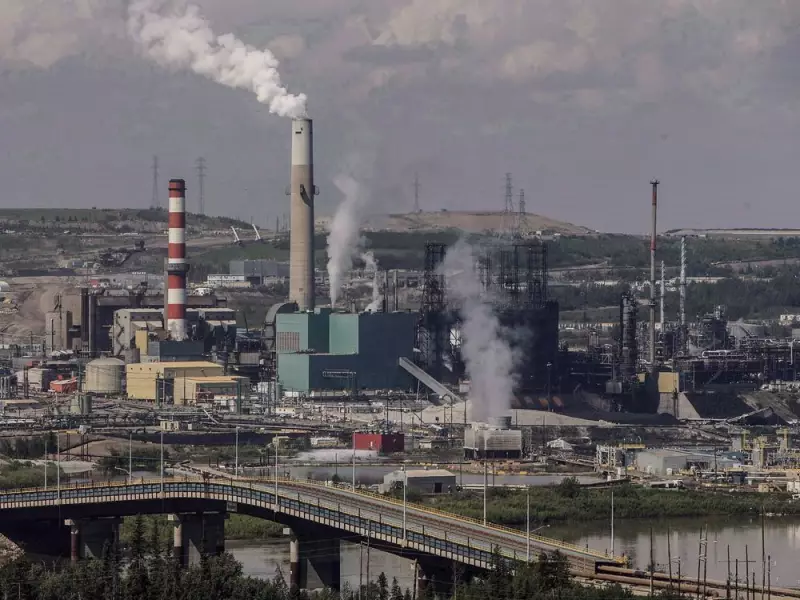
The connection is direct: oil from the Alberta oilsands is similar in grade to the heavy, high-sulphur crude produced in Venezuela. For years, Canada has been the primary beneficiary of Venezuela's production collapse, with pipeline expansions allowing Alberta's oil to fill the void on the U.S. Gulf Coast. Any sudden return of Venezuelan barrels threatens that market share.

Geopolitical Shockwaves and Oil in Limbo
The U.S. operation, which resulted in Maduro pleading not guilty to drug charges in a New York court on Monday, has stunned global politics. President Donald Trump stated the U.S. would temporarily manage Venezuela and required "total access" to the country's oil supply, which constitutes the largest known crude reserves in the world.
Prior to Maduro's capture, the U.S. had established a naval blockade to halt Venezuela's illicit oil trade, most of which was headed to China. However, in the chaotic aftermath, reports indicate at least four, and possibly up to 16, oil tankers breached the U.S. blockade. Furthermore, millions of barrels of Venezuelan oil currently sit in floating storage or in transit with no destination due to sanctions.
Simon Wong, a portfolio manager at Gabelli Funds, noted in an analysis that this stranded oil "may become immediately available for export," creating a potential short-term supply surge.
Long-Term Outlook for Canada's Oil Sector
The immediate reaction in short-term crude futures was muted, with the broader market already anticipating a supply glut. The fallout for Canadian producers is seen as more of a medium-term risk. Analysts at TD Cowen suggested in a client note that Maduro's ouster is not an "immediate threat" to Canada. They argued that only a rapid recovery in Venezuelan production would "meaningfully" affect prices.
However, the note added a significant caveat: "This assumes Venezuelan volumes currently destined for China are not instead sold into the open market; if they are, there is arguably a shorter-term track" for heavy crude prices to face renewed downward pressure.
The U.S. action is also expected to disrupt flows to China, which had increasingly turned to Canadian oil imports, especially since the startup of the expanded Trans Mountain pipeline to the British Columbia coast.
Despite the political change, reviving Venezuela's decimated oil industry is a monumental task. Production has plummeted to about 1 million barrels per day under Maduro's rule, a quarter of its 1970s peak. Experts estimate it could take years and cost over US$100 billion to restore significant output.
The market uncertainty weighed on share prices of major Canadian oilsands companies on Monday, with notable declines for Canadian Natural Resources Ltd., Cenovus Energy Inc., and Suncor Energy Inc.