

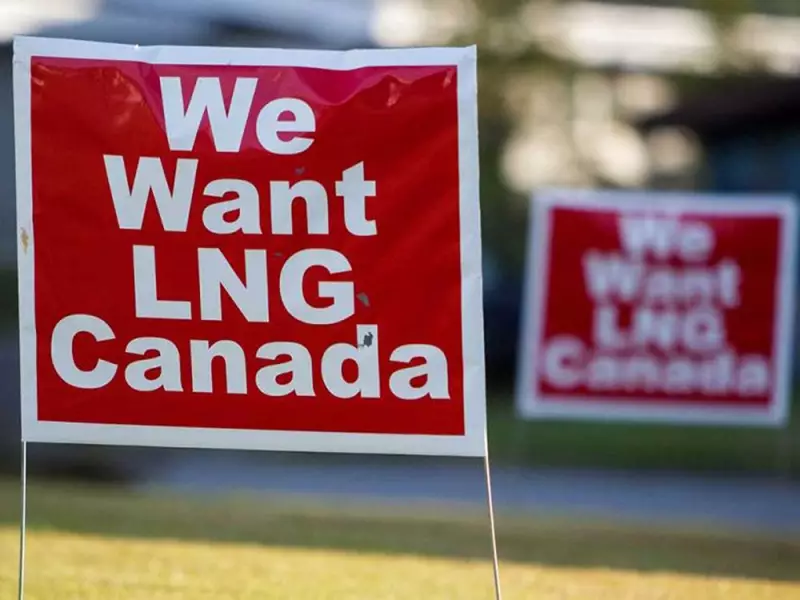
A significant shift in the federal government's rhetoric on liquefied natural gas is generating cautious optimism for Canada's export ambitions, particularly for two major proposals. While not expected to trigger a revolution in the sector, Ottawa's newly bullish tone is improving the outlook for Shell PLC-led LNG Canada Phase 2 and the Ksi Lisims LNG project, putting "wind at their back," according to industry insiders.
Confidence Grows for Front-Runner Projects
Prime Minister Mark Carney's push to establish Canada as a major LNG exporter is raising expectations that the two projects on the federal government's major projects list could advance. Susannah Pierce, the former president of Shell Canada, noted the considerable change in mood, stating it provides greater confidence. She highlighted that LNG Canada Phase 2 benefits from extensive pre-work and an existing environmental permit covering both phases, making its prospects look "pretty good."
Pierce added that she has seen anecdotal evidence that this rhetorical shift from Ottawa is registering with international LNG investors and companies, putting Canada back on their radar.

A History of Challenges Limits Broader Potential
Despite the improved sentiment, analysts warn that the policy shift is unlikely to unleash a wave of new investment across the sector. Alex Munton, head of global gas analysis for Rapid Energy Group, emphasized, "We're not talking about a revolution happening in Canadian LNG; we're really looking at the likelihood of two more big projects."
Munton pointed to Canada's "painful" history of stalled developments and ballooning costs as a persistent barrier. He contrasted Canada's slow progress with the explosive growth in the United States, noting that the U.S. Gulf Coast has over 200 million tonnes per annum of LNG capacity operating or under construction, compared to Canada's first wave of projects totalling just under 20 million tonnes per annum.
"It's literally a factor of 10 to one," Munton said. "That says so much in terms of the ability to get projects done. It's just harder in Canada."
High Costs and Complex Logistics Remain Hurdles
Proponents argue that Canada's significant advantages—including abundant, low-cost natural gas and proximity to growing Asian markets—are consistently undercut by formidable challenges. These include the high costs of remote construction, complex permitting and regulatory requirements, and difficult labour logistics.
The experience of Woodfibre LNG serves as a prime example. The project, backed by Enbridge Inc. and Pacific Energy, is under construction at a remote, water-access-only site on Howe Sound in southwestern British Columbia. Its projected costs have ballooned to US$8.8 billion, a substantial increase from the initial estimate of US$5.1 billion.
Canada's current LNG landscape is defined by a first wave of projects, primarily the under-construction LNG Canada Phase 1, Cedar LNG, and Woodfibre LNG. The focus now is whether the improved political environment can finally propel the next two major proposals, LNG Canada Phase 2 and Ksi Lisims LNG, across the finish line to a final investment decision, marking a measured but critical step for the country's energy export strategy.






