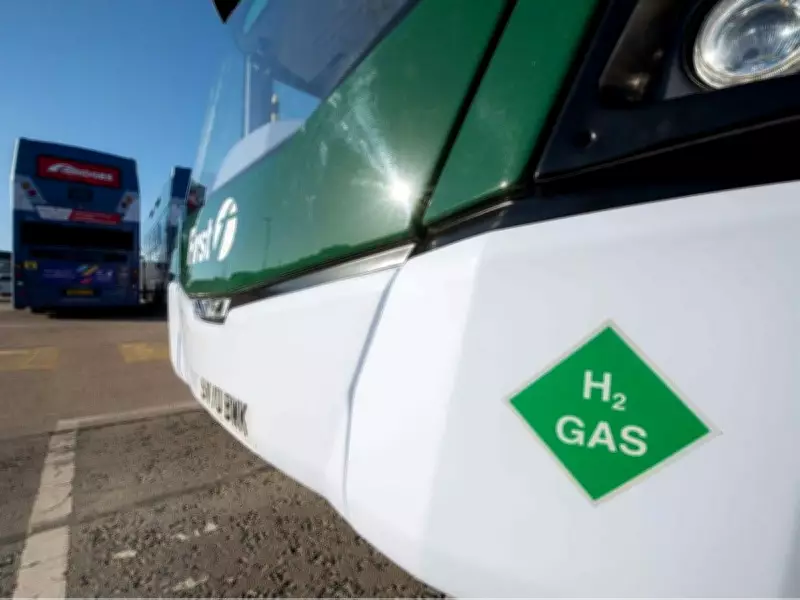
Alberta's Energy Superpower Ambition Must Embrace Hydrogen Development
The recent Canada-Alberta Memorandum of Understanding has, to a significant degree, reset the relationship between Ottawa and Edmonton. This agreement replaces years of federal-provincial quarrelling with a genuine opportunity to build a shared vision for the province's energy future. By agreeing to work together on resource development and emissions management, both governments have demonstrated that major energy projects can advance far more rapidly when political priorities align effectively.
Extending Cooperation Beyond Bitumen
That same cooperation must now extend decisively to hydrogen, not just bitumen. With global demand for low-carbon fuels rising substantially, Alberta can leverage this renewed federal-provincial partnership to make hydrogen a central pillar of its industrial strategy. The province possesses the potential to transform its abundant natural gas resources, carbon capture and storage capabilities, and engineering strengths into long-term competitive advantages for clean fuel development.
Canada's federal Hydrogen Strategy and its latest progress report both identify Alberta as a cornerstone of national deployment. This includes blue hydrogen produced via steam methane reforming with carbon capture and storage, emerging methane pyrolysis in the Industrial Heartland region, and developing fuel cell and equipment supply chains. Alberta's favorable geology, extensive gas infrastructure, and deep engineering expertise position it as one of the few jurisdictions worldwide capable of producing large volumes of low-carbon hydrogen at competitive costs.

Global Market Opportunities
Globally, demand for hydrogen and its derivatives is maturing rapidly. Europe's hydrogen bank auctions and emerging Asian import plans are explicitly seeking reliable, large-scale suppliers of low-carbon hydrogen and ammonia. The Canadian Hydrogen Association is actively working with Alberta developers and investors to capture these significant international opportunities. Applications for Alberta's hydrogen span multiple sectors including refining, ammonia production, steel manufacturing, power balancing, and heavy transport.
If Alberta limits its ambition exclusively to bitumen, it risks missing a crucial opportunity to diversify exports, hedge against long-term oil demand uncertainty, and leverage its skilled energy workforce to anchor next-generation hydrogen and industrial value chains as global markets shift toward cleaner energy sources.
The Critical Need for Political Will
The primary risk facing Alberta's hydrogen ecosystem is not technology or resources, but political will. Unless the province designates hydrogen as a project of provincial interest—with clear timelines and governance structures comparable to those embedded in its agreement with Ottawa—proponents will face uncertainty and fragmented policy that could deter essential investment. Alberta's energy superpower status must evolve to include hydrogen development alongside traditional resources to secure its economic future in a changing global energy landscape.