

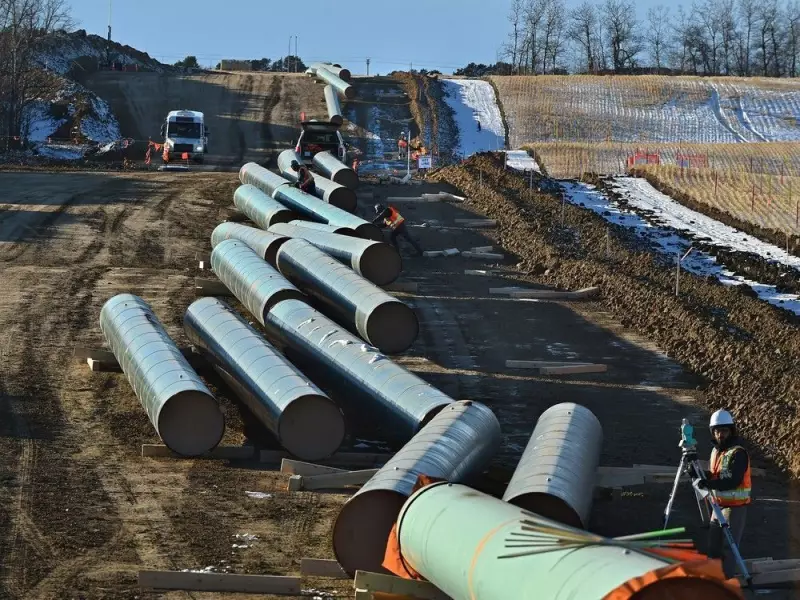
Alberta is exploring a potential end-run around British Columbia's staunch opposition to new oil pipelines, with Premier Danielle Smith floating the idea of a route through the United States to reach the Pacific Coast.
A Proposed U.S. Detour for Canadian Oil
Earlier this week, Premier Smith suggested that if B.C. Premier David Eby and certain First Nations groups continue to block a second oil pipeline from Alberta to the British Columbia coast, Alberta could seek investors to build an alternative line. This alternative would travel south through Montana and Idaho, terminating at a port in Washington State.
While Alberta would prefer a domestic route to northern B.C. for reasons of national pride and lower cost due to the shorter distance, Smith emphasized the ultimate goal is market access. "What does it matter if that oil is loaded onto tankers in Prince Rupert, B.C., Longview, Wash., or some other Pacific Northwest terminal?" the premise questions, provided the oil can reach booming Asian markets.

B.C.'s Firm Stance and a Precedent
Premier Eby has been adamant in his opposition to a second pipeline. He has vowed to block any new line to northern B.C. and to uphold the federal ban on oil tanker traffic along B.C.'s northern coast. While he has indicated a potential openness to a second pipeline paralleling the existing Trans Mountain line to Burnaby, his position remains a significant hurdle.
The commentary points to a precedent for choosing U.S. routes over B.C. obstacles. Nutrien, the Saskatchewan potash giant, recently decided to build a new $1-billion export terminal in Washington State along the Columbia River. This decision was reportedly made to avoid the regulatory and political challenges presented by the B.C. government and groups like the Coastal First Nations.
The Political and Financial Stakes
The article frames the potential U.S. route as a "win-win," allowing B.C. to maintain its environmental stance while Alberta secures its economic objectives elsewhere. It criticizes the Coastal First Nations, describing them as an "anti-oil lobby group" funded by American foundations such as the Tides Foundation and the Rockefeller Brothers Fund, with a stated goal of landlocking Canadian oil.
Eby's history of pipeline opposition is noted, referencing his time as B.C.'s Attorney General in 2018, when he instructed prosecutors not to charge protesters illegally occupying Trans Mountain construction sites. As the political standoff continues, the prospect of rerouting critical energy infrastructure through a foreign country underscores the deep divisions in Canadian energy and environmental policy.






