Alberta's Energy Future Requires Substantive Action Beyond Symbolic Agreements
The recent rejection of a Conservative motion in the House of Commons highlights the ongoing tension between federal energy policies and Alberta's resource development ambitions. Members voted 197 to 137 against recognizing Canada as a "competitive, resource-producing nation" and repealing numerous federal anti-energy regulations, creating significant challenges for Alberta's economic future.
Competitive Threats from Venezuela's Resurgent Oil Industry
The timing of this parliamentary decision couldn't be more problematic given emerging global energy dynamics. Prime Minister Mark Carney's recent comments about the U.S.-Venezuela intervention downplaying its impact on Canadian oil appear increasingly disconnected from market realities. As Carney himself acknowledged in different context, "If we're not at the table, we're on the menu."
With growing tensions between the U.S. and Canada, Alberta's energy sector faces genuine competitive threats. Venezuelan heavy crude shares remarkably similar characteristics with Alberta's oil sands production, making it easily substitutable in U.S. Gulf Coast refineries that historically processed Venezuelan products before recent embargoes.

Production Capacity Comparisons and Market Implications
Energy analysts now project that Venezuela's oil production could experience rapid expansion following recent political developments. The country possesses more than triple the proven reserves of the United States and previously achieved production levels of 3.5 million barrels per day before declining to approximately one million barrels currently.
This potential resurgence creates direct competition for Alberta, which produces about four million barrels daily, while Saskatchewan contributes roughly 450,000 barrels. Venezuela's previous production decline resulted from chronic under-investment and redirected exports to countries like China, but renewed access to U.S. markets could dramatically alter North American energy dynamics.
Decades of Federal Policy Challenges for Alberta Energy
Meanwhile, Canada's federal energy policies over the past decade have systematically undermined investment in Alberta's energy sector. These policies have squandered geological advantages, mismanaged economic cycles, and neglected critical infrastructure needs that could have positioned Canada more competitively in global energy markets.
The consequences of these energy decisions continue to reverberate through Alberta's economy, though opportunities remain to reshape Canada's economic trajectory through more balanced policy approaches.
The Limitations of Symbolic Federal-Provincial Agreements
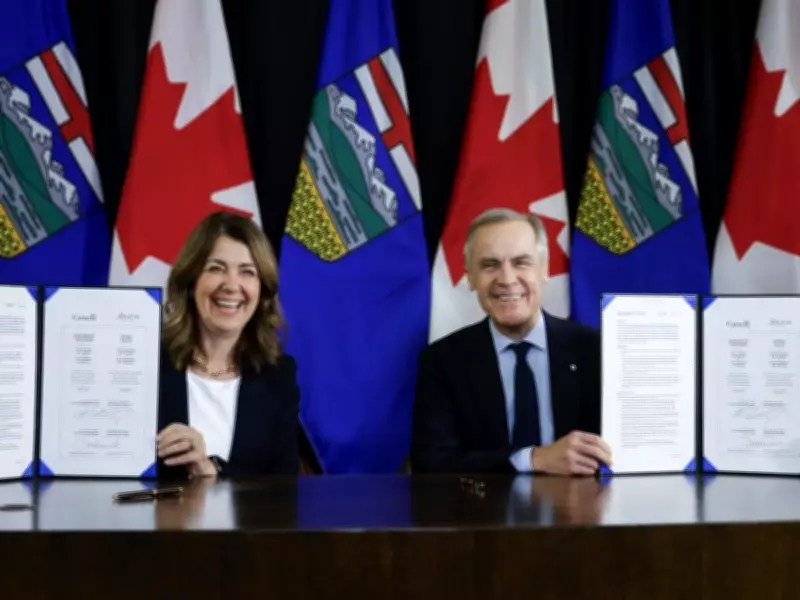
The recent memorandum of understanding signed between Alberta Premier Danielle Smith and Prime Minister Mark Carney represents a positive symbolic gesture toward federal-provincial cooperation. However, MOUs fundamentally lack enforcement mechanisms and regulatory teeth, often serving as diplomatic placeholders when governments lack substantive policy solutions.
While the agreement signals some paradigm shifts, including federal tax credits for CO2 enhanced oil recovery projects—one of carbon capture's few profitable applications—significant regulatory barriers remain entrenched from previous administrations.
Ongoing Regulatory Hurdles: The Impact Assessment Act
The persistent challenges of Bill C-69, the Impact Assessment Act, illustrate the limitations of symbolic agreements. Alberta officials report that Ottawa has "agreed to address" these concerns through future "co-operation agreements," yet federal agencies continue working around the legislation's requirements.
This approach suggests federal authorities may accept provincial environmental assessments for individual projects as substitutes for federal reviews, creating uncertainty for energy developers and investors seeking regulatory clarity and stability in Alberta's energy sector.