Oil Price Surge Forces Alberta to Rethink Economic Forecasts Amid Global Tensions
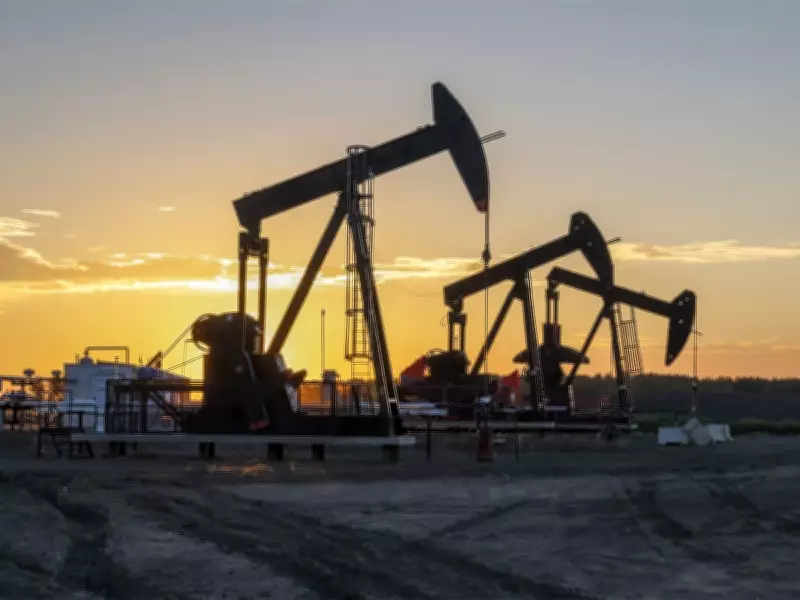
A dramatic spike in oil prices has sent Alberta economists back to the drawing board as they scramble to recalibrate projections for the province's energy-dependent economy. With crude prices surging more than 35 percent since the beginning of March due to escalating conflicts in the Middle East, experts are now navigating through multiple potential scenarios rather than offering definitive forecasts.
"We have entered scenario-land. You can't be definitive, but you can start thinking through scenarios," stated ATB chief economist Mark Parsons, who detailed three possible economic outlooks for Alberta this year. "We were going to release a March forecast very soon, and we're kind of going back to the drawing board. We've got to factor in Iran and what it means for oil prices, what it means for oil and gas investment."
From Modest Growth to Rapid Reassessment
The situation represents a stark turnaround from the beginning of the year when crude prices hovered around $57 per barrel and provincial economic growth projections remained relatively modest. In early December, ATB had projected Alberta's economy would grow by 2.1 percent with West Texas Intermediate crude averaging $61 per barrel—a forecast similar to last week's provincial budget that was based on oil at $60.50 per barrel.

However, benchmark West Texas Intermediate crude closed at $90.90 per barrel on Friday, representing an increase of nearly $10 from just the previous day. This sharp upturn has fundamentally altered the economic landscape for a province where energy accounted for approximately three-quarters of international goods exports last year and 28 percent of gross domestic product.
Three Potential Scenarios for Alberta's Economy
Parsons outlined three distinct scenarios that could unfold:
- Moderate Impact Scenario: This most likely outlook features an oil supply shock with limited global economic impact. Prices would remain near current levels for several months before averaging $75 per barrel for the entire year. Energy producers would cautiously increase investment in new growth projects, and Alberta's GDP would expand between three and 3.5 percent.
- Rapid Resolution Scenario: This scenario would see the Middle East crisis fade swiftly, with oil returning to previous levels and minimal disruptions to the global economy. Under these conditions, Alberta's GDP would grow by approximately two percent.
- Severe Disruption Scenario: This outlook would involve the global economy decelerating sharply due to a significant supply shock, with oil averaging $85 per barrel throughout the year. Rising prices would affect industries not directly tied to energy, and GDP growth would range between 1.5 and 2.5 percent depending on the severity of the global slowdown.
The rapid price escalation has created unprecedented uncertainty for Alberta's economic planners, who must now consider how geopolitical tensions halfway around the world could reshape the province's financial landscape. With energy playing such a dominant role in Alberta's economy, even temporary price fluctuations can have significant ripple effects across multiple sectors.
As Parsons noted, the current situation requires flexible thinking rather than rigid forecasts. "You can't be definitive, but you can start thinking through scenarios," he emphasized, capturing the challenging position facing Alberta's economic analysts as they attempt to chart a course through increasingly turbulent global waters.