

America's Fiscal Reckoning: Government Spending Addiction Pushes Nation Toward Debt Crisis
While political debates rage over tariffs, immigration policies, and international ambitions, a fundamental governance issue remains dangerously overlooked: the deteriorating state of United States federal finances. For decades, the American government has consistently spent far beyond its means, creating a mounting debt burden that threatens to destabilize the entire economy within coming generations.
The Sobering Numbers Behind America's Debt Addiction
According to the Congressional Budget Office's recent report "The Budget and Economic Outlook: 2026 to 2036," the federal budget deficit is projected to reach 5.8 percent of gross domestic product in 2026, expanding to 6.7 percent by 2036. Interest payments on existing federal debt alone will consume 2.6 percent of GDP this year, representing a significant drain on national resources.
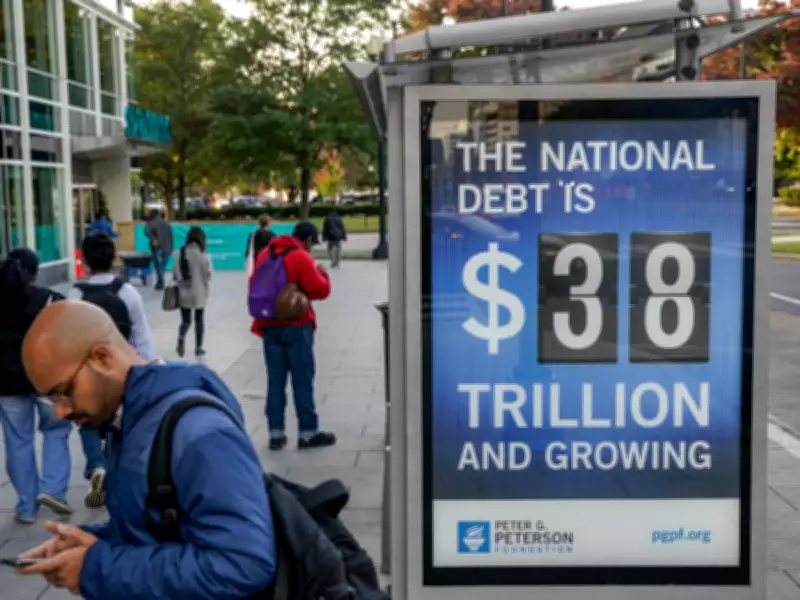
Federal debt held by the public is expected to surge from 101 percent of GDP this year to 120 percent by 2036, surpassing the previous post-World War II high of 106 percent recorded in 1946. In absolute terms, total federal debt currently stands at a staggering $38.7 trillion, creating what experts describe as an unsustainable fiscal trajectory.

Optimistic Projections Mask Deeper Problems
Even these concerning figures represent an optimistic assessment, as the CBO operates under legal constraints requiring certain unrealistic assumptions, including full funding of entitlement programs. To provide more realistic forecasts, the agency periodically publishes alternative scenarios that paint a grimmer picture of America's fiscal future.
In 2023, the CBO projected that if discretionary spending and revenues followed their 30-year historical averages as percentages of GDP, federal debt held by the public would exceed 250 percent of GDP by 2053. This scenario would force the agency to completely reevaluate its economic models, as current frameworks cannot adequately assess the consequences of debt at such unprecedented levels.
Expert Warnings of Economic Consequences
Research from the American Enterprise Institute supports these alarming projections. Mark J. Warshawsky, John Mantus, and Gaobo Pang predicted in 2023 that debt-to-GDP ratios would reach 135 percent by 2032 and 268 percent by 2052. Their analysis suggests this trajectory would trigger "a notable deterioration in consumer welfare" as interest rates, healthcare spending, and deficits increase in a self-reinforcing cycle.
The researchers warn that households would need to increase savings to maintain investment rates even as federal debt crowds out private economic activity. This vicious cycle could fundamentally reshape the American economy, reducing living standards and economic opportunity for future generations.
A Bipartisan Failure of Fiscal Responsibility
The current crisis represents decades of bipartisan failure. Republican administrations have frequently promised spending reductions while Democratic administrations have advocated for increased taxation, yet neither approach has successfully balanced the federal books. The result is a mounting debt burden that threatens to overwhelm the nation's economic foundations.
As political attention focuses on more immediately contentious issues, the fundamental mathematics of federal finances continue to deteriorate. Without significant policy changes addressing both spending and revenue, America appears headed toward a fiscal reckoning that could dwarf previous economic crises in both scale and consequence.






