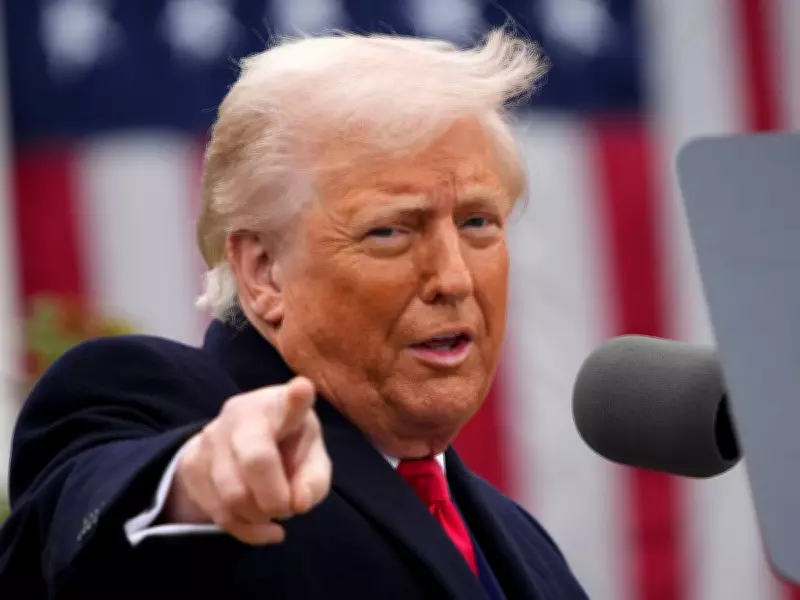
One Year Anniversary of Trump's Trade Offensive Shows Limited Success
This month marks the one-year anniversary of what former President Donald Trump termed "Liberation Day" – the launch of a comprehensive trade offensive against multiple nations through sweeping tariffs. On April 2, 2025, the Trump administration imposed tariffs on dozens of countries, dramatically increasing the United States' average effective tariff rate in what was billed as a historic economic maneuver.
Promises Versus Reality in Trade Policy
The stated objectives were ambitious: rebuilding domestic manufacturing capacity, significantly reducing the massive U.S. trade deficit, and ultimately fulfilling the campaign promise to "make America rich again." However, a detailed review of the impacts conducted by National Bank of Canada economist Ethan Currie reveals that this "historic trade upheaval" has fallen substantially short on all these critical fronts.
Despite collecting over US$340 billion from tariffs over the past twelve months – representing a staggering 230 percent increase from the previous year – recent tariff revenue has shown signs of deceleration. The financial picture became even more complicated in February when the U.S. Supreme Court ruled that President Trump lacked the authority under the International Emergency Economic Powers Act to impose these tariffs, effectively invalidating the so-called Liberation Day measures.

Financial Fallout and Economic Indicators
With the tariffs now ruled invalid, the United States faces the prospect of paying up to US$175 billion in refunds to affected parties. This financial burden compounds existing pressures from the ongoing conflict in Iran, estimated to cost approximately US$36 billion monthly, placing America's already shaky finances under unprecedented strain according to Currie's analysis.
The trade deficit – a primary target of the tariff initiative – has shown minimal improvement, actually widening in February by nearly five percent as imported goods surged to their highest level in almost a year. Meanwhile, manufacturing employment has declined by approximately 120,000 jobs over the past fourteen months, with only a modest gain recorded this past January.
"One year on, many corners of the U.S. economy appear far from liberated by White House standards," concluded Currie, noting that weakness in the manufacturing sector is evident across multiple indicators including business and consumer readings and Purchasing Managers' Index surveys.
Cross-Border Impacts on Canada
The trade war has left "visible scars" on the Canadian economy, according to Douglas Porter, chief economist at BMO Capital Markets. Canadian job growth has stalled over the past year while manufacturing output has dropped four percent in the last three months alone. Perhaps most significantly, Canadian exports to the United States have plunged to 66.4 percent, representing a ten percentage point decline.
Despite these challenges, Canada's economy has demonstrated resilience, managing to "keep its head above water" with moderate gains to start the current year. Remarkably, despite initial market volatility following the tariff announcement, the TSX has soared thirty percent since Liberation Day, suggesting complex and sometimes counterintuitive economic dynamics at play.
Broader Implications and Future Outlook
The tariff initiative's limited success raises fundamental questions about the efficacy of protectionist trade policies in achieving broad economic objectives. While generating substantial short-term revenue, the measures have failed to produce their intended structural economic changes, instead creating financial liabilities and straining international trade relationships.
As the economic landscape continues to evolve, policymakers face the challenge of addressing genuine concerns about domestic manufacturing and trade imbalances while avoiding measures that create more problems than they solve. The anniversary of Trump's tariff war serves as a cautionary case study in the complex interplay between trade policy, economic indicators, and real-world outcomes.