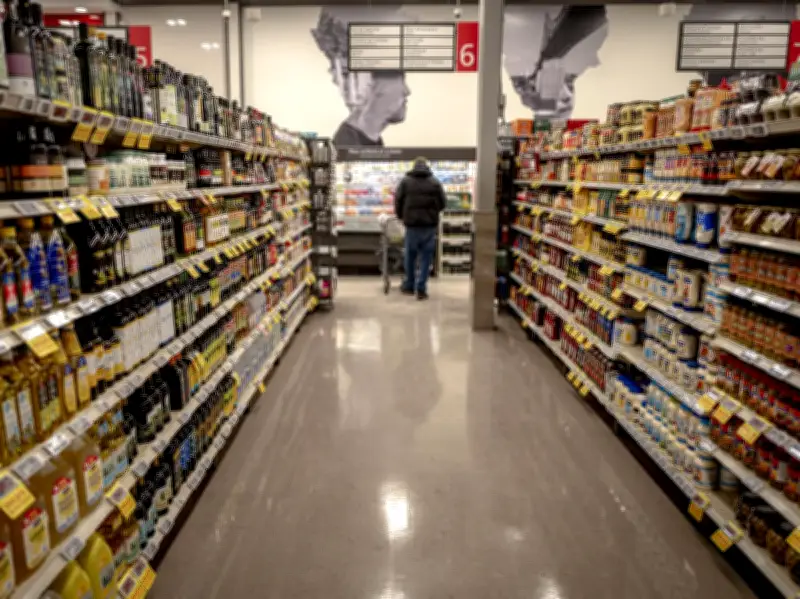
Commodity prices have been declining since the Strait of Hormuz reopened on Thursday, but economists caution that Canadians may still encounter higher food prices due to elevated fertilizer costs incurred during the planting season.
Nitrogen fertilizer prices in North America have surged roughly 40 percent since the conflict with Iran began in late February, according to TD Economics data, while phosphate prices started climbing in May.
As a result, food price increases are likely to follow, economists say, especially since farmers faced financial strain during the planting season earlier this year. Once those crops are harvested in the fall, the higher fertilizer prices will be reflected in higher food prices, leading to increased price tags on grocery store shelves.

Food Inflation Expected to Rise
Food inflation in Canada is projected to rise to around 4.5 percent year over year by early 2027, driven by higher global oil and fertilizer prices putting upward pressure on food costs, according to a new Oxford Economics Ltd. report.
Food inflation is already elevated, with year-over-year grocery store prices climbing four percent in April. However, Oxford Economics anticipates food prices will stabilize by early 2028.
“As (oil and fertilizer) prices come down quickly in the second half of this year — and that is our baseline assumption with the reopening of the Strait of Hormuz — it will result in weaker food inflation in the second half of 2027 and into 2028,” said Michael Davenport, a senior economist at Oxford Economics and author of the report.
“The downward pressure on food inflation doesn’t mean food prices are going to fall. It just means that the rate of increase in food prices is likely to slow significantly in 2028.”
Long-Term Impact of Fertilizer Costs
Davenport noted that it may take time for traffic in the Strait of Hormuz to return to pre-war levels, meaning overall headline inflation will remain more elevated than anticipated before the conflict began.
“Even with the easing in oil and fertilizer prices, they are still likely going to remain higher than they were prior to the war,” he said. “Inflation is going to remain a little bit more elevated than what we had expected before the war kicked off three to four months ago.”
Anusha Arif, an economist at TD Economics, explained that the fertilizer shock has already passed through the planting window. The damage cannot be fully reversed, unlike energy prices, which can adjust once shipping normalizes.
“Even if the waterway opens, the planting season cannot reopen, so any decisions that the farmers made based on more expensive fertilizers are already baked into the food production cycle,” she said. “All of this has implications for the food they will harvest later on, and consumers might see those impacts in 2027.”