Ontario's Progressive Conservative government has unveiled its latest provincial budget, titled "a Plan to Protect Ontario," but the document reveals a strategic reliance on existing support mechanisms with minimal new assistance for critical sectors facing economic pressures.
Budget Emphasizes Continuity Over New Initiatives
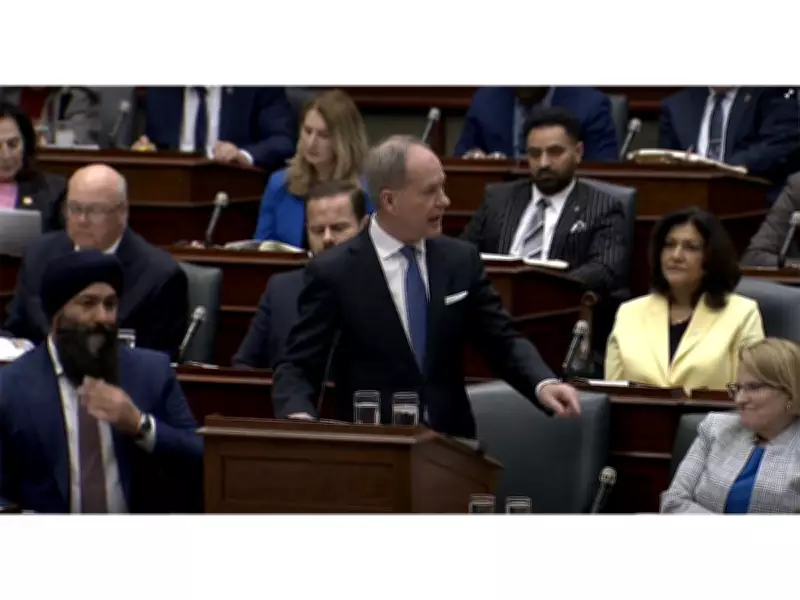
Finance Minister Peter Bethlenfalvy presented the budget at Queen's Park, highlighting how the province has already implemented substantial measures over the past year to shield Ontario's economy from external threats like tariffs. The focus now shifts toward fostering growth and enhancing competitiveness in a rapidly changing global landscape.
"Last year has been marked by significant change in the world around us," Bethlenfalvy stated during his speech. "But geopolitical forces that may have once felt distant have now reached our shores. That is why this budget is so important. It is about creating jobs, increasing our competitiveness, and growing our economy."

Key Industries Receive Limited New Support
The budget builds upon previous efforts to bolster local industries amid ongoing trade tensions with the United States, but introduces few targeted new programs.
- Agriculture: Ontario farmers are grappling with a global shortage of nitrogen-based fertilizers due to Iran's blockade of the Strait of Hormuz. The budget does not include new targeted supports, instead pointing to the existing Risk Management Program, which helps farmers manage risks from fluctuating costs and market prices.
- Steel Sector: No new announcements specifically for steel. The budget references the Protect Ontario Financing Program, established in the 2025 budget, which provided a $100-million provincial loan to Algoma Steel to help navigate market changes and U.S. tariffs. Despite this, Algoma recently laid off 1,000 workers in Sault Ste. Marie.
- Mining: The budget highlights existing measures aimed at accelerating approvals, promoting critical mineral extraction, and advancing the Ring of Fire development.
- Automotive: The province is allocating $85 million to continue existing programs, including the Ontario Automotive Modernization Program and the Ontario Vehicle Innovation Network. The government reaffirmed its commitment to supporting the creation of electric vehicle battery plants in St. Thomas and Windsor.
- Forestry: Support focuses on developing forest biomass and establishing a working group to explore advanced wood construction in Ontario.
Impact of U.S. Tariffs Less Severe Than Anticipated
A significant factor in the budget's shift away from new industry-specific supports is the relatively mild impact of U.S. tariffs. According to budget documents, more than half of Ontario's exports to the United States avoided tariffs by complying with the Canada-United States-Mexico Agreement (CUSMA). Consequently, exports to the U.S. in 2025 declined by only 1.7 percent from the previous year, alleviating some of the initial concerns about a trade war.
This data underscores the government's rationale for prioritizing economic growth and job creation over extensive new aid programs, as existing frameworks have proven effective in mitigating trade-related disruptions.