Statistics Canada's latest Consumer Price Index report shows that overall prices increased by 3.2% in May compared to a year earlier, with food prices rising 4.3% year over year. The price of tomatoes climbed 45% due to a shortage from Mexico, and fresh vegetable prices increased by 5.5%.
According to Statistics Canada, this is the largest monthly May increase since 2008, attributed to reduced supply and higher fuel costs. This contradicts previous claims by the Liberal government, the Bank of Canada, and some agencies that the consumer carbon tax was not impacting food prices.
Fuel Costs and Food Prices
The link between fuel costs and food prices is now acknowledged. While the consumer carbon tax has been reduced to zero and the federal fuel excise tax is paused for this year, other policies continue to drive up costs. The Clean Fuel Regulation, the Industrial Carbon Tax, and other oil and gas industry policies increase production costs, inevitably leading to higher food prices.

If the Carney government follows its plan, the excise tax holiday will end after Labour Day, resulting in an overnight increase of 10 cents per litre, which will impact inflation in the fall. While the holiday is welcome now, like the recent GST holiday, it will have consequences down the road.
Canadians Stressed by Grocery Costs
A new poll from the Angus Reid Institute shows that 34% of Canadians say paying for monthly groceries is adding to their stress. It is the most cited cause of stress, with more than 50% of those reporting household finances stressed by food costs.
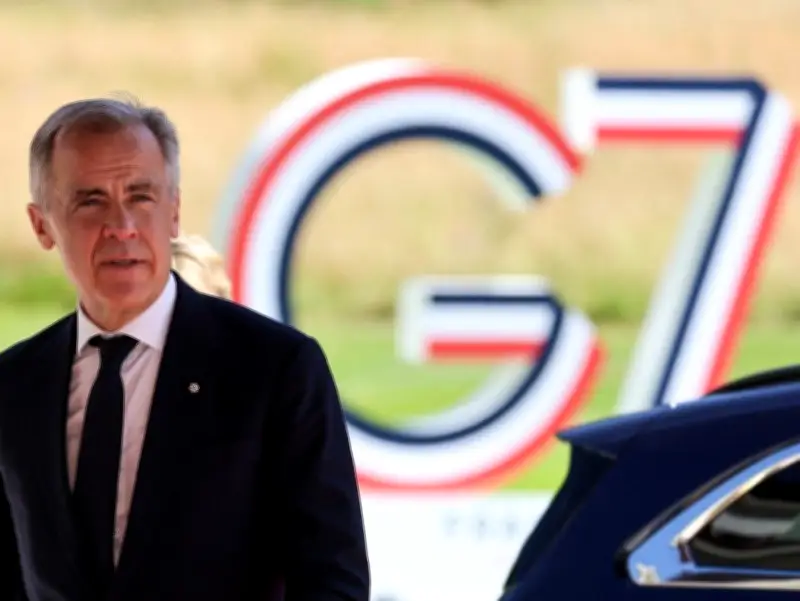
Canada once again has the highest food inflation rate in the G7. Sylvain Charlebois, professor and researcher in food distribution at Dalhousie University, said, “At 3.8%, food inflation isn’t a crisis, but it is a signal. Most G7 countries face the same global pressures. The fact that Canada continues to underperform suggests our food affordability problem is increasingly homegrown, not imported.”
Carney's Pledge and Performance
After winning the election last year, Carney said, “Canadians will hold us to account by their experience at the grocery store.” However, food prices have gone up at a higher rate than general inflation every month since Carney became prime minister. Despite his policies contributing to higher prices, Canadians are not holding him responsible.
Federal Conservative Leader Pierre Poilievre, speaking in British Columbia, blamed Carney and his policies. “Mark Carney has given Canada the worst food price inflation in the G7 only days after we learned that he gave us the only recession in the G7,” Poilievre said. “All the other G7 countries have to deal with wars and tariffs and energy prices, and yet none of them are in recession, and none of them have the rising food prices that we have here under Mark Carney.”
Despite this, Carney appears to bear no responsibility for the situation.