Analysts: High Gas Prices May Force Canadians to Cut Spending, Reduce Demand
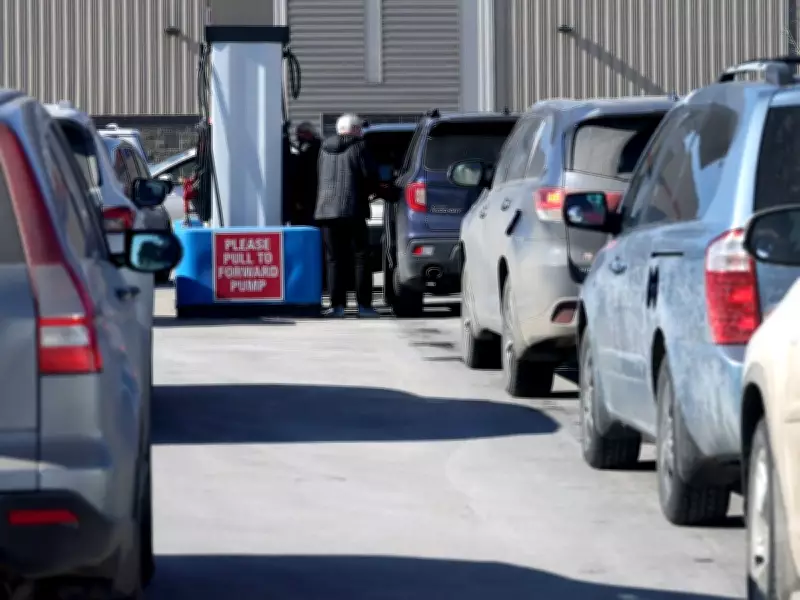
As gasoline prices continue their dramatic climb across Canada, many consumers are being forced to make painful financial decisions that could reshape spending patterns nationwide. The conflict in the Middle East has triggered a seismic shift in global oil markets, sending fuel costs soaring and leaving households grappling with difficult tradeoffs between essential expenses.
The Personal Toll of Rising Fuel Costs
John Hollinrake, a 60-year-old retiree living on a fixed income in Calgary, watches the numbers tick upward each time he fills his sedan's tank. "I can't afford to eat the food that I want to eat," Hollinrake explained, noting that he's now taking money from his food budget to cover his increased fuel expenses. His daily 150-kilometre round trip to drive a friend to work has become significantly more costly, transforming what was once a manageable expense into a financial burden that threatens his basic necessities.
Hollinrake's situation reflects a broader national trend as Canadians across the country confront similar difficult choices. "We haven't even seen the beginning yet," Hollinrake predicted about the price increases. "It's gonna get worse."

Global Conflict Drives Market Disruption
The root cause of these price spikes lies in the ongoing conflict between the United States, Israel, and Iran, which has disrupted global oil supplies and sent prices for gasoline, diesel, and jet fuel skyrocketing. A critical factor has been the blockades at the Strait of Hormuz, a crucial shipping corridor that handles approximately one-fifth of the world's oil supply.
Despite recent ceasefire attempts, the situation remains volatile. Peace talks between Iran and the U.S. ended without agreement over the weekend, and markets remain focused on tanker traffic through the strategic Strait of Hormuz after threats to completely block the passage. U.S. Central Command has since announced it would instead block all ships at Iranian ports while allowing non-Iranian traffic through the strait.
Consumers as Market Correctors
Analysts suggest that consumer behavior may ultimately provide the solution to the supply-demand imbalance. "Consumers will make the right choices with their dollars and just reduce consumption," said Susan Bell, a senior vice-president at Rystad Energy. "That starts to help resolve the supply-demand imbalance."
This perspective frames high fuel prices as potentially necessary market correctors during a period of scarcity. The financial pressure on consumers' pocketbooks could help reduce demand for the commodity, creating a natural balancing mechanism within the economy.
Broader Economic Impacts
The ripple effects extend far beyond individual consumers. For shippers, truckers, retailers, and businesses throughout the supply chain, the pressure of steeper costs is creating significant economic strain.
Zekira Brate, a long-haul trucker who transports potatoes from Canada's prairies to the United States, faces eye-watering increases each time he fills his semi-truck's nearly 200-litre diesel tank. The higher costs mean extended periods away from his family as he works to maintain profitability amid the challenging economic conditions.
Long-Term Outlook Remains Uncertain
Regardless of how the geopolitical situation evolves, analysts expect the recovery to be gradual. "Whatever the outcome, analysts expect it will take months or even years for a full recovery to take hold," according to market observers.
On a recent spring morning in Calgary, the reality of this dependence on affordable fuel was evident everywhere—from students racing to class and laborers taking lunch breaks to office workers preparing for their daily commutes. Like Hollinrake, they all hope for a resolution to the conflict and a return to more reasonable fuel prices, but the path forward remains uncertain as global markets continue to react to geopolitical tensions and supply constraints.