Surging gasoline prices resulting from the ongoing conflict in the Middle East are impacting consumers throughout North America, but Canadians are positioned to experience significantly more financial pain at the pumps than their American counterparts, according to a prominent economist.
Record Fuel Price Increases
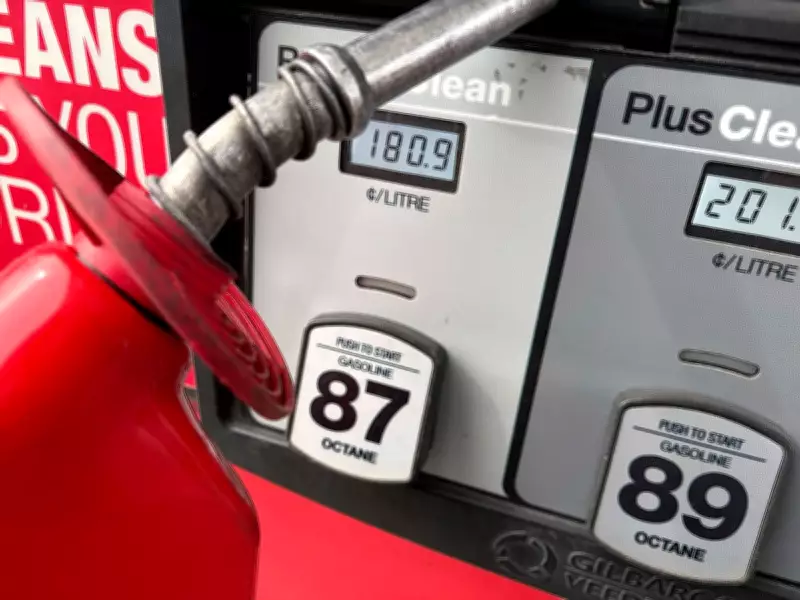
Gasoline prices have skyrocketed to unprecedented levels in recent weeks. In the United States, prices exceeded US$4 per gallon, while in various regions across Canada, costs climbed above $2 per liter, marking the highest prices witnessed in four years.
Sal Guatieri, a senior economist at BMO Capital Markets, highlighted that this represents the largest monthly increase in fuel prices recorded over the past four decades. "Regardless of political statements about energy independence, crude oil prices are determined globally," Guatieri explained. "This means energy costs throughout North America are ascending in tandem with worldwide trends."

Erosion of Consumer Spending Power
This unexpected surge in fuel expenses is eroding the purchasing power of households on both sides of the border. In the United States, gasoline and other fuels constitute approximately 2 percent of personal consumption expenditures.
If elevated prices persist, American consumers could be spending an additional US$1,000 annually on fuel—money that would otherwise circulate through the economy via other purchases. Canadians confront similar pressures, with West Texas Intermediate crude oil trading at US$110.64, and many analysts identifying US$150 per barrel as a potential trigger for economic downturn or recession.
Why Canadians Feel More Pressure
Guatieri emphasized that Canadians are likely to feel the squeeze of rising energy costs more acutely than Americans due to several key financial factors.
Weaker Financial FootingCanadian consumers are already operating on less sound financial footing, with consumer spending lagging behind that of their southern neighbors. Although job growth remains tepid in both nations, disposable incomes are rising more rapidly in the United States, largely due to recent personal tax cuts.
Heavier Debt BurdenCanadians also carry a substantially heavier debt burden on average. By the end of last year, Canadian households were dedicating 14.6 percent of their disposable income to interest payments, approaching record highs.
In contrast, American households spent only 11.3 percent of disposable income on interest, which remains below long-term historical averages. "More money directed toward the gas tank means less available for vacations, restaurants, and entertainment among higher-income households," Guatieri noted. "For lower-income earners, it translates to reduced spending on essentials like food, shelter, and clothing."
Potential for Sharp Consumer Pullback
While American households may be somewhat better positioned to withstand this new economic shock, both Canadian and American consumers could sharply reduce spending in a worst-case scenario involving escalated conflict in the Middle East.
Rising energy prices are simultaneously lifting inflation rates, placing central banks in a difficult position where providing economic stimulus becomes increasingly challenging. The situation is further complicated by Canada's trade dynamics, as the nation's trade deficit expanded to $5.7 billion—the largest since August of the previous year—driven by record-high imports boosted by gold shipments.
Imports surged 8.4 percent to $72.1 billion in February, while exports increased 6.4 percent to $66.3 billion, reaching the highest level since March 2025. This economic landscape underscores the vulnerability of Canadian consumers to external price shocks and highlights the broader implications of sustained high fuel prices on North American economic stability.