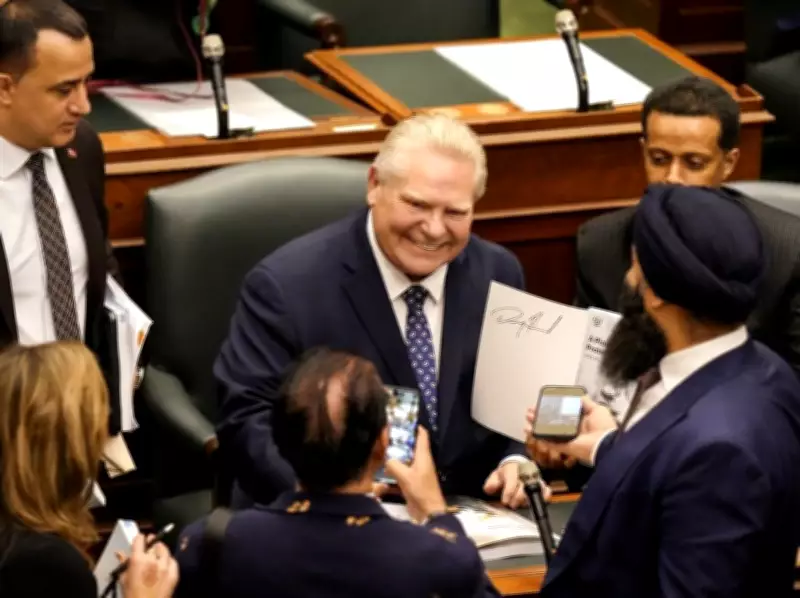
Doug Ford's 2026 Budget Mirrors Wynne's Spending, Driving Debt Up 44%
Ontario Premier Doug Ford, who once criticized former premier Kathleen Wynne for excessive spending, has unveiled a 2026 budget that critics argue could have been crafted by Wynne herself. The budget, introduced by Finance Minister Peter Bethlenfalvy on March 26, 2026, includes $25.8 billion in new borrowing, pushing the provincial debt to a staggering $485.1 billion. This represents a 44% increase in Ontario's debt since Ford took office in 2018, a figure that starkly contrasts with his earlier fiscal promises.
Ford's Fiscal Reversal: From Critic to Corporate Welfare King
During the 2018 election, Ford lambasted Wynne's budget for adding $14.6 billion to the debt. However, his 2026 budget surpasses that in red ink. Ford also used to denounce corporate welfare, but now his administration is dubbed the "corporate welfare king of Canada," allocating more funds to business handouts than any other premier. Additionally, instead of ending political party subsidies as pledged, Ford has made them permanent, further straining taxpayer resources.
The budget shows government spending rising by $5.8 billion compared to last year, with initiatives like the new $4-billion Protect Ontario Account criticized as a slush fund for connected businesses. Despite these subsidies, Ontario's unemployment rate stood at 7.6% in February 2026, the second-highest in Canada, suggesting corporate welfare has failed to boost job creation effectively.

Debt Interest Burden Hits Taxpayers Hard
Years of overspending by both Liberal and Progressive Conservative governments have led to significant debt interest charges. In 2026, Ontarians will pay $17.2 billion in debt interest, equating to over $1,000 per person. This money could otherwise fund hospitals, infrastructure, or tax cuts but is instead diverted to bond fund managers. According to Leger polling, 75% of Ontarians express concern about these rising charges, highlighting public anxiety over fiscal management.
Bright Spots and Shortfalls in the Budget
There are some positive measures for taxpayers, including:
- Tax cuts for small businesses to spur job creation.
- Expansion of sales tax relief by removing HST on all new homes, saving Ontarians $1.6 billion this year.
However, critics argue these tax cuts are insufficient. To address the rising cost of living and attract businesses, broader tax relief for families and enterprises is needed. Yet, without curbing wasteful spending on corporate and political welfare, meaningful tax reductions may require further borrowing, perpetuating the cycle of debt.
Conclusion: A Call for Fiscal Responsibility
Ford campaigned against Wynne's borrowing habits but now replicates them, leaving taxpayers to foot the bill. To provide sustainable relief, experts urge the government to:
- Cut unnecessary spending.
- Reduce the overall debt burden.
- Implement comprehensive tax cuts for all Ontarians.
As Noah Jarvis, Ontario Director of the Canadian Taxpayers Federation, notes, "Taxpayers can't afford Ford's borrowing binge." The budget underscores the need for a return to fiscal prudence to secure Ontario's economic future.