

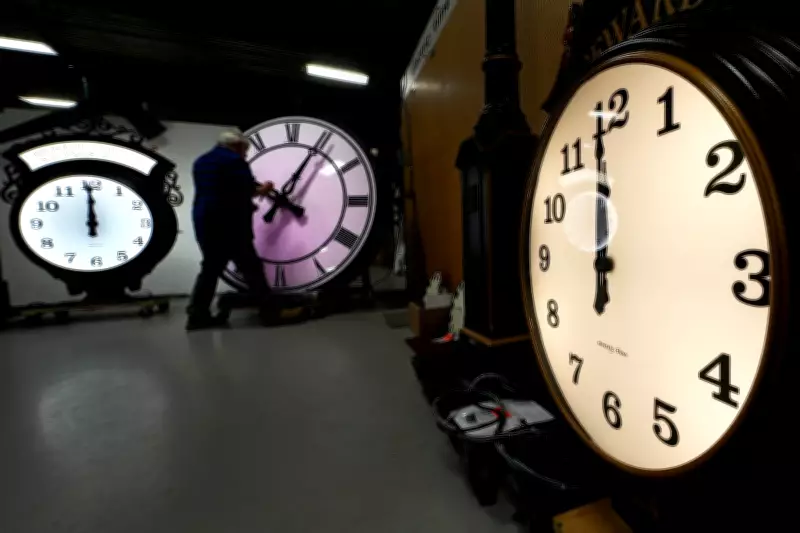
As winter begins to loosen its grip, Canadians across the nation are preparing for the annual ritual of adjusting their clocks. Daylight Saving Time (DST) is set to commence, marking the shift to longer evening daylight hours.
The Official Spring Forward Date
In 2026, Daylight Saving Time will begin in the early hours of Sunday, March 8. At precisely 2:00 AM local time, clocks should be advanced by one hour to 3:00 AM. This change affects most provinces and territories, with notable exceptions including most of Saskatchewan, which remains on Central Standard Time year-round, and select regions in British Columbia, Ontario, and Quebec that have opted out of the practice.
Historical Context and Current Debates
The practice of adjusting clocks forward in spring and back in autumn has a long history in Canada, with modern standardized DST being widely adopted during the First World War to conserve energy. However, in recent years, the biannual time change has faced increasing scrutiny.

Medical researchers have highlighted potential health impacts associated with the time shift, including disrupted sleep patterns and increased risks of heart attacks and strokes in the days following the change. These concerns have fueled ongoing discussions about whether Canada should follow the lead of jurisdictions that have abolished seasonal time changes.
Provincial Variations and Legislative Efforts
The landscape of Daylight Saving Time across Canada is not uniform. Several provinces have explored making DST permanent, effectively ending the practice of "falling back" in November. British Columbia passed legislation in 2019 to adopt year-round DST, contingent on similar moves by neighboring U.S. states. Ontario has also considered legislation to make DST permanent, though implementation would require coordination with Quebec and New York.
Meanwhile, Yukon made the switch to permanent Mountain Standard Time in 2020, eliminating seasonal clock changes entirely. This patchwork of timekeeping practices across the country reflects the complex interplay between provincial autonomy, economic considerations, and public health concerns.
Practical Implications for Canadians
The shift to Daylight Saving Time brings both benefits and challenges. On the positive side, the change provides an extra hour of daylight in the evenings, which can boost outdoor activities, reduce energy consumption for lighting, and potentially improve mood as winter recedes.
However, the immediate effect includes one less hour of sleep on the night of the change, which can disrupt circadian rhythms. Experts recommend gradually adjusting sleep schedules in the days leading up to the time change, increasing exposure to morning light, and maintaining consistent bedtime routines to minimize disruption.
Technological Adjustments
Most modern electronic devices—including smartphones, computers, and smart home systems—automatically adjust for Daylight Saving Time when connected to the internet. However, many analog clocks, appliances, and older vehicles require manual adjustment. The time change also serves as a useful reminder to perform seasonal safety checks, such as testing smoke detectors and carbon monoxide alarms.
As the March 8 date approaches, Canadians will once again engage in the familiar debate about the merits and drawbacks of seasonal time changes. While the immediate effect is simply moving clocks forward one hour, the broader discussion touches on issues of health, energy policy, and regional coordination that extend far beyond this simple mechanical adjustment.






