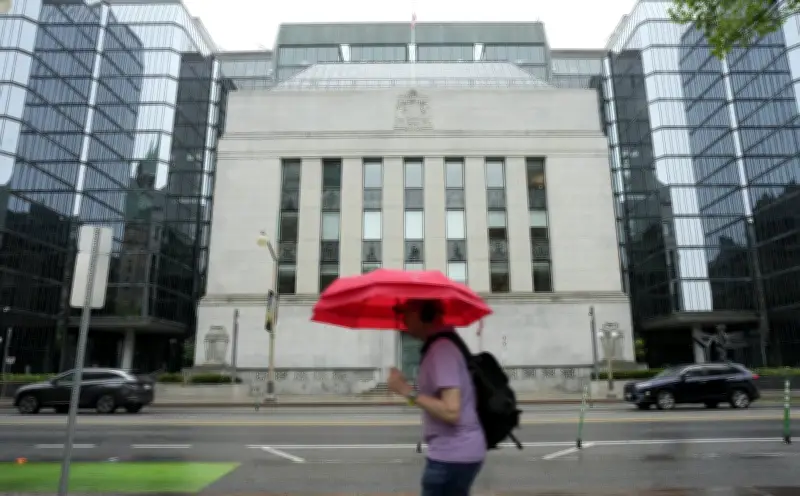
Bank of Canada officials appeared unfazed by the unexpected economic contraction in the first quarter of 2026, according to a report by The Canadian Press. The surprise decline in GDP did not trigger immediate concern among policymakers, who pointed to resilient underlying factors.
Economic Contraction Details
Canada's economy shrank by 0.6% in Q1 2026, defying analysts' expectations of modest growth. The contraction was driven by a sharp drop in exports and a slowdown in business investment. However, consumer spending remained robust, and the labor market continued to show strength with an unemployment rate holding at 5.2%.
“The Q1 GDP figures were a surprise, but the Bank of Canada is looking through the noise,” said Avery Shenfeld, managing director and chief economist at CIBC, in an interview with BNN Bloomberg. “The underlying economy is still performing well, and the central bank is likely to maintain its current policy stance.”

Central Bank's Response
In its latest monetary policy report, the Bank of Canada emphasized that the Q1 decline was largely due to temporary factors, including severe winter weather that disrupted supply chains and a one-time drop in energy exports. The bank reiterated its commitment to keeping interest rates steady at 4.5% until inflation, which currently stands at 2.8%, returns sustainably to the 2% target.
Governor Tiff Macklem stated that the central bank would not overreact to a single quarter of negative growth, noting that the economy is still operating above its potential. “We are monitoring the data closely, but we see no need for immediate policy adjustments,” Macklem said during a press conference.
Market Reaction
Financial markets initially reacted negatively to the GDP report, with the Canadian dollar dipping 0.3% against the US dollar. However, the currency quickly recovered as traders absorbed the Bank of Canada's calm stance. The S&P/TSX Composite Index also rebounded after an early drop, closing 0.2% higher.
Economists remain divided on the outlook. Some warn that the contraction could be a sign of deeper weakness, while others agree with the central bank's assessment. “We expect a rebound in Q2 as temporary factors fade,” said Shenfeld. “The Bank of Canada is right to stay the course.”
Broader Economic Context
The Q1 decline comes amid global economic uncertainty, with trade tensions and high interest rates weighing on growth. Canada's housing market has also cooled, with home sales down 12% year-over-year. However, strong immigration and a tight labor market are providing support.
The Bank of Canada's next policy decision is scheduled for July 15, 2026. Most analysts expect the central bank to hold rates steady, with a potential cut later in the year if the economy fails to recover.