United States President Donald Trump is happy with Canada's arrangement to allow a capped number of Chinese electric vehicles to be imported at a low-tariff rate, Prime Minister Mark Carney said.
Deal Details
The deal, unveiled during Carney's trip to Beijing in January, allows as many as 49,000 Chinese EVs in a 12-month period at a tariff rate of around six per cent, with that quota to climb gradually over time. Prior to this year, Canada had a tariff of more than 100 per cent on those vehicles.
Trump's Reaction
"He likes the structure, actually," Carney told reporters at the Group of Seven leaders summit in Evian, France, on Wednesday. "We had a follow-up conversation."

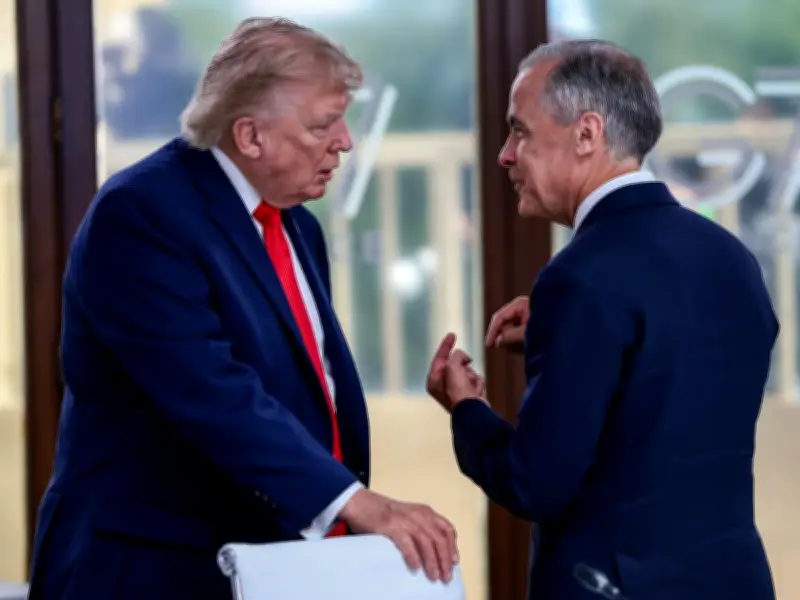
A hot mic captured Carney talking to Trump on Tuesday about the China deal and explaining how it capped the number of imported cars. "I thought you'd actually like that," Carney was heard saying. Trump appeared to agree, saying "that's good."
Asked Wednesday about the interaction, Carney said the topic came up because Trump inquired about it.
Bilateral Talks
Trump and Carney didn't have a formal bilateral meeting during the G7, though Carney said the two had conversations throughout the summit on a "wide range of subjects."
Canada's accord with China has been harshly criticized by members of Trump's administration, which has kept its 100 per cent tariff on Chinese EVs in place and is implementing a ban on the cars' software over national security concerns.
And the agreement remains a sensitive subject as Canada seeks to lower Trump's tariffs on foreign built cars.
Progress on Tariffs
Dominic LeBlanc, the Canadian minister responsible for the talks, met with U.S. Trade Representative Jamieson Greer on the sidelines of the summit Tuesday. LeBlanc later described it as a "constructive meeting," but was vague about whether concrete progress was made toward lowering tariffs.
Meanwhile, Industry Minister Melanie Joly is in China this week, in part to meet with Chinese carmakers. The government has sought joint ventures between Chinese and Canadian firms to build EVs in Canada, but on Wednesday Carney downplayed expectations for quick results.
Future Possibilities
Canada's EV deal with China "creates the possibility — possibility, not the certainty in any way — that this commercial relationship develops, and there's Chinese investment in Canada," Carney said.
Carney added that the investment he was referring to needed to be "material Canadian production" and that the government wasn't interested in so-called knockdown kits, where the cars are largely built in China but then shipped overseas for final assembly.