

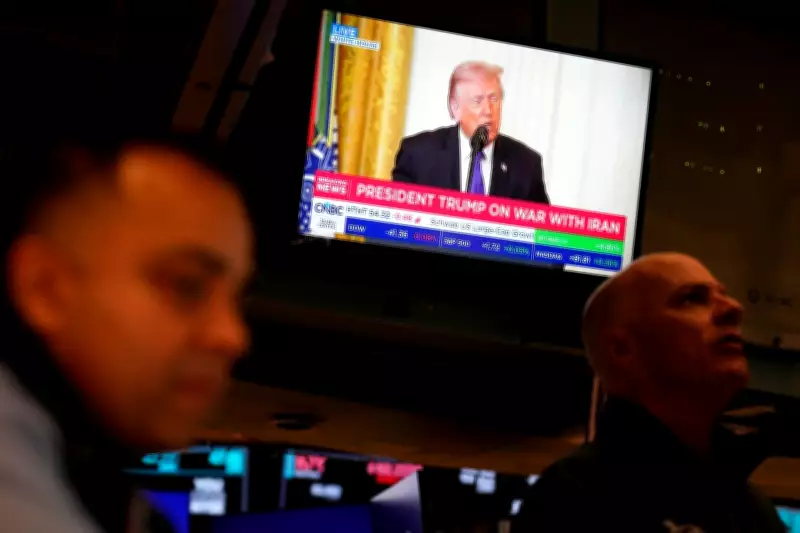
Trump's Market Influence Tactics Lose Potency Amid Prolonged Iran Conflict
President Donald Trump's established methods for influencing financial markets are encountering diminishing returns as the military engagement with Iran continues without resolution. Market analysts report that the president's characteristic approaches—including optimistic public statements, targeted policy announcements, and direct interventions—are failing to generate their previous impact amid the persistent geopolitical tensions.
Sustained Conflict Creates Economic Uncertainty
The extended military operations in the Middle East have introduced a new layer of unpredictability that appears resistant to traditional presidential market management techniques. Financial experts note that while Trump's communications once prompted immediate market reactions, investors now demonstrate increased skepticism as the conflict enters a prolonged phase with unclear economic consequences.
Market volatility has become more closely tied to battlefield developments and diplomatic maneuvers than to presidential pronouncements, representing a significant shift from earlier patterns. This change suggests that investors are increasingly factoring in the fundamental economic risks associated with sustained military engagement rather than responding primarily to political messaging.

Evolving Investor Psychology
Economic observers point to several factors contributing to this diminished presidential influence. The duration of the conflict has allowed market participants to develop more sophisticated assessment frameworks that prioritize tangible economic indicators over rhetorical interventions. Additionally, the global nature of modern financial markets means domestic political statements now compete with numerous international factors for investor attention.
The traditional correlation between presidential optimism and market rallies has weakened substantially as analysts incorporate war-related variables into their forecasting models. These include potential disruptions to oil supplies, increased defense spending implications, and broader geopolitical instability effects on global trade patterns.
Broader Implications for Economic Governance
This development raises important questions about the evolving relationship between political leadership and financial markets during extended international crises. The apparent reduction in presidential market influence suggests that:
- Investors are developing greater resilience to political messaging during sustained conflicts
- Market fundamentals are reasserting themselves as primary drivers of financial decisions
- The economic impact of prolonged military engagement creates conditions resistant to quick political fixes
Financial institutions are reportedly adjusting their risk assessment protocols to account for this new dynamic, placing greater emphasis on conflict duration and potential economic spillover effects than on presidential communications alone.
The changing market response to presidential influence attempts represents a significant evolution in how financial systems process geopolitical risk during extended international conflicts. As the Iran engagement continues without clear resolution, this trend appears likely to persist, potentially reshaping the traditional dynamics between presidential leadership and market behavior for the foreseeable future.






