

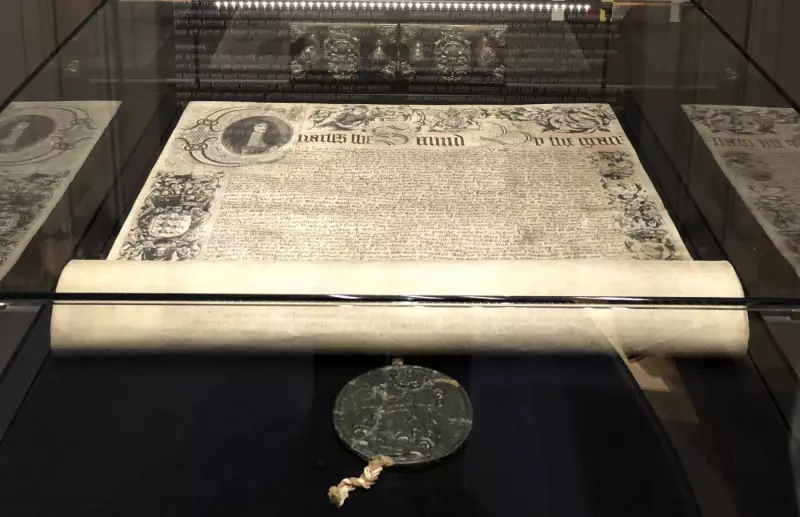
A significant chapter in Canada's corporate and colonial history is poised for a quiet transfer, as a bid by two of the country's most prominent business dynasties for the historic Hudson's Bay Company charter is expected to proceed without opposition.
Uncontested Acquisition of a National Artifact
According to a source familiar with the matter, the joint effort by the Thomson and Weston families to acquire the 1670 royal charter that established the Hudson's Bay Company will go uncontested. The document, signed by King Charles II, granted a sweeping monopoly over the vast territory known as Rupert's Land, shaping the early economic and political landscape of what would become Canada.
The charter is not merely a corporate relic but a foundational piece of Canadian history. It was most recently displayed publicly in 2020 at the Manitoba Museum in Winnipeg, where it was loaned to be exhibited alongside the institution's permanent collection of Hudson's Bay artifacts. This public viewing underscored its status as a national treasure as much as a corporate instrument.

The Significance of the 1670 Charter
The value of the charter extends far beyond parchment and wax seal. It represents the legal birth of one of the world's oldest commercial corporations, an entity that played a central role in the fur trade, exploration, and colonial administration in North America for centuries. Its acquisition by private families with deep roots in Canadian business raises questions about the stewardship of such historically sensitive items.
The Thomson family, through its investment holding company Woodbridge, controls Thomson Reuters and holds a major stake in The Globe and Mail. The Weston family controls George Weston Limited and the Loblaw Companies retail empire. Their combined interest in this artifact highlights its unique symbolic and potentially financial worth.
Implications for Heritage and Ownership
The uncontested nature of the bid suggests a private transaction, moving the charter from one form of private ownership to another. While details of the sale remain confidential, the event sparks a broader conversation about where such pivotal historical documents should reside. Museums and public archives often advocate for keeping nationally significant artifacts in the public domain to ensure access for research and education.
The fact that the charter was loaned to the Manitoba Museum just five years ago indicates a precedent for public access. Whether the new owners will continue this tradition of occasional public display or keep the document in a private collection remains an open question for heritage observers.
This development marks a pivotal moment, as a physical piece of Canada's origin story changes hands, potentially shaping how future generations will be able to engage with this tangible link to the nation's complex past.






