

Tech Leaders Reap Rewards After Aligning With Trump's Second Presidency
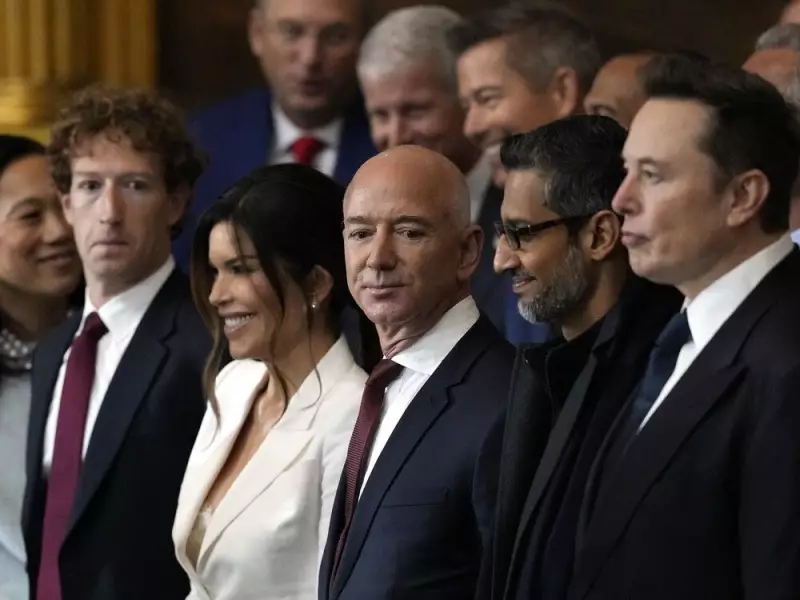
The inauguration of Donald Trump for his second presidential term in January featured prominent seating arrangements for America's Silicon Valley elite, including influential figures such as Elon Musk, Apple's Tim Cook, and Amazon's Jeff Bezos. These technology titans positioned themselves strategically during the ceremonial proceedings at the Capitol Rotunda, signaling their alignment with the returning administration.
Strengthened Connections Between Tech and Washington
Throughout the subsequent year, technology executives and their corporations maintained unusually close relationships with the president and his administration. This involved attendance at exclusive dinners, substantial donations to White House fundraising initiatives, and frequent visits to Washington with increasingly ambitious investment pledges for United States projects. The evolving dynamic represents a significant shift from previous administrations where tech leaders often maintained more distance from political operations.
Companies that previously experienced strained interactions with Trump began receiving regulatory relief, favorable policy adjustments, and in certain instances, lucrative government contracts. This transformation underscores the increasingly transactional character of Washington politics during Trump's second presidency and the emerging alignment between his administration and major technology corporations.

Elon Musk's Complex Relationship with the Administration
Elon Musk, the world's wealthiest individual, entered Trump's second term with an expansive business empire and substantial governmental influence, having contributed over $250 million to support the president's return to office. Despite experiencing challenges during his tenure leading the Department of Government Efficiency and a temporary rift with Trump during the summer months, which temporarily reduced Tesla's market valuation, Musk has returned to supporting MAGA initiatives.
The Tesla CEO continues donating to Republican causes and recently dined with Trump at Mar-a-Lago. Tesla's stock has recovered significantly, while Musk associate Jared Isaacman now administers NASA, where Musk's SpaceX serves as a primary contractor. Additionally, Musk's artificial intelligence model Grok secured a Pentagon contract and became accessible to multiple federal agencies. A federal framework for autonomous vehicles developed under the Trump administration, which aims to eliminate unnecessary regulatory barriers, promises substantial benefits for Tesla's robotaxi deployment ambitions.
Key metrics for Musk:
- White House and Mar-a-Lago visits: More than a dozen documented meetings
- Financial contributions: X paid $10 million to settle a lawsuit with Trump in February, with Musk spending at least $55 million supporting Republican candidates last year
- Wealth accumulation during Trump's second term: Approximately $234 billion
Jeff Bezos's Strategic Approach
Amazon founder Jeff Bezos dedicated considerable effort during the 2024 election cycle and its aftermath to cultivating relationships with the incoming administration, seeking to avoid the confrontational dynamics that characterized his interactions during Trump's first presidency. Bezos, who owns the Washington Post, made editorial decisions including discontinuing support for Kamala Harris and narrowing the newspaper's opinion section. Amazon invested $40 million in a documentary about First Lady Melania Trump scheduled for release this month.
Unlike numerous other American businesses, Amazon has refrained from joining legal challenges against Trump's tariff measures. Instead, the company emphasizes its tens of billions in data center investments that contribute to economic stability. Bezos's various enterprises, including space venture Blue Origin, have largely avoided becoming administration targets, representing a strategic shift in corporate-government relations.

The financial trajectories of these technology leaders during the twelve months following their Capitol Rotunda appearance illustrate the evolving nature of political-business relationships in contemporary Washington. Their experiences demonstrate how strategic alignment with presidential administrations can yield substantial economic benefits while reshaping the traditional boundaries between Silicon Valley innovation and federal governance structures.





