

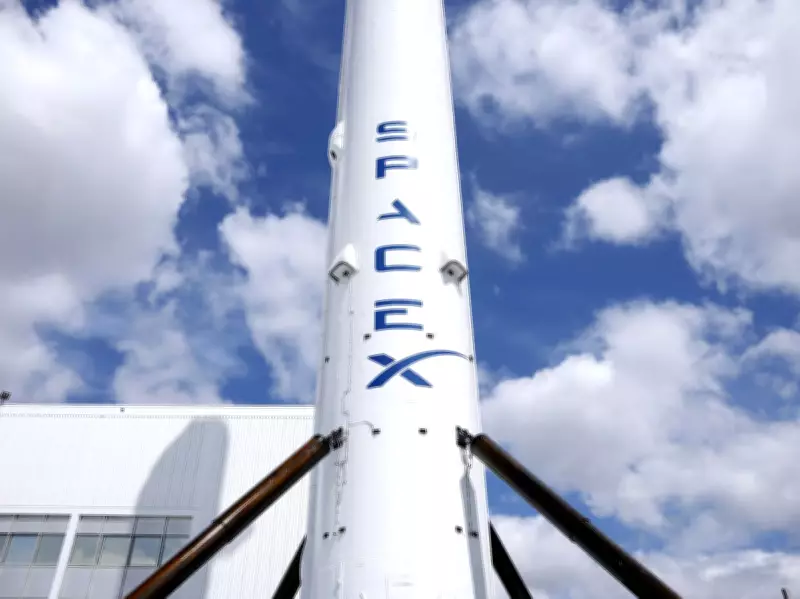
SpaceX's Monumental IPO Journey: Testing a $2 Trillion Valuation Dream
SpaceX, in collaboration with leading investment bankers, is set to commence critical meetings aimed at pressure-testing the company's targeted $2 trillion valuation. This pivotal step comes as the Elon Musk-led aerospace and artificial intelligence enterprise drives toward what could become the largest initial public offering in history, according to individuals with direct knowledge of the proceedings.
The Valuation Challenge: From $1.25 Trillion to $2 Trillion
Merely two months following its strategic merger with xAI, senior banking representatives are poised to initiate comprehensive discussions surrounding SpaceX's public market debut. The central question remains whether the company's ambitious valuation can continue to attract substantial investor interest. Current market expectations now place SpaceX's value above the $2 trillion threshold, a significant increase from the $1.75 trillion projection reported less than two weeks prior.
"What investors must be convinced of—and this will be the focus until public filing—is the continued ability to sell the visionary dream," explained David Erickson, adjunct associate professor at Columbia Business School and former co-head of global equity capital markets at Barclays PLC. "There's arguably nobody more skilled at selling ambitious dreams than Elon Musk himself."

Fundamental Disconnect and Market Comparisons
At a valuation exceeding $2 trillion, SpaceX would surpass all but five S&P 500 Index constituents: Nvidia, Apple, Alphabet, Microsoft, and Amazon. Despite generating substantially lower revenue figures, the company's market capitalization would dramatically overshadow both Meta Platforms and Musk's own Tesla—the remaining members of the so-called Magnificent Seven technology stocks.
Analyst estimates indicate such a valuation implies a price-to-sales ratio surpassing 100-times on a trailing basis. This would easily exceed even the lofty 79-times ratio of retail-favorite Palantir Technologies, currently the highest within the S&P 500 Index.
Revenue Projections and Musk's Public Response
Bloomberg Intelligence analysis projects SpaceX's rocket launch program and Starlink satellite network will generate the majority of company revenue, approaching $20 billion in 2026. Meanwhile, xAI is expected to contribute less than $1 billion during the same period.
SpaceX representatives have not provided immediate commentary regarding the valuation discussions. Elon Musk appeared to challenge the $2 trillion target in an April 3 social media post, cautioning followers "not to believe everything you read" about the company's valuation expectations.
"The reality is this isn't fundamentally about traditional financial metrics," emphasized Erickson. "Nobody reaches these valuation heights through conventional mathematical analysis because the numbers simply don't align with traditional valuation models."
Critical Launch Tests and Funding Ambitions
Two upcoming rocket test launches, scheduled ahead of a potential June trading debut, are considered crucial milestones for the IPO timeline. "If either of these two test flights encounters failure, there's a genuine possibility the IPO might not proceed as planned," noted Franco Granda, senior analyst at PitchBook. "These launches will fundamentally dictate the directional momentum toward the public offering."
Elon Musk confirmed via social media that the inaugural flight of SpaceX's latest reusable, super heavy-lift launch vehicle iteration is approximately four to six weeks away.
Industry reports indicate a SpaceX listing could potentially raise up to $75 billion, dramatically surpassing the current record held by Saudi Aramco's $29 billion 2019 debut. The substantial capital raised would be strategically deployed to fund Musk's visionary projects, including artificial intelligence data centers in space and establishing manufacturing capabilities on the lunar surface.






