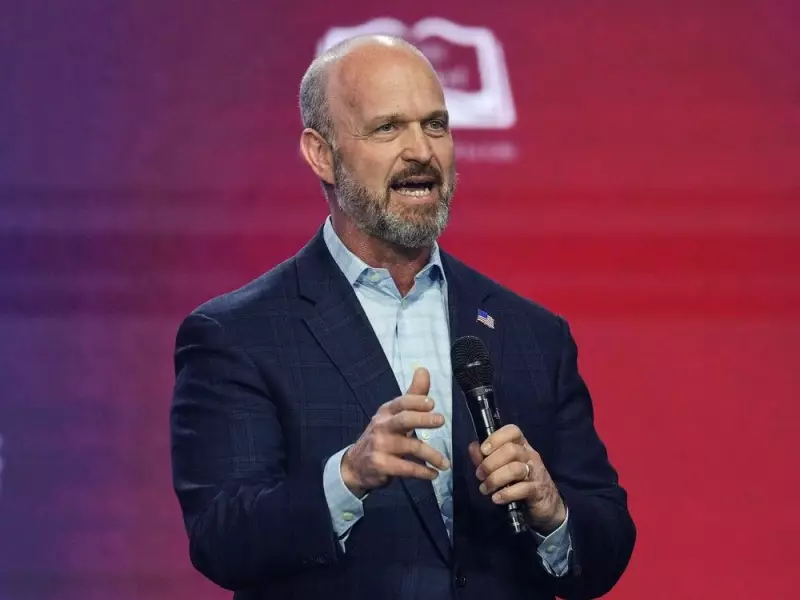
Economist Andrew Hale Departs Heritage Foundation Amid Leadership Controversy
WASHINGTON, D.C. — Andrew Hale, a prominent economist and trade expert with dual U.S.-U.K. citizenship and Canadian educational background, has resigned from the Heritage Foundation, a leading conservative think tank based in Washington, D.C. His departure stems from growing concerns about the organization's direction under President Kevin Roberts, whose controversial statements and associations have triggered a broader exodus of donors, staff, and board members.
Background and Career Trajectory
Hale's professional journey includes significant roles with the U.K.'s Defence Intelligence Staff and Department for International Trade, the U.S. State Department, and as an aide to a U.S. congressman. His most recent position was at the Heritage Foundation, where he served until this month. Hale's resignation follows his public campaign to expose abuses at Grenville Christian College in Ontario, which he attended as a teenager, demonstrating a longstanding commitment to accountability and ethical leadership.
Leadership Concerns and Organizational Impact
Kevin Roberts has garnered international attention in recent years, notably through his promotion of Project 2025 and his defense of Tucker Carlson's interview with Nick Fuentes, a figure often labeled as a white nationalist and antisemite. Roberts' criticism of what he termed a "venomous coalition" and "globalists"—interpreted by some as coded language targeting Jewish communities—has fueled accusations of antisemitic rhetoric. This controversy has precipitated a significant outflow of support from the Heritage Foundation, with Hale's resignation marking another high-profile exit.

In an interview with the National Post, Hale expressed his apprehensions about the changes he observed at the think tank. He has since transitioned to a new role as a fellow at Advancing American Freedom, where he aims to continue his work in policy and advocacy.
Failed Canadian Engagement and Political Fallout
The interview also revealed details about a cancelled presentation by Roberts to Canadian Liberal leaders, intended to guide their dealings with a potential Trump administration. Roberts had planned to speak in Toronto for Mark Carney's cabinet but disclosed the trip secretly during an all-staff meeting at Heritage, a move Hale described as ill-advised.
The engagement was scrapped after the Carney government issued a press release announcing Roberts' visit, sparking public outcry. Hale suggested that the cancellation was not purely ideological but rooted in political pragmatism. He noted that former U.S. President Donald Trump's unpopularity in Canada—due to remarks like referring to Canadians as the "51st state"—was leveraged by the Liberal Party to regain political traction, ultimately helping them form a minority government under Carney.
Broader Implications for Conservative Think Tanks
Hale's resignation underscores a broader trend of internal strife within conservative institutions, as leadership decisions and public statements increasingly influence organizational stability and credibility. The Heritage Foundation's challenges reflect ongoing debates about the role of think tanks in shaping policy amidst polarized political landscapes.
As Hale moves forward in his career, his departure highlights the critical importance of ethical leadership and transparent governance in maintaining the integrity of influential policy organizations. The exodus at Heritage serves as a cautionary tale for other think tanks navigating similar tensions between ideological purity and professional accountability.