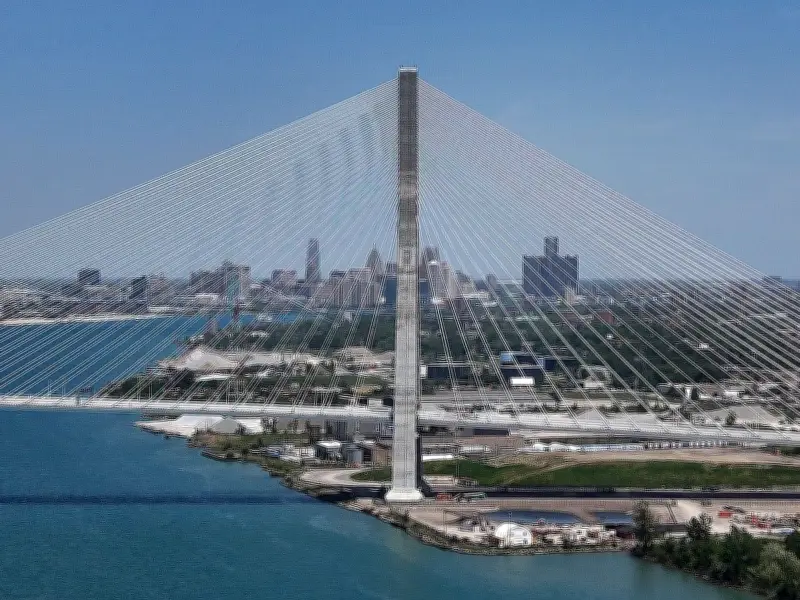
The financial reality of the Gordie Howe International Bridge highlights an addiction to inefficient infrastructure mega-projects, according to a letter writer from LaSalle.
Costs ballooned by 33 per cent
Construction costs ballooned by 33.3 per cent, from an initial $4.80-billion estimate to a final $6.40-billion contract. Total public allocations captured $6.96 billion, including a heavy $1.90-billion 30-year maintenance contract.
Alternative tunnelling approach
Had an agile, automated subterranean tunnelling framework like Elon Musk's Boring Company been deployed to conquer this 2.5-km Windsor-Detroit trade corridor, it could have saved the public treasury up to $4.5 billion. Instead, we built a traditional, above-ground steel span bogged down by bureaucratic inertia and cost inflation.

Canadian roots of innovation
Elon Musk's foundational history traces directly back to Montreal, where a seventeen-year-old Musk arrived in 1989 to attend McGill University. It was within these Canadian academic corridors that his physics-first principles began to crystallize.
Paradox in funding
It is a paradox: we are euphoric when it comes to pouring into mega projects, yet remain risk-adversed when it comes to funding the very foundational research that could yield breakthroughs of a Silicon Valley.
Lesson beyond civil engineering
The lesson here extends far beyond civil engineering. Moving forward, the true challenge in Canada is not merely balancing mega-project budgets, but fostering an ecosystem that retains its brilliant minds.
Driven by the perpetual need for “re-election assets,” politicians routinely opt for massive mega-projects as a shortcut to proving their efficacy. However, these legacy infrastructures frequently transform into inefficient capital sinks and incoherent debt spirals.
Proposed solution
We can utilize this predisposition to claw back a portion of the billions sunk into traditional infrastructure projects. By redeploying a fixed portion percentage of these massive capital streams toward real-world technology in our universities, we are financing less high-friction legacy systems and instead building a genuine, technological edge generating true long-term national wealth.
Simon Jacques
LaSalle