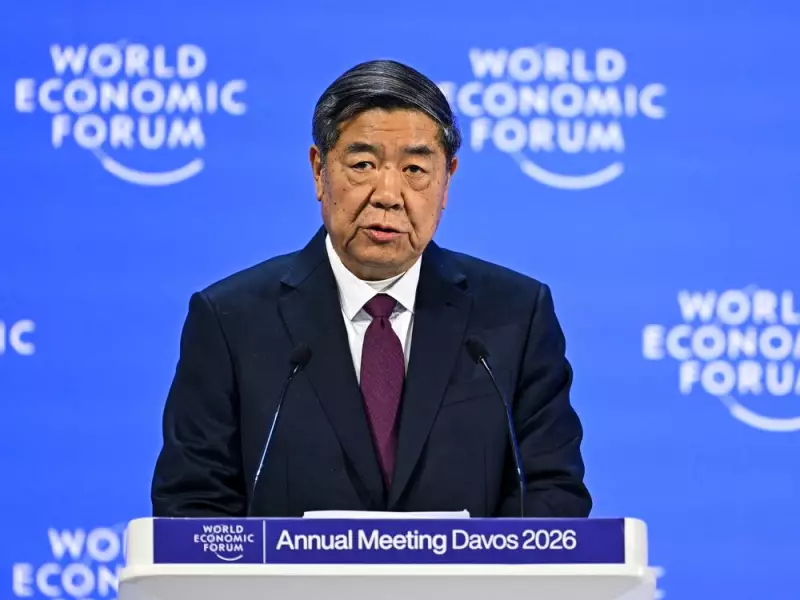
Chinese Vice Premier Courts Global Business Leaders at Davos Summit
In a significant diplomatic and economic outreach effort, China's Vice Premier He Lifeng conducted private meetings with an elite group of global corporate leaders during the World Economic Forum in Davos, Switzerland. This engagement represents a continuation of China's strategic practice of connecting with international business executives while attending the prestigious annual gathering.
High-Profile Executive Meetings
According to sources familiar with the matter, the Chinese trade negotiator met with several prominent CEOs during a private luncheon hosted by a World Economic Forum official. The distinguished group included:
- Tim Cook of Apple Inc.
- Jamie Dimon of JPMorgan Chase & Co.
- Ray Dalio, founder of Bridgewater Associates
- Raj Subramaniam of FedEx Corp.
- Michael Miebach of Mastercard Inc.
The World Economic Forum declined to comment on private participant engagements, while representatives from several of the involved companies either declined comment or did not immediately respond to inquiries about the meetings.

Economic Outreach Amid Global Tensions
These discussions occurred against a backdrop of ongoing economic recalibration between major global powers. The United States and China have recently stepped back from a trade confrontation that saw tariff levels escalate dramatically, though underlying tensions persist regarding supply chain dependencies and economic partnerships.
In his public remarks at Davos, Vice Premier He Lifeng emphasized China's commitment to international business collaboration, stating: "We welcome foreign enterprises to invest in China and share in China's opportunities. Should foreign enterprises encounter any problems in China, please do not hesitate to inform us – and we will actively address them."
Addressing Business Concerns
This reassurance comes as foreign companies operating in China have frequently raised concerns about various challenges, including:
- Intense competition from domestic Chinese firms
- Perceived market discrimination against foreign entities
- Bureaucratic delays in licensing and approval processes
- Increasingly stringent export control regulations
The Chinese government's outreach at Davos appears designed to counterbalance these concerns while reinforcing the nation's position as an attractive destination for international investment.
Broader Diplomatic Context
This economic diplomacy follows other recent high-level engagements, including Chinese President Xi Jinping's meeting with Canada's Mark Carney in Beijing prior to the Davos forum. The consistent pattern of Chinese leaders engaging with global business executives during international forums underscores Beijing's recognition of the private sector's crucial role in economic development and international relations.
The Chinese Foreign Ministry did not immediately respond to requests for comment regarding these private meetings, which occurred outside regular business hours in China.
As global economic fragmentation concerns persist, China's proactive engagement with corporate leadership at forums like Davos represents a strategic effort to maintain economic connectivity and demonstrate the nation's ongoing openness to international business partnerships despite geopolitical complexities.