Mark Carney’s industry minister, Melanie Joly, is in China trying to attract auto investment while Carney’s government attempts to kill off our existing auto industry. In an interview with the Globe and Mail, Joly explained how she wants Chinese-made electric vehicles to be built in Canada.
This is the opposite of what Canada’s existing automakers believe needs to be done to make us competitive and it’s likely something that will hurt any trade talks with the Americans.
“What is important is how can we make sure that we offer great vehicles to Canadians that are actually affordable, and with the latest technology, while keeping and protecting our 500,000 auto workers,” Joly told the Globe and Mail.

Chinese EVs Are Highly Subsidized
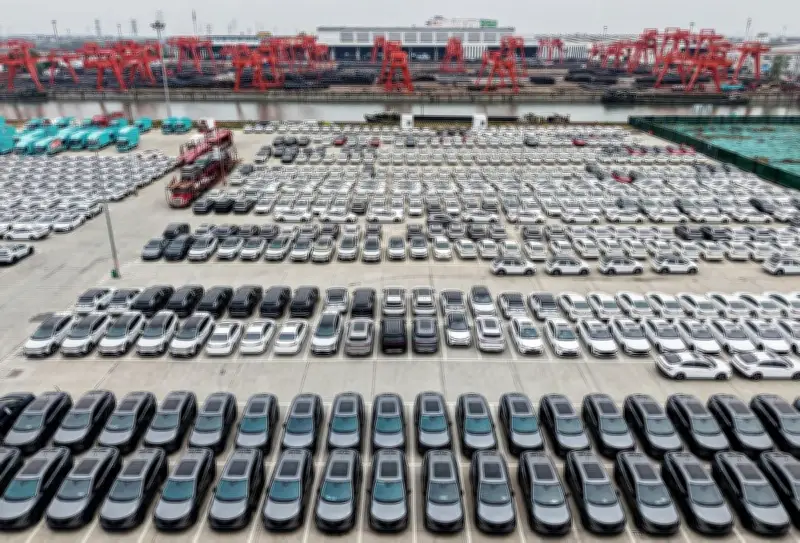
By making these “affordable” vehicles available to Canadians, what Canada is doing is killing Canadian jobs. Chinese electric vehicles are highly subsidized. Some estimates say the cheapest Chinese EVs have half of their production costs picked up by the government.
So, buying a “great car” for $20,000 that does more than a North American-made vehicle can do means you are allowing China to pay you to make your fellow Canadian unemployed. Companies that already make vehicles in Canada are noticing and last week Honda, the No. 2 producer of vehicles in this country, second only to Toyota, warned about the Chinese model, whether imports or a fake assembly plant.
“The concern is that large-scale imports, along with minimal assembly or knock-down operations, could create very real and obvious market imbalances,” Honda Canada president and CEO Dave Jamieson said in a speech. “This business model has made headlines and attracted attention. Why? Because it often involves limited investment, fewer jobs, and weak supply chain development.”
Honda Buys Canadian Parts, Chinese EVs Won’t
Honda has spent billions building their footprint in Canada, including partnering with Canadian parts makers to build products like the CR-V and Civic. Chinese plants won’t be buying Canadian parts. That is not how they operate. At best there will be a small assembly plant to put together kit cars like they are IKEA furniture.
Jamieson warned that between the plan to allow large numbers of Chinese imports into Canada, and ongoing federal government policy, it will be difficult to argue for Honda’s plant in Alliston, Ont. to keep getting new and high volumes of production.
“Auto production allocation is earned. Companies don’t automatically keep building vehicles in the same country just because it’s always been that way,” Jamieson said. “If Canada becomes more expensive or more complicated, or less competitive, we stand to lose future production allocation to another more favourable plant.”
We are definitely making ourselves less competitive. While the United States has moved away from an electric vehicle mandate model, the Carney government in Ottawa has dropped a strict EV mandate but is moving towards stricter tailpipe emissions. This will make building, and selling, cars in Canada more expensive – unless you are buying one of those Chinese made EVs subsidized by Beijing.
United States Doesn’t Like This Move
Meanwhile, the Americans have made it clear, they won’t be taking any Chinese EVs coming through Canada.
“Those cars are going to Canada — they’re not coming here,” U.S. Trade Representative Jamieson Greer said earlier this year. “I think in the long run, they’re not going to like having made that deal.”
Transportation Secretary Sean Duffy has also said this is a decision we will regret, and Ambassador Pete Hoekstra has said these cars won’t cross the border.
With the decisions the Carney government has been making on emissions policy, on Chinese EVs and more we are making ourselves less competitive. That won’t convince companies like Honda, or Toyota to stick around and keep producing here — especially if access to the American market is in question.
Trump’s tariffs are hurting our industry, but it may be our own policy moves are the ones that do the most damage.