Businesses Across America Push Back Against ICE with Signs and Legal Challenges
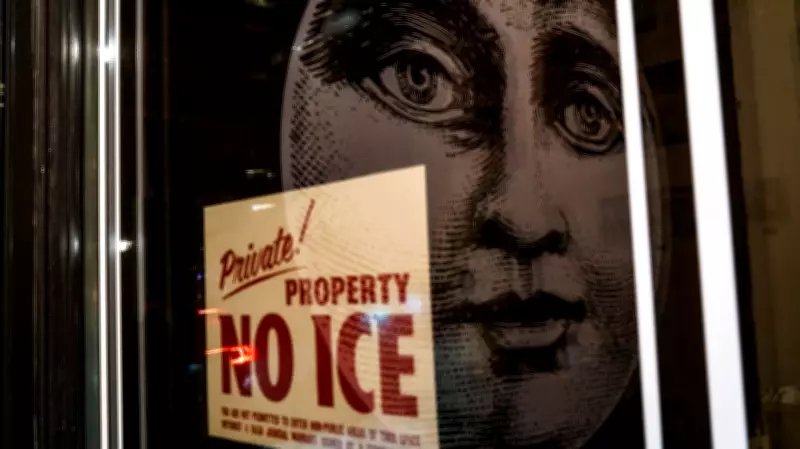
For over a year, Immigration and Customs Enforcement (ICE) has conducted a widespread deportation campaign affecting diverse groups, from American citizens exercising First Amendment rights to a recent case involving a 5-year-old boy. In response, small businesses nationwide are resisting in various ways, including prominently displaying signs stating they will not serve ICE officers. A visitor to Portland, Maine, last month reported seeing such signs on doors of thrift stores, coffee shops, and other local establishments, declaring ICE unwelcome. This action comes amid increased law enforcement presence in the area, causing distress in the liberal-leaning community. While Southern Maine is mostly white, immigrant communities from Somalia, Sudan, Iraq, and Iran reside there, making these signs a perceived tool for community protection.
Legal Confusion: Can Businesses Legally Ban ICE Officers?
The signs often read, "ICE agents may not enter private areas without a judicial warrant," but confusion persists about the legality of banning law enforcement from businesses. Last month, Crunch Fitness in El Paso, Texas, faced backlash after an internal memo urging employees to cooperate with ICE and "follow orders" was leaked. The memo went viral, leading to membership cancellations and debates over legal obligations. Subsequently, a Crunch location posted on Instagram, vaguely distancing itself from the franchise while reaffirming compliance with the law. To clarify these intricacies, legal experts were consulted to determine if businesses can technically deny entry to ICE officers and under what specific circumstances.
Expert Insights: When ICE Can and Cannot Enter
According to Jamene Christian, an attorney with the American Immigration Lawyers Association practicing in Georgia and Connecticut, ICE officers can enter public areas of a business without a warrant, such as lobbies, reception areas, and retail spaces. However, they need explicit verbal permission from the owner to access private areas like employee-only locker rooms, break rooms, storage areas, or back-of-house kitchens. Business owners can designate these spaces as private using signs and written policies. Christian emphasizes that even if ICE enters a public space, owners can demand they leave the premises.

Brandon Tillman, an Illinois-based attorney specializing in civil and criminal litigation, notes that if ICE has a warrant, it must be signed by a judge and specify the issuing court. Christian adds that if a warrant is erroneous, lacks specificity, or is fraudulent, owners can challenge it legally. She advises business owners to question ICE and ask them to leave if necessary, as many people unfamiliar with the law may not recognize a valid warrant. Another exception for entry is during emergencies, such as preventing harm or evidence destruction.
Protecting Businesses: Staff Training and Signage Strategies
For businesses concerned about ICE, Tillman and Christian recommend training staff on their rights, including how to read and interpret warrants, and clearly defining private areas. Christian states, "Consent, or rather lack of consent, is best affirmatively asserted. Although silence alone does not automatically constitute consent, failure to object or clarify that an area is not open to the public could later be argued as consent to enter." It is crucial for employees to distinguish between judicial warrants, which allow entry to private areas, and administrative warrants, issued by immigration officials and only authorizing arrests without private area access.
There is also debate over whether signs denying ICE entry attract unwanted attention or endanger undocumented staff and patrons. However, Christian argues that widespread signage can protect businesses by deterring ICE, as enforcement agencies may avoid targeting businesses where rights are asserted. She explains, "When a government enforcement agency knows that a citizen is aware of [their] rights, the enforcement agency will either make sure that paperwork is in order before targeting and interacting with the business owner, or move on to another business owner who, because there is no signage denying entry, will probably allow for non-authorized and illegal entry, inspections and or arrests."

Conclusion: Clarity Amid Fear and Confusion
While immigration enforcement continues to evoke fear and confusion, legal experts assert that the rules are clear, and ICE officers often exploit situations where rights are not fully understood. For business owners, knowing how to lawfully push back is a vital protection for themselves and their employees. As communities rally with signs and legal knowledge, this movement highlights the power of informed resistance in safeguarding immigrant populations.