

Asian Markets Retreat and Oil Prices Advance Amid Lingering Iran War Concerns
Financial markets across Asia witnessed significant downward pressure as stock indices fell broadly, while global oil benchmarks climbed once again. This dual movement reflects persistent investor anxiety over the uncertain trajectory of de-escalation efforts in the ongoing Iran conflict, which continues to inject volatility into worldwide economic conditions.
Market Reactions to Geopolitical Tensions
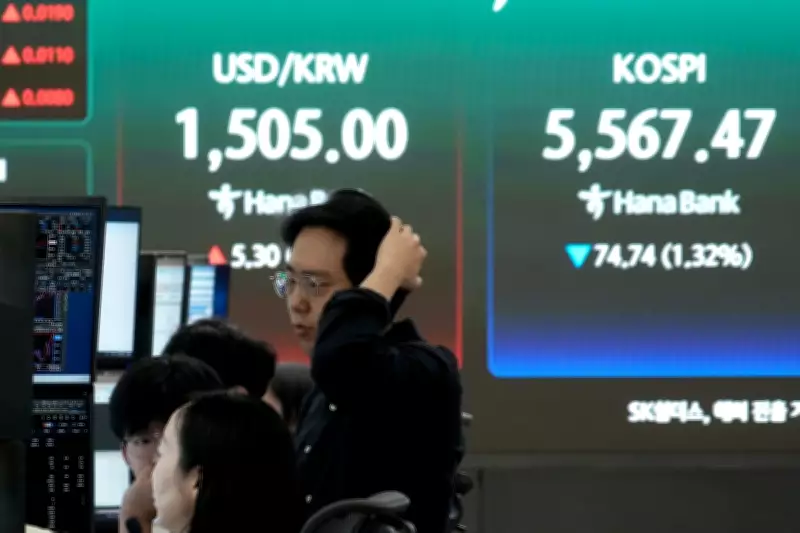
Currency traders and financial professionals monitored screens intently in trading rooms, such as the foreign exchange dealing room at Hana Bank headquarters in Seoul, South Korea. The Korea Composite Stock Price Index (KOSPI) displayed notable declines alongside fluctuations in the U.S. dollar and South Korean won exchange rate. This visual encapsulates the broader regional trend where uncertainty regarding Middle Eastern stability directly influences asset valuations and currency markets.
The retreat in Asian equities was not isolated, as markets responded to the complex geopolitical landscape where hopes for a peaceful resolution clash with fears of prolonged hostilities. Investors are reassessing risk exposures, leading to capital shifts away from equities perceived as vulnerable to supply chain disruptions or energy price shocks.

Energy Markets Respond to Supply Concerns
Concurrently, oil prices experienced another upward surge, building on recent gains. The escalation in crude benchmarks underscores market apprehensions about potential disruptions to oil supplies from the Persian Gulf region, a critical global energy artery. Any military engagement or sanctions escalation involving Iran could severely impact oil transit through strategic waterways, prompting preemptive buying and price support.
Analysts note that the oil market's sensitivity to Middle Eastern developments remains exceptionally high, with traders pricing in both immediate risks and longer-term supply uncertainties. This environment fosters volatility where even rumors or diplomatic statements can trigger sharp price movements, affecting everything from transportation costs to inflation expectations worldwide.
Broader Economic Implications
The simultaneous stock declines and oil price increases highlight the interconnected nature of modern global finance. Key implications include:
- Increased cost pressures for industries reliant on energy inputs, potentially squeezing profit margins.
- Currency fluctuations as capital seeks safe havens, impacting trade balances and central bank policies.
- Portfolio reallocations by institutional investors moving assets toward defensive sectors or commodities.
- Growth forecast revisions by economic institutions accounting for heightened geopolitical risk premiums.
Market participants are closely watching diplomatic channels and official statements for signals that could either calm or exacerbate the situation. Until clearer pathways toward de-escalation emerge, this pattern of equity market caution and energy market vigilance is likely to persist, testing the resilience of both regional and global economic frameworks.






