Air Canada CEO's Language Misstep Sparks Outrage After Tragic Crash
Air Canada faced a devastating tragedy when one of its Jazz flights, AC8646, crashed upon landing at New York's LaGuardia Airport late Sunday night. The accident claimed the lives of both the pilot and co-pilot, while a flight attendant was ejected and suffered a broken leg. Dozens of passengers were transported to hospitals with injuries, some of them serious.
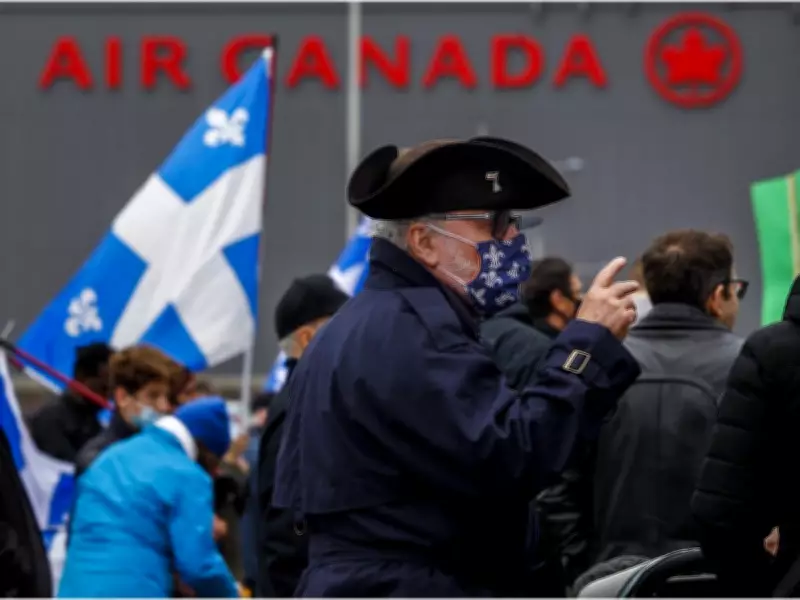
As the airline entered emergency management mode, CEO Michael Rousseau recorded a video message offering sympathies and reassurances. However, the video was delivered almost entirely in English, with only French subtitles and bookended by a cursory "bonjour" and "merci." This decision quickly ignited a firestorm of controversy across Quebec and federal political circles.
History Repeats Itself
This is not the first time Rousseau has faced criticism over language issues. Five years ago, shortly after becoming CEO, he delivered his maiden speech to the Montreal Board of Trade mostly in English. When questioned by reporters about his lack of French proficiency despite living in Montreal for 14 years, he gave responses that many found dismissive and insensitive.

That incident led to a parliamentary committee appearance where Rousseau spoke laborious French and answered many questions in English, even when they were posed in French. At the time, he apologized and vowed to learn the language, but this week's events have raised serious doubts about whether he ever took that commitment seriously.
Political Fallout Intensifies
The controversy has reached the highest levels of government. Prime Minister Mark Carney expressed disappointment, stating: "We proudly live in a bilingual country and companies like Air Canada particularly have a responsibility to always communicate in both official languages, regardless of the situation."
In Quebec City, Premier François Legault and others have called for both an apology and Rousseau's resignation. The federal official languages committee has summoned Rousseau to appear, while hundreds of public complaints have poured in regarding his unilingual video message.
Air Canada's Defense and Public Reaction
Air Canada explained that Rousseau isn't proficient enough in French to communicate a "sensitive message as effectively as he would have liked," hence the reliance on subtitles. However, critics argue that this explanation only highlights the CEO's failure to follow through on his commitment to learn French over the past five years.
Many have noted that the family of pilot Antoine Forest, a francophone Quebecer, might have appreciated hearing condolences in their native tongue, no matter how imperfect. Surviving crew members, passengers, and the broader public might have found greater comfort in a bilingual message during this difficult time.
Broader Implications for Corporate Leadership
Air Canada, as a corporation based in Montreal, has specific obligations under Canada's Official Languages Act. While most requirements pertain to in-flight services, the CEO's role carries symbolic importance in demonstrating respect for both official languages.
The controversy has raised questions about whether corporate leaders in bilingual regions have a responsibility to develop language skills that reflect their community's linguistic reality. As one commentator noted, what might have been seen as naivete in 2021 now appears as cluelessness in 2026.
As Air Canada continues to manage the aftermath of the fatal crash, it must also navigate a political firestorm that many believe could have been avoided with more thoughtful communication. The incident has left Rousseau with few excuses for his lack of French proficiency and has eroded trust in his willingness to address this longstanding issue.