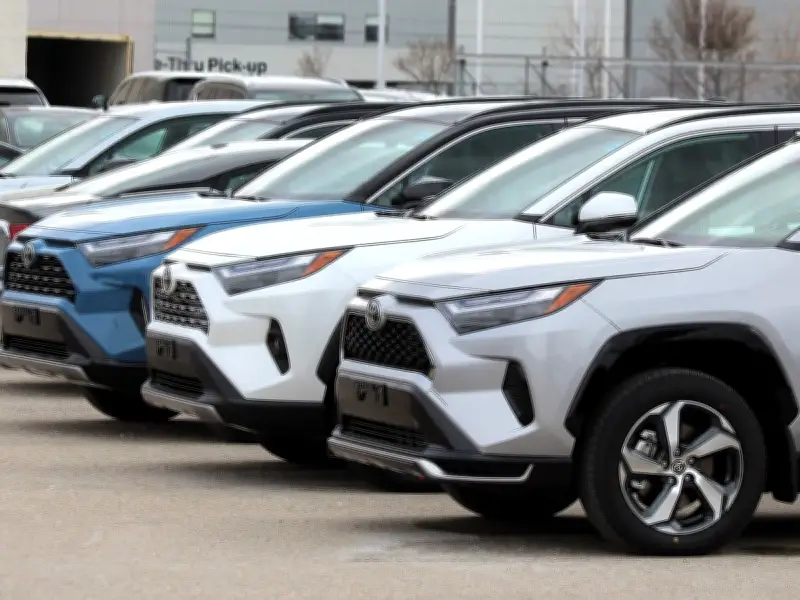
Most cars lose value the moment they leave a dealer’s lot. The Toyota RAV4 hybrid gains it. With the average transaction price of a new car in the U.S. now around US$50,000, used cars have surged in popularity, and no model exemplifies this trend better than the RAV4.
Price Inversion Defies Used-Car Economics
Used, late-model versions of the RAV4 hybrid often list for more than their original sticker prices, even with thousands of miles on their odometers. In some cases, they cost more than a new 2026 model fresh from the Toyota Motor Corp. factory. This price inversion seems to defy a natural law of used-car economics, but it illustrates some of the most powerful forces driving the United States auto market this year.
Rising Gas Prices Boost Hybrid Demand
The Iran war sent gas prices surging, with the national average for regular well above US$4 per gallon. Some car buyers have responded by snapping up used electric vehicles, which often sell at a steep discount from their original price. Others who are either unwilling or unable to go fully electric have turned to hybrids, which pair an electric motor with a gas-burning engine. Long considered a niche product in the U.S., they’re now highly coveted.

Production Lull Creates Shortage
For the moment at least, there aren’t enough new hybrid RAV4s to go around. Production hit a lull last year as Toyota stopped building the fifth generation of the compact SUV and started making the sixth. With fewer new RAV4s reaching showrooms, many would-be buyers have been stuck on waiting lists. Used versions — as long as they’re from a recent year and in good shape — command a premium, even topping the list price of a new car.
Fuel Efficiency and Reliability Drive Demand
The hybrid RAV4 gets upwards of 40 miles per gallon, well above the U.S. new-car average of 27.2 mpg. It’s popular enough that Toyota discontinued all non-hybrid versions of the RAV4, starting this model year. Brandon Wingate of Albany, Georgia, decided it was just what his family needed. He and his wife were sold on its roominess, Toyota’s reputation for reliability and the hybrid’s promise of savings at the pump.
Wingate paid US$32,000 in February for a 2024 RAV4 with 44,000 miles on it — a car that listed for US$38,735 when new. He drove about five hours across the state to test-drive it after spotting it online and was only able to haggle the dealer down US$500 to compensate for a small window crack.
No Room for Negotiation
“There’s no negotiating anymore — you basically pay the asking price,” said Wingate, 42, an IT technician. “I’m just glad to have bought when we did, because prices for the same vehicle are up anywhere from US$6,000 to US$8,000 since then.” Indeed, CarMax recently advertised a 2024 RAV4 Hybrid XSE with 29,000 miles for US$46,998, which is higher than that trim’s original US$38,735 sticker price.
Carvana listed a 2025 RAV4 Hybrid Limited with 5,606 miles for US$48,590. That’s a cool US$6,040 above the manufacturer’s suggested retail price when it was new. It’s also more than the US$43,300 sticker price of a 2026 Limited model.
Future Outlook
The shortage fuelling those high prices should end as Toyota scales up production. “We have a very methodical cadence of ramping up to ensure high quality,” Cooper Ericksen, Toyota’s North American head of product planning and strategy, said in an interview.