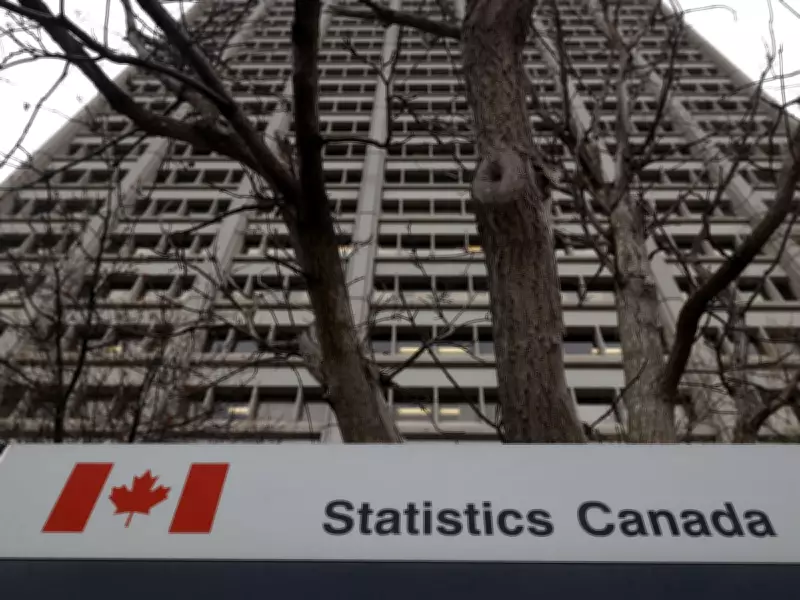
Statistics Canada will no longer publish detailed quarterly data on the economic well-being and financial stability of Canadian households, a move that some economists warn could obscure wealth distribution at a critical time.
Shift to annual releases
The Distributions of Household Economic Accounts (DHEA) reports will return to an annual release schedule, with data for the 2026 reference year scheduled for April 13, 2027. This change is part of broader cost-saving measures implemented by the agency this year.
Statistics Canada stated that its national balance sheet and financial flow accounts, which provide an aggregate overview of household wealth trends, will continue to be released quarterly.

CCPA raises concerns
The Canadian Centre for Policy Alternatives (CCPA) think tank warned in February that these cuts could result in "costly mistakes". In an open letter to Mélanie Joly, the minister responsible for Statistics Canada, the CCPA argued that "a cut to Canada's foremost data department is a cut to evidence-based decision-making."
The DHEA datasets break down income, consumption, savings, and wealth by demographic groups, including age, income cohorts, generations, and provinces. Quarterly releases served as an in-depth complement to the national balance sheet reports.
Background on frequency change
Statistics Canada began publishing household wealth distribution reports quarterly in 2020. Prior to that, the DHEA was released annually after the fourth quarter. Jasmine Emond, a communications officer at the agency, explained that the decision to return to annual releases was "made after careful deliberations on the best use of resources" as part of the 2026-27 departmental plan, following the federal government's fall budget and expenditure review.
Broader cuts at Statistics Canada
The agency's 2026-27 departmental plan, released in March, includes cutting 900 full-time staff and reducing spending by approximately $52.9 million in 2026-27, $69.7 million in 2027-28, and $95.9 million in 2028-29. These reductions will be achieved through program realignment and cost-saving efficiencies.
The CCPA's open letter urged reconsideration of these cuts, stating they would lead to "reduced data collection, diminished data quality, loss of vital expertise, silenced marginalized voices, less government accountability, costly mistakes, and less information in a time of turmoil and mis/disinformation."
Economists divided
Opinions among economists differ on whether the frequency of reports affects data quality. Some argue that quarterly data is essential for tracking Canadians' financial status amid "oil price shock and volatility in financial markets," while others believe annual data suffices for long-term trend analysis.