Canada's food inflation rate has reached 3.8 percent, the highest among G7 nations, according to Statistics Canada data released Monday. Grocery store prices have surged 4.3 percent year-over-year, with staples like tomatoes (up 45 percent), grapes (23 percent), and carrots (16.8 percent) seeing dramatic increases. This comes one year after Prime Minister Mark Carney declared the cost of living a key priority for his Liberal government, promising to bring down costs with urgency and determination.
Carney's Grocery Store Test Failed
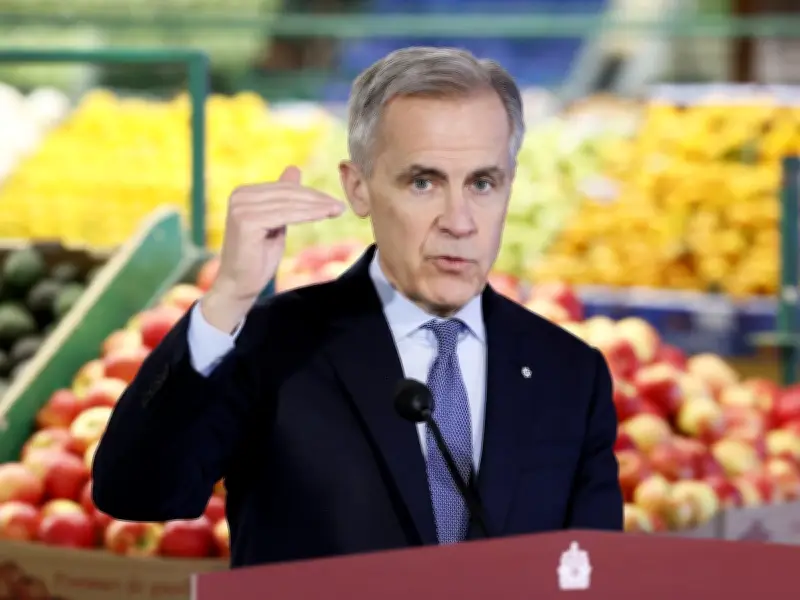
In January 2026, Carney made an affordability announcement at an Ottawa grocery store, stating that Canadians would hold his government accountable by their experiences at the grocery store. A year later, those experiences are marked by sticker shock. The prime minister had said, “Canadians will hold us to account by their experiences at the grocery store.” According to the latest data, Canadians are indeed holding him accountable as prices continue to climb.
Other significant price increases include canned salmon up 14.3 percent, coffee and tea up nearly 13 percent, whole chicken up 12.5 percent, beef chunk up 25 percent, bananas up 12 percent, and lettuce up almost 11 percent. The only notable decrease was soup, down 0.5 percent.

Structural Defects Blamed for High Prices
Michael Higgins, the author of the article, argues that while the Liberals may blame external factors like Ukraine, Donald Trump, tariffs, or climate change, the main reason for high grocery bills is a lack of competitiveness driven by structural defects. These include interprovincial trade barriers and the carbon tax. Supply management, intended to stabilize prices for items like poultry, is also failing, which Higgins calls “supply mismanagement.” He claims Liberal cowardice prevents tackling this thorny issue.
Sylvain Charlebois, a professor at Dalhousie University and an expert on food distribution, security, and safety, echoed the sentiment that the problem is homegrown. In a post on X, he stated, “Canada’s return to the top of the G7 food inflation rankings should concern policymakers. At 3.8 percent, food inflation isn’t a crisis, but it is a signal. Most G7 countries face the same global pressures. The fact that Canada continues to underperform suggests our food affordability problem is increasingly homegrown, not imported.”
Carney's Broken Promise
A year ago, Carney acknowledged that Canadians had sent a clear message that their cost of living must come down. He pledged to act with urgency and determination to bring down costs and make life more affordable. However, food prices have risen every month since then. The prime minister’s own words now serve as a benchmark for failure: Canadians are experiencing shock at the grocery store, and they can point directly to the Liberal government as responsible.