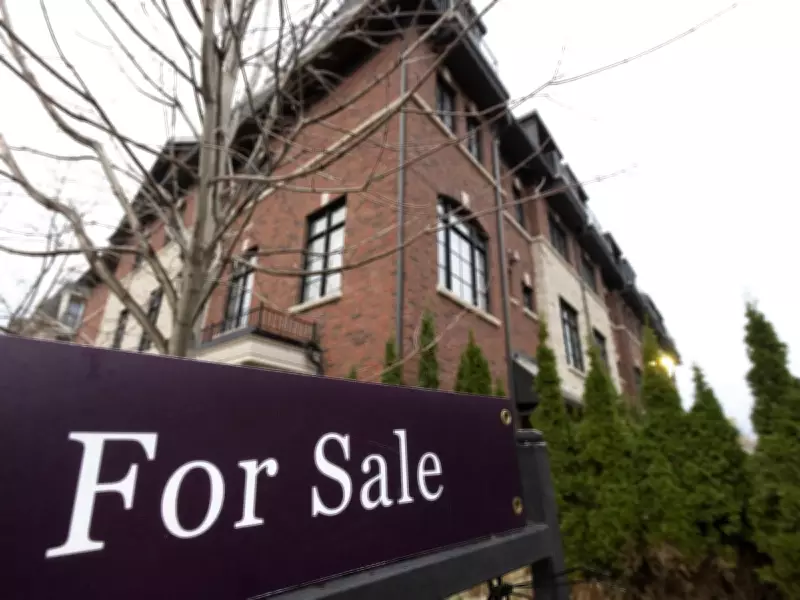
Josh thought he had cracked the code to homeownership after he bought a three-bedroom house with a basement unit in Toronto five years ago. Eager to avoid moving again, the tech manager, who asked not to be named to protect his privacy (He said Josh L. is fine), went beyond his budget and took on a larger mortgage to purchase a $1.3-million property with his wife, with the plan being to rent out the basement to help pay it off.
The move seemed to work well initially. His real estate agent got him his first tenant, who stayed for two years before moving out in 2023. Josh was then overwhelmed with “tons and tons” of responses when he relisted the unit.
“I could raise the rent a lot,” he said. “I think about 30 per cent.”

But by the time his second tenant moved out in mid-2025, Josh began to see a different reality in the rental market. Very few people responded to his advertisement and most of the applications weren’t ideal, he said, since many didn’t have a stable job and others wanted to live with four or five roommates. Eventually, he had to reduce the rent to $1,765 from $1,925 before finally getting a couple to move in at year-end.
“I am relieved, but it was a huge change,” he said. “It was a big amount of stress that was added to the lives of my wife and I. We were really worried.”
Josh said he believes the key reason behind the change was the decline in Canada’s immigration growth rates. Canada’s population grew at a record pace between 2021 and 2023 by roughly one million people each year. The federal government at the time made it easier for foreign workers and international students to enter the country right after the pandemic since there were hundreds of thousands of job vacancies. But the sharp increase in the number of people also played a role in worsening the housing crisis, which led to multiple offers for rental units such as the one Josh was offering in 2023.
That all changed in 2024 when the federal government decided to limit the number of foreign students and workers coming in, followed by subsequent decreases in the annual immigration targets. Those policies and a few more taken by the government led to a decline in the population growth rate for the first time ever in 2025 — a decrease of 0.2 per cent or about 102,000 people, according to Statistics Canada.
As a result, asking rents — the rent landlords advertise — have declined by about $200 per month since peaking in early 2024, according to Giacomo Ladas, an associate director at Rentals.ca, but this is still $300 to $400 higher on average than pre-pandemic levels. Prior to the pandemic, rents increased by a couple of percentage points each year, but he said that trend got “thrown out of the window” starting in February 2021. Between 2021 and 2024, annual asking rents in Canada increased by about $500 a month.
Homeowners who entered the market at its peak on the hopes of renting out their property to help pay off their mortgage are now facing a different reality. The collapse in rental demand, driven by immigration policy shifts, has left many landlords struggling to find tenants and forced to lower rents. This has put additional financial strain on those who stretched their budgets to buy homes, as they now face higher carrying costs without the expected rental income.