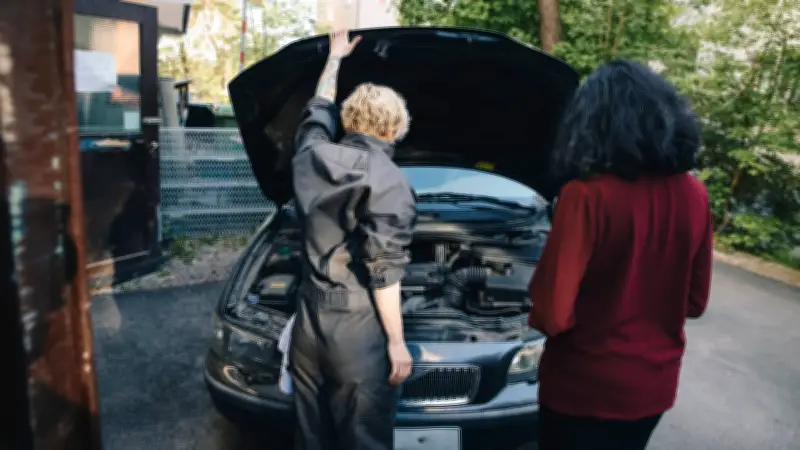
Your car is one of the most expensive and important investments you'll ever make, yet many owners neglect proper maintenance. Automotive technicians see the consequences daily. "My job is to give you an overall state of health of your car, so you can make educated decisions on what to do with it," said Bogi Lateiner, a Phoenix-based master automotive technician and owner of Girl Gang Garage.
Too often, drivers make maintenance decisions—or fail to act—in ways that create safety hazards and lead to costly errors. Here are the top 10 things car repair experts say they would never do, and what you should avoid.
1. Never Skip Regular Maintenance
Lateiner equates oil changes to brushing teeth: "Can you get away with only brushing your teeth once a month? You'll survive, but you're going to lose your teeth and you're going to lose your friends." She says neglecting preventative maintenance is the most common mistake. "Preventative maintenance is always less expensive than the repair." Oil is the lifeblood of the engine, keeping it cool and lubricated. When oil breaks down, the engine can deteriorate catastrophically. Lateiner recommends changing oil every 8,000 miles on a full synthetic oil change for European cars, about half the manufacturer's recommended 15,000-mile interval.

2. Don't Rely Solely on Maintenance Reminders
Robin Reneau, owner and lead technician of Georgia Auto Solutions, warns against depending on oil change reminder stickers. "You might not always drive the same amount of miles within the recommended interval," she told HuffPost. Driving conditions like frequent short trips, towing, or extreme temperatures accelerate oil degradation. Instead, Reneau checks her car's oil level and condition regularly to track consumption and determine when to change it.
3. Avoid Aftermarket Car Parts
Grace Claudio, a master automotive technician for BMW Manhattan, says to steer clear of aftermarket parts. While cheaper, they often cause issues. She gave an example of an aftermarket battery that the car doesn't register, leading to malfunction. "I've had it where things come apart, and it makes it worse than it already was," Claudio said, resulting in more expensive repairs. OEM (original equipment manufacturer) parts are specifically designed for your vehicle.
4. Use Only Manufacturer-Recommended Fluids and Fuels
Lateiner stresses using the correct coolant, oil, and fuel. "If your car is asking for 91-octane gas, you have to use 91-octane." Using different fluids leads to bigger repair issues. She has seen European cars with odd symptoms that disappeared after switching to the proper oil.
5. Don't Buy Over-the-Counter Leak-Stop Products
Lateiner warns against products that promise to stop leaks in engine oil, coolant, power steering fluid, or tires. "It's a Band-Aid. A temporary solution at best, and very often it causes more damage than good," she said. Tire leak products can make a mess of the rim, making tire changes difficult.
6. Consider Climate Before Changing Exterior
Cheyenne Ruether, a master auto body technician in Las Vegas, prefers painting over car wrapping, especially in sunny states like Nevada. "UV rays are so extreme that they often cause cracking or delaminating relatively quickly," Ruether said, and wraps are a pain to remove.
7. Don't Layer Ill-Fitting Floor Mats on Driver's Side
Claudio sees customers layering rubber mats over carpet mats on the driver's side. Improperly fitted mats can get stuck on the accelerator, causing unintended acceleration, or behind the brake, making braking difficult. She recommends removing the carpet mat and using a properly fitted mat that clears the pedals.
8. Never Ignore Warning Lights
Lateiner says warning lights are the car's way of communicating issues before they become serious. "That's the only way the car has of telling us that something is wrong, before it gets so wrong that you're on the side of the road," she explained. Check the owner's manual for what the light means and consult a shop if needed. "It's always better to know than not to know."

9. Don't Replace Tires With Used Tires
Claudio warns against buying used tires, as sellers may provide incorrect sizes or tires with sidewall bubbles. Even if the tire looks normal, age is a hazard. Tire manufacturers like Michelin recommend replacing tires no later than 10 years after manufacture; many car makers say every six years. Check the Tire Identification Number on the sidewall: the last two digits indicate the year, the first two the week of manufacture.
10. Never Lie to Your Mechanic
Lateiner says technicians often hear, "I don't know what happened, it just suddenly started making this weird noise," when the evidence shows off-roading with a low-profile car. "The more accurate information you can give us, the quicker we can get to the actual problem," she said. Keep track of when the noise occurs, and consider recording audio or video to show the technician.
Proper car maintenance involves upfront costs and research but saves headaches and money in the long run.