On June 23, The Globe and Mail hosted INTERSECT/26 Vancouver, convening elected officials, industry leaders, and policymakers to debate strategies for securing British Columbia's economic resilience and growth. The province benefits from abundant natural resources, a diversified industrial base spanning energy, mining, technology, and trade, and its strategic position as Canada's gateway to the Asia Pacific. However, high costs of doing business and living, infrastructure constraints, regulatory complexity, labour shortages, and global trade uncertainty continue to test its competitiveness.
Opening Remarks and Economic Overview
The event opened with remarks from Wendy Cox, B.C. Bureau Chief at The Globe and Mail; David Walmsley, Editor in Chief; and Bill Cunningham, Executive Vice President of Business and Commercial Banking at Vancity Credit Union. Judith Bosire, Chief Economist at Vancity, then delivered an inside look at the B.C. economy, outlining pressures, priorities, and prospects.
Bosire highlighted that B.C.'s economy is projected to grow modestly in 2025, with GDP growth around 1.8%, constrained by high household debt and a tight labour market. She emphasized that while natural resource exports remain strong, the province must diversify further to reduce vulnerability to global shocks.

Unlocking Business Growth
Former Premier Christy Clark, now Senior Advisor at Bennett Jones LLP and podcast host, joined moderator Patrick Brethour, Editorials Editor at The Globe and Mail, to discuss unlocking business growth. Clark argued that regulatory streamlining and investment in infrastructure are critical: “We need to cut red tape and speed up project approvals to attract capital. B.C. has the resources—now we need the will to act.” She cited the LNG Canada project as an example of what can be achieved with coordinated policy.
Clark also stressed the importance of fostering innovation in clean technology and life sciences, sectors where B.C. has emerging strengths.
CEO Perspectives: Priorities for Today
A CEO panel featured Alison Nankivell, President and CEO of Export Development Canada (EDC); Sarah Huggins, Co-founder and COO of Hiive; and Carl Hansen, CEO of AbCellera, moderated by Sean Silcoff, Technology and Life Sciences Reporter at The Globe and Mail. Nankivell noted that Canadian exports to Asia-Pacific have grown by 15% annually over the past three years, and B.C. is poised to capture more of that market. However, she cautioned that trade diversification requires investment in port capacity and digital infrastructure.
Huggins highlighted the challenges for tech startups: “Access to talent is the number one barrier. We need better alignment between immigration policy and industry needs.” Hansen added that B.C.'s life sciences sector could double in size by 2030 if lab space and funding are expanded, but regulatory hurdles remain a drag.
B.C.'s Energy Future
Merran Smith, President of New Economy Canada, and Ellis Ross, Member of Parliament for Skeena-Bulkley Valley, debated B.C.'s energy future, moderated by Brent Jang, Business Reporter at The Globe and Mail. Smith advocated for a rapid transition to renewables, noting that B.C.'s hydroelectric capacity provides a foundation for green hydrogen and electrification. Ross countered that natural gas and critical minerals are essential for both economic growth and global decarbonization: “We can't abandon our resource sectors—they pay for schools and hospitals.”
The discussion underscored tension between environmental goals and economic realities, with both speakers agreeing that clearer policy signals are needed to attract investment.
Mining and Critical Minerals
JP Gladu, Principal of Mokwateh, and Michael Goehring, President and CEO of the Mining Association of British Columbia, examined the province's opportunity in mining and critical minerals, moderated by Ryan MacDonald, Editor of Politics & Economy. Gladu emphasized Indigenous partnership: “Free, prior, and informed consent is not a barrier—it's a pathway to faster, more sustainable projects.” Goehring reported that B.C. has over 30 critical mineral projects in development, but permitting times average 10-15 years, far longer than in Australia or the U.S.

Goehring called for a provincial critical minerals strategy with streamlined permitting and infrastructure investment, noting that global demand for copper, nickel, and lithium is expected to surge 400% by 2040.
Policy Priorities for Energy and Critical Minerals
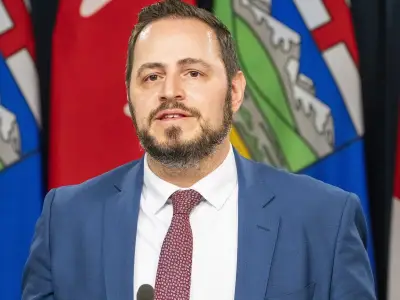
The Honourable Adrian Dix, B.C. Minister of Energy and Climate Solutions, and The Honourable Jagrup Brar, B.C. Minister for Mining and Critical Minerals, outlined their policy priorities in a joint session moderated by Ryan MacDonald. Dix announced a new Clean Energy Action Plan, including $500 million for grid modernization and incentives for clean hydrogen production. Brar committed to introducing a Mining and Critical Minerals Strategy by early 2026, with a goal to reduce permitting timelines to five years.
Both ministers acknowledged the tension between accelerating development and meeting environmental commitments, but stressed that B.C. can achieve both with innovation and collaboration. The event concluded with a call for sustained dialogue between government, industry, and communities to secure B.C.'s economic future.