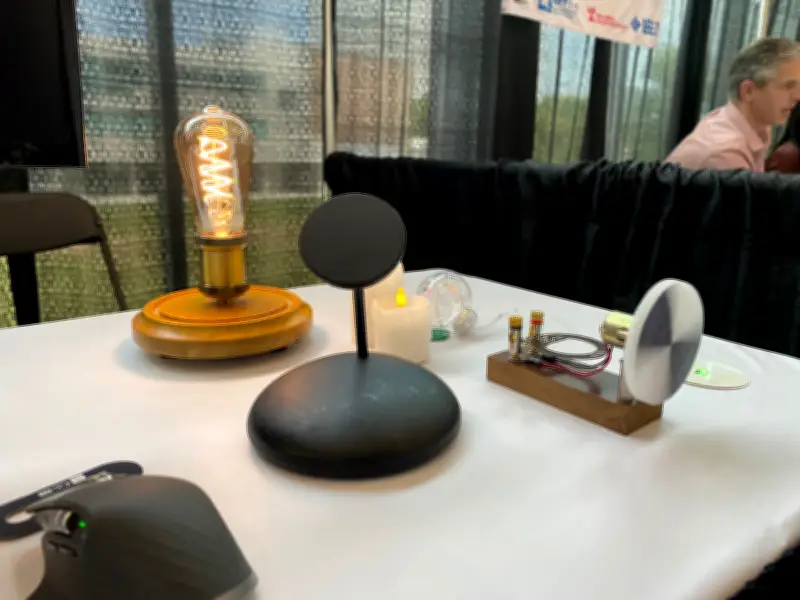
Leading researchers and engineers in wireless power technologies have converged in Halifax to showcase the latest advancements in the field. The gathering, which took place on July 7, 2026, highlighted innovations that could revolutionize how electronic devices are charged, potentially eliminating the need for cords and traditional batteries.
Breakthroughs in Wireless Energy Transfer
The event featured demonstrations of cutting-edge systems capable of transmitting power over distances of several meters with high efficiency. One notable presentation showed a prototype that could charge multiple devices simultaneously within a room, using magnetic resonance technology. According to Dr. Sarah Mitchell, a lead researcher at Dalhousie University, "We have achieved over 90% efficiency in power transfer at a range of three meters, which is a significant milestone for practical applications."
Potential Applications Across Industries
The technology has broad implications for consumer electronics, medical devices, and industrial equipment. In the medical field, wireless power could enable implantable devices to be charged without invasive procedures. For electric vehicles, road-embedded charging pads could allow for dynamic charging while driving. "This could transform the electric vehicle industry by reducing range anxiety and the need for large batteries," said engineer Mark Chen from Nova Scotia Power.

Collaboration and Future Steps
The conference brought together researchers from universities, startups, and established tech companies. A key focus was on standardizing wireless power protocols to ensure compatibility across devices. The group plans to publish a white paper outlining technical specifications and safety guidelines by the end of 2026. "Collaboration is essential to bring this technology to market," noted conference organizer Dr. Emily Wong. "We are working with industry partners to pilot wireless charging stations in public spaces within the next two years."
Challenges Ahead
Despite the progress, challenges remain in scaling the technology for widespread use. Interference with other electronic devices, health concerns regarding electromagnetic fields, and cost are among the issues being addressed. Researchers emphasized that current systems comply with international safety standards and that ongoing studies are monitoring long-term effects.
The Halifax event marks a significant step toward a future where wireless power is commonplace, promising greater convenience and new possibilities for technology integration.