Sandy Scott's house looked like chaos. The living room in his northeast Calgary home served as an informal warehouse with rows of shelves and racks. Computers, inventory and sheet metal were stored outside one bedroom. A bathroom became a 'liquids lab' for his fledgling enterprise.
For the co-founders of CoolIT Systems — Alexander 'Sandy' Scott, Brydon Gierl, and Jason Myers — the small home became the launching pad of their embryonic venture in the early 2000s.
'The furnace room was the machine shop. I could literally touch the walls, sitting at a little desk,' recalls Gierl.

'Stuff was just all over the place. It looked like sort of a madman's house,' Myers says with a laugh. 'It was pretty, pretty unorganized.'
From those unassuming beginnings, CoolIT took its initial steps. It marked the opening chapter in the unlikely tale of a tiny company that would eventually be sold for more than $6 billion this year.
More than 25 years ago, the Calgary startup began its quest to use liquid cooling systems to tame the issue of excessive heat generated by gaming computers. In their search for answers, Gierl, who worked in a local metal fabrication shop, teamed up with his neighbour, Myers, and friend, Scott, to establish CoolIT. The business was incorporated on Feb. 27, 2001, and the research, testing and manufacturing was conducted in Scott's basement, one of several unconventional steps in its improbable journey.
An initial patent application for CoolIT included a reference to a 'flux' conductor — a nod to the fictional 'flux capacitor' that turned a DeLorean into a time machine in the 1985 film Back to the Future — as they expanded their research. Early board meetings were held around a backyard firepit.
What happened next were a series of ideas and advances, innovations and adjustments, along with missteps and bleak times when it appeared the lights would be turned off, permanently. But last month, CoolIT Systems was sold to Minnesota-based giant Ecolab for an eye-popping $6.6 billion (US$4.75 billion) in cash, a giant exclamation point for a company that was cash-starved for years.
It marks the largest sale of a technology business in Alberta history. And it's not the end of the tale. Today, the Calgary-based company finds itself in the middle of a bigger story, the quest to reduce excessive heat from high-speed computer chips, the rise of artificial intelligence and the development of billion-dollar data centres.
Not a bad piece of business for a company that was only 48 hours away from the CEO nearly pulling the plug a decade earlier, before a last-ditch effort unearthed a new investor.
'I would say for many years, my mind would go from, 'Wow, this could be truly revolutionary, to my brain would be like, this will never work,'' says Myers, who was president and chief fundraiser in CoolIT's formative years. 'How could three guys possibly come up with something like it — why doesn't Dell or HP or Intel, you know?'
The company now has more than 600 employees and manufacturing facilities in Calgary, Vietnam and China. Its new owner has a US$105 billion market capitalization and plans for growth as more data centres are built. It expects CoolIT will generate US$550 million (more than C$750 million) in sales over the next 12 months.
'As I like to joke, for about 20 of those years, we were on the verge of world domination or bankruptcy,' recalls Dean Prodan, an early investor and former CoolIT board chair. 'I always thought that it was going to be big. I mean, I joke about world domination. But I always felt like there was this path to success.'
An idea for computer coolers
It all began with a surprise visit. Gierl was working at a metal fabrication shop in east Calgary when Scott unexpectedly strolled through the doors one day in 1999 with a problem to solve. Could Gierl help him build a solution that would use liquid cooling to reduce heat generated when video gamers would 'over-clock' their computer processors, speeding it up to boost its performance.
'He literally walked through the door one afternoon and had a box full of computer parts, and he just pitched me this idea right on the spot. He knew I was good with my hands, and had the shop and had some tools,' says Gierl. 'That was really it. There was no major plan. We thought we'd spend a couple weekends and hammer away at this idea.'

Weekends turned into weeks. And then months. And then years. It certainly didn't feel like world domination was at hand during the early days.
Gierl, who'd grown up on a farm near LeRoy, Sask. — population 500, with a graduating high school class of six — had moved to Calgary in 1990, attracted in part by the city's burgeoning music scene. The drummer met Scott, who sang and played bass, at a house party. The two musicians soon played in a local rock band called Nevermore; Gierl later joined another band and the two lost touch for several years. So it was a surprise when Scott, an avid video gamer, showed up at the shop in the Greenview Industrial Park.
The pair soon decided to work together on the issue and studied how to best use liquid-cooling technology in desktop computers. 'Sandy was the one that came up with the genesis, the idea,' says Gierl, 55. 'Truthfully, I'm not interested in computers, whatsoever. But the problem of solving the heat thing was really intriguing to me.'
Scott, who attended Western Canada High School, wasn't an engineer — he worked in construction — but he understood the problem. His sister, Carol Klippenstein, recalls Scott had a mechanical mind, and would 'soup up' vehicles he'd bought to improve upon their original design. At CoolIT, Scott had a slide rule on his desk — essentially a manual pre-calculator tool — that had belonged to his father, who was an electronics engineer.
Klippenstein says their father worked at one time for Pan American World Airways on the Apollo space missions when the company was a NASA contractor at Cape Kennedy in Florida. 'One day, (Sandy) just came up with this idea that computer coolers were needed for gaming,' says Klippenstein, who with her husband, Benno, were among the company's first investors. 'Sandy just decided that here was an opportunity to invent something and make money. He was thinking that he, Brydon and Jason would just work on it for a year and then sell it for a million bucks. Well, it didn't quite work out that way.'
In search of business sense and cold cash
It was soon apparent Scott and Gierl would require more than curiosity. They needed business acumen — and money. That's when Gierl's neighbour, Myers, came on to the scene.
'I used to see him coming and going in the mornings. I saw him wearing a suit, and I knew him from backyard firepit gatherings,' Gierl says. 'I knew he was a chartered accountant, and I thought, 'OK, this guy (has) a business mind, and that's the kind of person we need.''
Gierl made his pitch around a firepit in the backyard of Myers' house in Hidden Valley. It would later become the company's unofficial boardroom. 'Brydon said, 'I know this guy and he fits the stereotypical, quirky inventor kind of persona, but he's come up with a pretty wild idea about cooling computers,'' says Myers, now 55. 'I'd never even heard of anything about cooling computers until this conversation.'
That led to a meeting among the three men. 'Sandy, the inventor, started giving us a bit of a tutorial about why you would want to even introduce liquid cooling into a computer, and that chips are getting hotter,' says Myers. 'From that evening, pretty much right there and then, we decided, 'OK, well let's start a company.''
After that point, Scott dealt with testing and researching technology. Gierl worked on building prototypes, along with fine-tuning the tech. Myers, who became the president, handled the finances and setting up the business. An early investor presentation from July 2001 titled, 'Don't let the heat slow you down!' captured the company's task. 'Our mission statement: To provide a solution for computer cooling that can be mass marketed,' it read.
The founders ran the business on a shoestring budget and kept their regular jobs until the early 2000s. They raised seed capital — about $25,000 — from families and friends. 'Brydon and Sandy and I didn't have two pennies to rub together,' says Myers. 'Relying on little, small investments from some friends, some family, that didn't get us very far.'
Gierl, the only founder still with the company, lost his daytime job at the fabrication shop — he wanted to devote more time to CoolIT rather than take that business over — which helped push him in the direction of going all-in on the new venture. At the time, Gierl and his wife, Jennifer, had two children, with another on the way. 'I went home and told my wife, 'We're in this 'cool-it adventure.' And that's what we called it back in the day,' says Gierl. 'It was CoolIT.'
'We were on a tightrope'
The name came out of a meeting held in Myers' backyard at a picnic table. 'CoolIT, because we're cooling something, but it also is a secondary play on technology because of the IT part. That's how the name came to be,' says the accountant.
After incorporating the company, they applied for patents, with an early application referring to a 'flux' capacitor. 'The flux capacitor was just kind of a goofy thing. We didn't know what to call it. It was just basically a protrusion' in the cooling system, explains Gierl.
The group kept working away and eventually secured a meeting with executives from tech giant Intel in Portland, Ore., on Sept. 4, 2001, to discuss their novel idea. Hopes of an early payday ended with a reality check of how much work was ahead. 'We had these ridiculous suits on and we're all decked out,' recalls Gierl. 'These (Intel) guys come waltzing out in flip flops and shorts, and they're looking at us like, 'What are you guys doing?''
The CoolIT presentation was written on lined paper, about 15 pages long. Myers soon launched into reading what he now calls 'the worst presentation I've ever done in my life.' 'It was so silent, you could hear a pin drop. And everyone sitting around that table was just staring at me. And I'm like, 'Oh my God. I felt like I was inside of a vacuum.' It was super uncomfortable,' he says.
Part way through the monologue, one of the Intel officials declared he wanted to take a break. He asked Myers to join him in the parking lot, where the two began to talk. 'He said, 'You know, you guys actually have your hands on something that's pretty amazing. This is very, very interesting stuff and it really has potential,'' Myers says. 'That was our first moment of, OK, this actually feels real. But very quickly we came to realize it wasn't far enough developed that anyone was going to purchase it from us at that point.'
The idea of putting liquid into computers also puzzled many people who considered the idea of mixing electronics and fluids anathema. Yet, the concept intrigued the Intel officials, and later led to a meeting with Apple in Silicon Valley.
Among those intrigued by CoolIT were Calgarians Rahul and Ravi Sood, who founded VoodooPC, which made high-performance gaming computers in the city. The company was later sold in 2006 to Hewlett-Packard. 'Their abilities to just adapt and innovate, and pivot was remarkable,' says Ravi Sood. 'Any problems we were trying to solve or trying to make better, Brydon and Sandy, those guys would just never take no for an answer.'
In 2003, Prodan became an early investor after hearing about the tiny technology firm from friends. A former Canadian oil and gas sector portfolio manager, the company's thesis about cooling piqued his interest, as he was looking to diversify his own investments. 'It was an interesting concept,' says Prodan. 'They were early — way too early — for them to get proper market acceptance, because no one really wanted to have liquid in their computer.'
Prodan later joined the CoolIT board and remained on until the company was initially acquired in 2023 by U.S. investment firm KKR, which bought out the original investors.
By 2005, Myers began looking for a CEO to grow the company, while he remained as president, until he left the company around 2010. They hired Geoff Lyon, who'd helped build another Canadian tech firm that had been sold within four years of starting up. Lyon, who has a degree in aerospace engineering and was living in Calgary, joined the founders and they began to secure customers, generate revenue, and hire staff.
Lyon was impressed that the group was able to secure key meetings with Intel and Apple. He was struck by Myers' ability to raise funding 'and knock down doors,' Scott's ingenuity and inventiveness, and the talent of Gierl, who was referred to as 'the metal magician' for his ability to turn white-board ideas into prototypes by the end of day.
The beginning years were meagre with a small office near Marlborough Mall in northeast Calgary. In 2006, they garnered attention in the New York Times for developing a beverage chiller powered by a USB hookup, to keep drinks cool. It was later sold in Walmart and other retailers, and helped garner CoolIT attention at trade shows.
Lyon, who remained at the helm for 14 years, recalls the team were having a few beers and talking about the business when the idea arose. 'I said, 'It's a shame we don't chill beer because we might make more money and we all had a good laugh,'' he says. Scott later went to the company's shop and promptly designed one. 'He came down and said, 'Here's your beer chiller,' and we're like, maybe we should make this for kicks,' Lyon adds. 'In the end … I think we sold maybe 60,000 to 80,000.'
The company also sold its computer cooling system and added more employees, but ran head-on into economic turbulence, such as during the global financial crisis. By 2008, the company had grown to more than 25 workers; it was forced to cut the payroll to just 14 people, which led to Scott's departure. 'The whole economy just took a big wobble there and we had to downsize,' says Gierl. 'I didn't even understand that (there) was a mechanism that would happen where a founder could get pushed out. But then I realized, well, there's company survival.'
During his time at the company, Lyon says one reoccurring theme was CoolIT being cash-strapped and needing to raise more money. During his 14 years as CEO, the company did 21 separate raises and had close to 150 shareholders. 'It was non-stop. We were scrounging up nickels and dimes from everywhere,' says the former CEO. 'We were on a tightrope.'
Early investor Bruce Williams, who put money into CoolIT in 2008 at $4 a share in a financing round — and later invested at a lower valuation — liked the idea of supporting a Calgary company and its ideas of how to deal with excessive heat from computer chips. 'I never really knew that we were on the precipice of something great until it happened, quite frankly,' Williams says. 'Every year I would say, 'Should I write it off or not?''
There were times where Lyon needed to write cheques to cover the payroll, sometimes on the line of credit of his home. 'We had several instances where we were effectively writing the presentation to give to the employees to let them know that we were going to shut the lights off. We ended up with a Hail Mary, every time,' he says. 'I remember one in particular. I jumped on a plane to Philadelphia, did a presentation, and walked away with a cheque for a million bucks. And (we'd previously planned that) two days after that, we were going to tell everyone it was over.'
'A scrappy, scrappy startup'
There were new products and growth ahead, as the company made a prescient decision to consider providing cooling solutions for server racks and data centres early on. By 2006 and 2007, the company's business plan identified that workstations and servers were going to be, by far, 'volume opportunities' for CoolIT, instead of just selling systems for desktop computers, says Lyon. A 2006 investor presentation noted the liquid-cooling market was expanding beyond gaming to mainstream PCs, and other areas were being targeted for growth, including laptops and servers. 'CoolIT can reduce data centre power consumption,' it declared.
Current company president Patrick McGinn, hired in 2012 as a product manager for the engineering team, recalls being asked to spend time to research cooling in data centres, to understand how these facilities with racks of servers operated. 'It was a scrappy, scrappy startup,' says McGinn. 'You settled things with beers downstairs, and Nerf guns kind of thing. It was fun. We travelled together; everyone went to the trade shows, shared rooms … Christmas parties were held in people's houses, not at the Westin.'
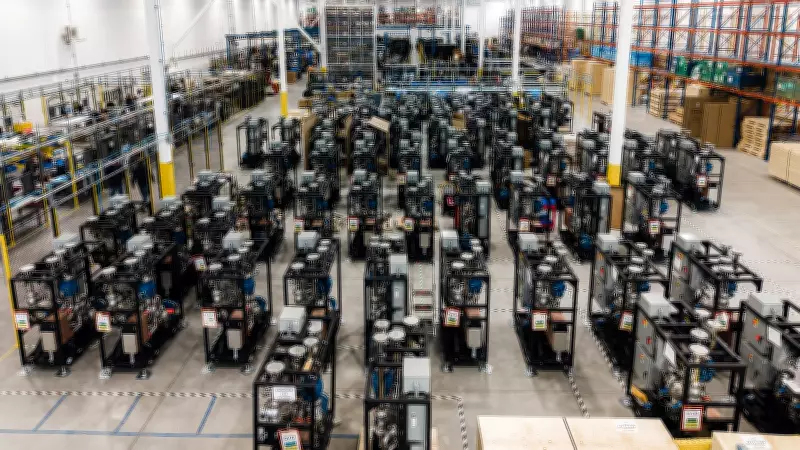
CoolIT's cooling technology was used in supercomputers; the business also developed a direct liquid cooling (DLC) modular architecture for data centres. These facilities became increasingly important as the sector evolved with more powerful chips that generated more heat, and the development of large AI-focused data centres for hyperscalers.
According to CoolIT, Dell began selling servers with factory-installed DLCs from the Canadian company in 2017. 'We knew when Dell, the biggest computer company in the world, said 'Hey, we're interested. Let's start running some prototyping,'' says McGinn. 'We thought, OK, people will buy this … We knew we had enough that it was going to go.'
Others were noticing as well. In 2023, CoolIT was acquired by U.S. investment firm KKR for a reported US$270 million. The new owners invested and scaled up the business. Since that point, the company has seen its revenues expand by four times; EBITDA has grown 10 times, and CoolIT has almost tripled its staff.
In March, KKR agreed to sell the business — generating approximately 15 times its initial equity investment — to Ecolab, with CoolIT joining the ranks of Calgary's billion-dollar tech unicorns. The deal is expected to close in the third quarter of 2026. 'Never would I have thought that it would get all the way up to US$4.75 billion. I was astonished,' says Lyon.
For those involved with the company over the years, the news was validation of their ideas and effort. 'Jaw-dropping,' says Myers, who is now CFO at a Calgary tech company. 'It was amazing to us and it gave us so much pride in Sandy, to hear that it had happened,' adds Carol Klippenstein, whose brother died from cancer last year at the age of 65.
A sale to celebrate
At a lively employee gathering after the sale was announced in March, KKR leaders unveiled a sizeable cash payout program to all workers for their ownership in CoolIT. It was a memorable celebration inside a large tent set up on a company parking lot outside its new liquid lab in Quarry Park, with employees about to get news of some life-altering money coming their way.
Payouts began with a full year of salary for employees who'd joined this year, with a minimum amount of $35,000. Those who started at CoolIT before 2016 will receive eight times their annual wage, and a minimum $490,000. The average payment is $240,000, says McGinn. 'Just seeing the emotion in that room and the noise, it was like a jet engine taking off every time we announced something,' he says. 'I'll never forget that. You could feel the shake in the tent.'
At the gathering, McGinn also paid tribute to Gierl, the lone co-founder who remains with CoolIT. 'He's dedicated himself to this company,' the company's president told the crowd. 'Brydon, we owe so much to you. Thanks for letting us do it with you.'
Gierl considers himself an individual who doesn't get too high or too low, noting Myers used to call him 'Steady Eddy' when they worked together. That spring day, he went home with his wife after the event ended, and reflected on the impact of the sale and what the payouts would mean to his colleagues and friends. (His son, Quinn, also works at the company.) And it all sprung up from an innocuous meeting with a friend more than a quarter-century earlier to help solve an intriguing technical problem.
'I thought I had it all together … just watching that unfold the other day, it was very, very emotional and happy — but very emotional,' he says. 'We just opened a bottle of wine and just chatted about the day, just thinking about what all happened and how cool it was.'