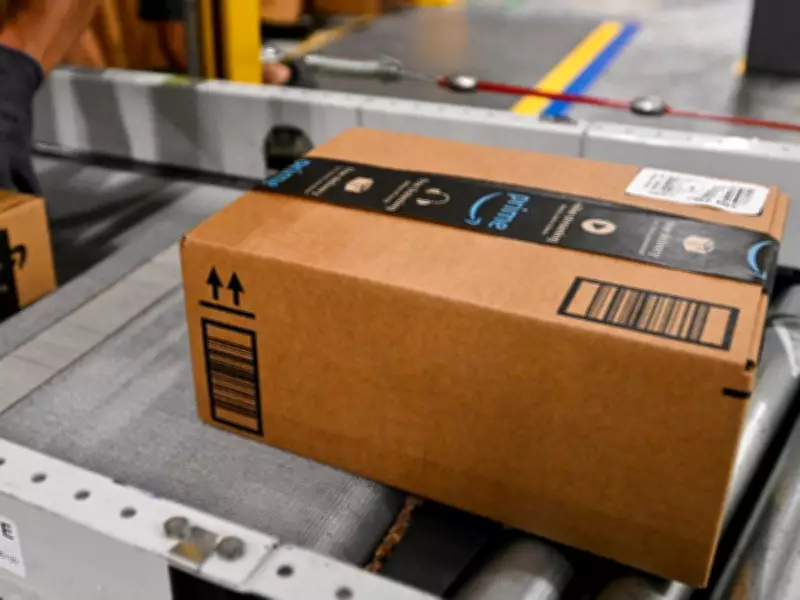
U.S. transportation stocks experienced a significant decline on Monday following Amazon.com Inc.'s announcement of expanded logistics services, positioning the e-commerce giant as a major competitor to parcel carriers and air freight companies. The move also impacted trucking firms and third-party brokers.
Market Reaction
FedEx Corp. shares fell as much as 10%, marking its worst single-day performance in over a year. Similarly, rival United Parcel Service Inc. dropped by as much as 10%. Logistics firms Forward Air Corp. and GXO Logistics Inc. saw double-digit declines, while several trucking companies, including Old Dominion Freight Line Inc., fell more than 6%.
Joe Gilbert, portfolio manager at Integrity Asset Management, described the news as "a shot across the bow to the entire transport market."

Amazon's Logistics Expansion
Amazon has been steadily building its distribution network over the years, primarily focused on accelerating fast shipping for sellers on its own marketplace. However, the company is now opening its network to businesses beyond Amazon sellers. Amazon will offer freight, distribution, fulfillment, and parcel shipping to standalone customers, ranging from industrial manufacturer 3M Co. to outdoor retailer Lands' End Inc., according to a statement released on Monday.
Morgan Stanley analyst Ravi Shanker called the announcement "a watershed moment for North American freight transportation companies." He noted that air freight companies and parcel carriers are likely to be the hardest hit, while truckers, railroads, ocean shippers, and warehouse operators also face increased risk.
Industry Impact
For years, Amazon relied on existing networks as it expanded, eventually becoming UPS's largest customer. Simultaneously, it built its own delivery network, now operating an extensive web of warehouses and delivery stations. Last year, Amazon delivered more than a quarter of the 23.9 billion parcels shipped in the U.S., while FedEx and UPS combined moved approximately one-third, according to industry data provider ShipMatrix.
By offering transportation services even when unrelated to its core e-commerce business, Amazon can capture a growing share of the market, threatening to divert additional business away from UPS and FedEx.
Expert Insights
Nate Skiver, founder of LPF Spend Management, a shipping consulting firm, stated: "Amazon has been heading in this direction for several years, offering portions of its supply chain capabilities as services to non-Amazon sellers. Bringing its end-to-end capabilities to market in a unified service offering stands to disrupt the U.S. logistics market."
The sell-off comes just as transportation stocks were recovering from concerns related to the war in Iran. The S&P 500 Transportation Index had been trading near all-time highs by late last month. FedEx had been a standout performer this year, with a 36% gain through Friday.
Mark Hackett, chief strategist at Nationwide, commented: "The stock price reactions are expected, though at this point, the direct impact is immeasurable and the reaction is likely exaggerated. The sector will likely be in wait-and-see mode for some time, as this is a third leg to the bear stool, after energy prices and supply chain disruptions."
This report includes assistance from Spencer Soper and Jordan Fitzgerald.