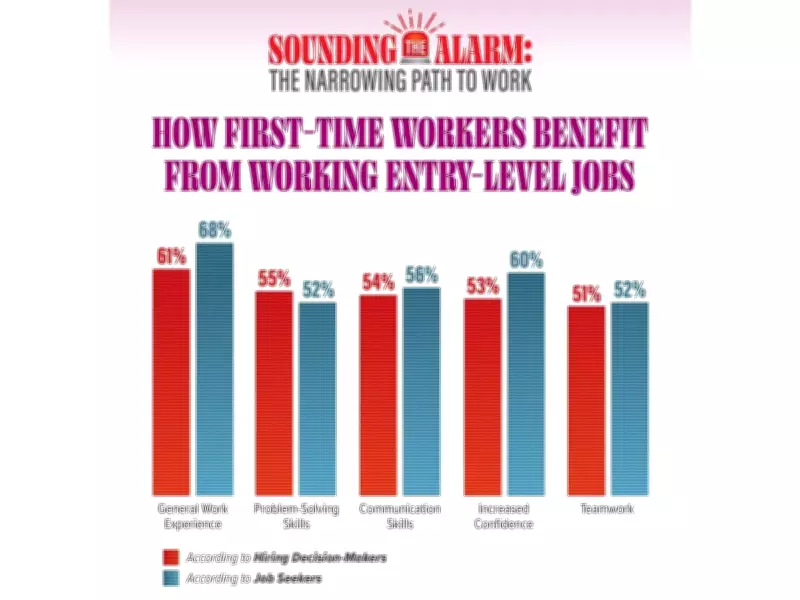
A new white paper from Express Employment Professionals and The Harris Poll warns that entry-level jobs in Canada are becoming increasingly difficult to access, posing long-term risks for both businesses and job seekers. The report, titled "Sounding the Alarm: The Narrowing Path to Work," highlights how higher skill demands, automation, and fewer genuine entry-level openings are compressing the first rung of the labour market.
Key Findings
The survey reveals that over 80% of hiring managers and job seekers agree that entry-level positions now require more skills than in the past. Additionally, 60% of hiring managers consider these roles essential for developing future talent, yet half acknowledge that AI could reduce their workforce size. Nearly half also find it more efficient to use AI for entry-level tasks than to hire and train candidates.
Impact on Graduates
The shift has already affected recent university graduates, whose unemployment rate reached 10.6% in 2025, the highest in 30 years outside of the COVID-19 pandemic. When early-career opportunities narrow, job seekers struggle to gain traction, employers risk weakening future talent pipelines, and communities face lasting economic consequences.

Recommendations
The white paper outlines practical steps for organizations, including preserving true entry-level roles for those with zero to two years of experience, aligning job requirements with training, maintaining learning opportunities as tasks are automated, and expanding internships and short-term assignments to build foundational skills.