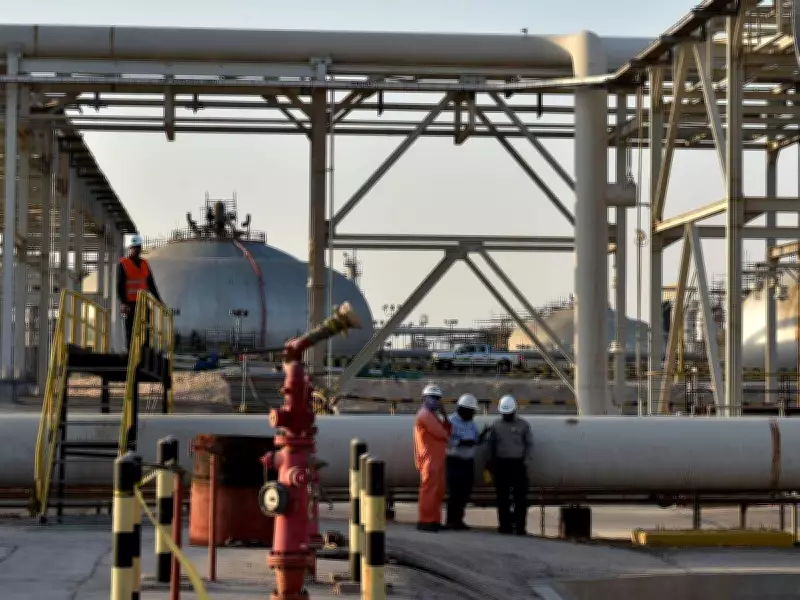
Saudi Arabia reported to OPEC that its crude oil production collapsed further in April to the lowest level since 1990, as the Iran war choked off exports from the Persian Gulf. The kingdom told the organization that output fell by another 651,000 barrels a day to 6.316 million barrels a day, according to a monthly report from OPEC's secretariat obtained by Bloomberg on Wednesday. This brings the loss since February to 42 percent and marks the lowest level since the start of the Gulf War 36 years ago, when OPEC nation Iraq invaded fellow member Kuwait.
OPEC Output Plunges Amid Conflict
Output from OPEC members plunged again in April, slumping by 1.727 million barrels a day to average 18.98 million barrels a day, with the Saudis accounting for about half the decline. The current disruption comes as OPEC members are again embroiled in conflict, with the Iran war blocking shipments from the Persian Gulf and causing a record drop in output from nations such as Saudi Arabia, the United Arab Emirates and Iraq. Fuel prices have surged, heightening the risk of global recession.
Saudi Arabia's Supply to Market
Riyadh told OPEC that its "supply to market" — which excludes movements into storage — was a little higher than production, at 6.879 million barrels a day. In addition to the figures communicated directly by OPEC members to the group's secretariat in Vienna, the report also includes a set of estimates compiled from external consultants and media outlets, known as secondary sources. This data shows output from OPEC members plunged again in April, with the Saudis accounting for about half the decline. It puts the kingdom's output slightly higher than its official submission, at 6.768 million barrels a day.

UAE Plans to Leave OPEC
The UAE said last month it planned to leave the group in May after roughly six decades of membership. Abu Dhabi announced its surprise exit following years of tension with group leader Saudi Arabia over OPEC's output quotas, as well as discord over regional political issues. OPEC's statutes state that the UAE will technically remain a member until Jan. 1.
Impact on Other Gulf States
While the output losses inflicted on the Saudis by the war have been severe, the kingdom's ability to divert some oil exports away from the Gulf along another pipeline to the Red Sea has mitigated the impact. The UAE also has an alternate route for some of its exports. Other Gulf states have been hit harder. The second-biggest decline in April was in Kuwait, which saw its output roughly slashed in half to just 600,000 barrels a day, according to the report. Kuwait is now pumping less than a quarter of prewar levels.
OPEC Trims Demand Forecasts
OPEC trimmed forecasts for global oil demand growth in 2026 to 1.2 million barrels a day from 1.4 million barrels a day. This still leaves the group's projections considerably at odds with other forecasters. The International Energy Agency said in its monthly report earlier on Wednesday that world demand will contract by 420,000 barrels a day this year, the steepest since the COVID pandemic in 2020.