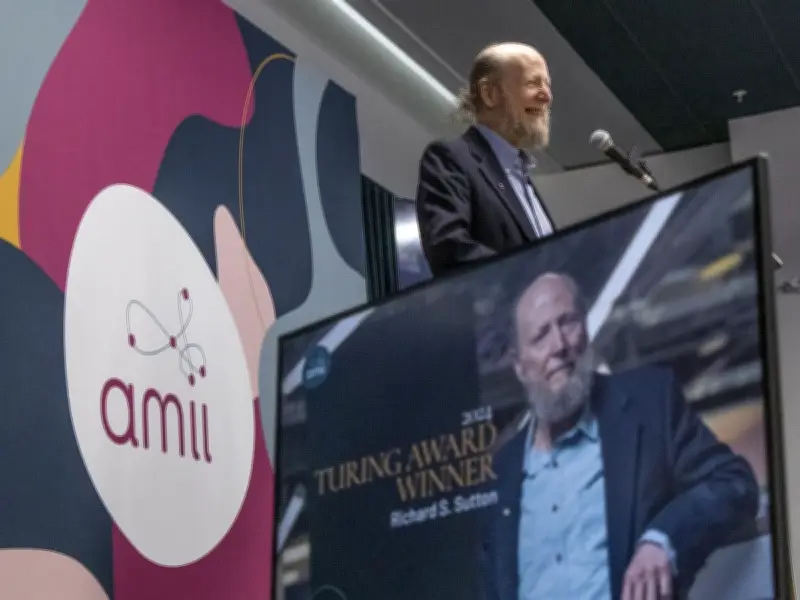
Edmonton's experience with artificial intelligence offers a crucial lesson for Canada's national AI strategy: build deep local foundations so the industry survives when foreign investors leave. The city's AI ecosystem, anchored by the University of Alberta and the Alberta Machine Intelligence Institute (Amii), became a global hub for reinforcement learning—the branch of AI behind many of the field's biggest breakthroughs. Professor Richard Sutton, who helped build that field in Edmonton, co-received the 2024 ACM A.M. Turing Award, computing's highest honour, carrying a US$1-million prize funded by Google.
DeepMind's arrival and departure
That reputation led DeepMind, then the world's most famous AI lab, to choose Edmonton for its first international office in 2017. For a time, the city shone on the global AI map. But in January 2023, Google's DeepMind closed the Edmonton lab and consolidated elsewhere. The talent had been Edmonton's; the decisions belonged to a company headquartered an ocean away.
Yet Edmonton did not fold. Former DeepMind researchers started their own companies. Amii and the university hired and expanded. Edmonton's AI ecosystem came back arguably stronger and, crucially, more its own. When the foreign lab left, the value did not have to leave with it because the foundation had been built locally.

National stakes and the $2 billion strategy
That same choice now faces the entire country. Ottawa has committed up to $2 billion to a Canadian Sovereign AI Compute Strategy and the largest defence build-up in a generation. According to Al Vigier, a Vancouver AI company founder who wrote the original opinion piece, that money can either build Canadian capability that stays Canadian, or rent capability from abroad that can be packed up and moved when economics shift, as happened in Edmonton.
Keeping AI capability at home means insisting on data within reach of Canadian law, systems that can be inspected and audited, a human here who can override the machine, and a domestic legal forum. Allied governments increasingly demand exactly that before they buy, making it also good business.
Lessons from soccer and AI
Vigier draws a parallel to Canada's World Cup soccer team, which lost 2-1 to Switzerland at B.C. Place on Wednesday but still made history by reaching the knockout round for the first time. A draw would have kept the team in Vancouver; the loss sends it to Los Angeles. Canada built home advantage and gave it back.
Edmontonians do not need that lesson explained. The city has lived a sharper version in the very technology now remaking the world. Vigier concludes: when the foundation is genuinely yours, you keep the industry even when the big foreign name walks out the door.