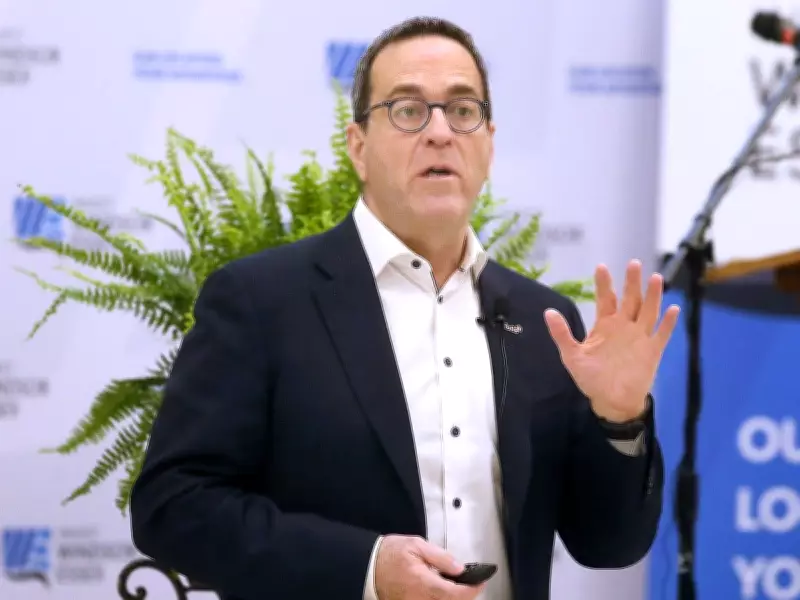
Business Development Bank of Canada (BDC) chief economist Pierre Cléroux delivered a cautiously optimistic five-year economic outlook in Windsor on Thursday, urging local manufacturers to diversify and seize emerging opportunities in Canada's expanding defence sector. Speaking at the Ciociaro Club of Windsor before roughly 200 political and business leaders, Cléroux emphasized that the region's strong manufacturing base positions it at the heart of the country's push to build a domestic defence supply chain.
Defence Spending as a Growth Driver
Cléroux highlighted that Ottawa's commitment to more than double defence spending over the next five to ten years creates significant opportunities for Windsor-Essex manufacturers. 'These companies can benefit from this spending that we're going to see in defence in the next five to 10 years,' he told reporters after the event. He added that the region's 'strong manufacturing base is exactly what we need to build this supply chain in Canada. I think Windsor is at the heart of this transformation that the Canadian government is trying to do.'
Navigating a 'New Normal' of Uncertainty
The chief economist's remarks came amid a period of global economic uncertainty driven by shifting world order, artificial intelligence, and persistent U.S. tariffs. He identified trade tensions and the Middle East conflict, which is raising fuel and food costs, as key irritants already affecting the economy. One of the most significant near-term variables for 2026 is the mandatory joint review of the Canada-United States-Mexico Agreement (CUSMA), set to begin July 1. While Cléroux expects the agreement to be renewed, he warned that some tariffs could remain and that a U.S. withdrawal would trigger a recession.

Structural Shifts Ahead
Cléroux outlined three major structural shifts Canada will face over the next five years. First, a changing world order as the U.S. moves away from free trade and global conflicts rise. Second, Ontario's working-age population is shrinking due to aging demographics and tighter immigration policies, leading to a tighter job market that requires increased investment in automation and technology. Third, the rapid advancement of AI is already boosting efficiency and cutting costs for businesses that invest in it.
Slow but Positive Growth Forecast
Despite these challenges, Cléroux forecast slow but positive growth for Canada in 2026, driven largely by consumer and government spending. He encouraged Windsor-Essex manufacturers battered by U.S. tariffs to explore homegrown opportunities, particularly in defence, as Canada fortifies its domestic supply chain. 'We need manufacturers to be able to do that and there's a strong manufacturing base here in Windsor,' he reiterated, calling the region a key player in Canada's economic transformation.