When Uber launched in Mexico 13 years ago, it encountered an unexpected hurdle. Many potential riders had smartphones to download the app, but few were willing to pay with a bank card. Some lacked cards, while others simply preferred not to use them. Within a few years, the ride-hailing giant introduced a cash payment option, which remains the choice for over half of its Mexican riders today.
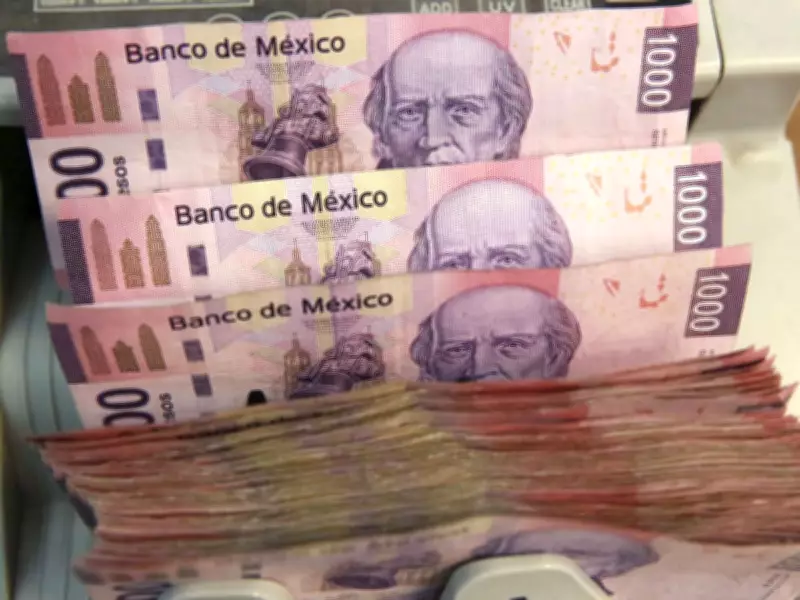
This scenario reflects a broader trend across Mexico: despite a surge in financial products, cash remains king. Roughly 54 per cent of Mexico's workers operate outside the formal banking system, shaping how they earn, spend, and store money. Distrust in banks is deeply rooted, stemming from memories of the financial crises of the 1980s and 1990s, when banks shifted from state ownership to inexperienced private hands.
A Booming Fintech Market with a Cash Paradox
On paper, Mexico is one of Latin America's fastest-growing fintech markets. Over 800 fintech companies now operate in the country, up from fewer than 200 a decade ago. Electronic payments have grown at double-digit rates, fueled by hundreds of millions in venture capital. Government data shows that roughly eight in ten Mexicans now have at least one financial product.

Yet, more than half of all debit cards in the country remain untouched, and nearly half of credit cards go unused. This is partly because banks and fintech companies push cards onto clients who use other services. The issue became so prevalent that Mexico's lower house passed a bill last year banning fees on unsolicited cards. Despite these efforts, cash is still used for about 85 per cent of small purchases, according to government data.
The Informal Economy and Cultural Habits
Roberto Negrete, a 33-year-old construction consultant from the State of Mexico, exemplifies this cash-centric approach. He manages almost all his money in cash, a habit inherited from his father. When paid, Negrete goes to Banamex, where he has a checking account, but instead of depositing the money, he cashes his check and stores the bills in a home safe. He uses his bank account sparingly, mainly for expenses like Netflix or Apple Music that require electronic payment.
“I still prefer to handle everything in cash because it’s simpler and easier than having to declare my income, which would be tedious and confusing,” Negrete said. “I don’t like depending on a financial institution to hold my money. I prefer to do things with my own hands.”
Like many Mexicans, Negrete uses the financial system when necessary but is reluctant to rely on it. This perspective is rooted in Mexico's large informal economy and lingering distrust in institutions from past banking crises. Cash offers anonymity, while digital payments leave a trail that can expose users to taxes.
Slow Shift Toward Digital Payments
Nonetheless, non-cash payments are gaining ground. In 2024, 19 per cent of Mexicans preferred using a card for purchases over 500 pesos (about US$29), up from 12 per cent six years earlier, according to the central bank. Mobile or electronic payments were the go-to option for 7.6 per cent of people, compared to just 0.3 per cent in 2018. While cash still dominates, the gradual shift suggests that digital payments may eventually gain a stronger foothold in Mexico's economy.