

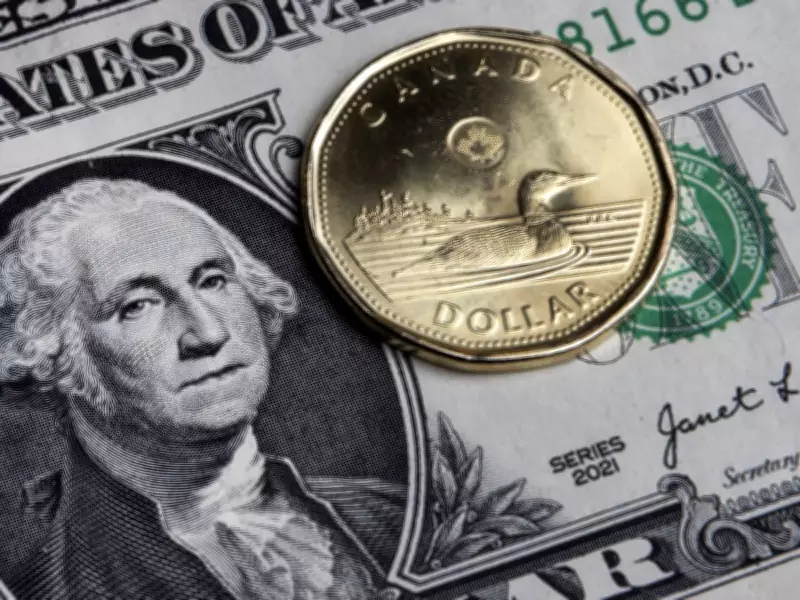
Canadian Dollar's Resilience Amid U.S. Dollar Surge: Energy Exports Provide Shield
The Canadian dollar is demonstrating remarkable resilience as a surging U.S. dollar batters other major currencies, with Canada's position as a significant energy exporter serving as a crucial buffer against the greenback's advance, according to currency market analysts.
Comparative Currency Performance
While the loonie experienced a modest decline of 0.53 percent against the U.S. dollar from Friday's close to Tuesday, trading at 72.9 cents U.S. according to Bloomberg data, other G10 currencies suffered substantially greater losses. The Japanese yen dropped 1.1 percent, the Swiss franc fell 2.1 percent, and the Swedish krona emerged as the worst performer with a 2.6 percent decline.
"The Canadian dollar is holding up better than most of its peers despite the broader U.S. dollar advance, underpinned by the country's status as a net oil exporter," stated Karl Schamotta, chief market strategist at Corpay Currency Research, in a Tuesday morning analysis.

Energy Market Dynamics
The correlation between the Canadian dollar and commodity prices becomes particularly pronounced when crude oil benchmarks exceed the US$75-per-barrel threshold, a level currently being surpassed. West Texas Intermediate prices have surged more than 15 percent since Friday's close, climbing from US$67.02 to US$77.35 per barrel following recent geopolitical tensions in the Middle East.
"As an oil-exporter currency, the Canadian dollar tends to be insulated, sometimes even supported, when the shock is energy-led rather than purely growth-led," explained Nick Rees, head of macro research at Monex Canada. "Today, price action is likely to remain a tug-of-war between two forces: oil support versus risk-off greenback demand."
Safe Haven Demand and Market Implications
The U.S. dollar's surge reflects investors flocking to the safe haven currency amid market volatility unleashed by Middle East conflicts, with the U.S. dollar index posting its strongest two-day increase since September 2022. This development has prompted markets to reassess inflation risks and central bank expectations, according to Shaun Osborne, chief currency strategist at Scotiabank Global FX strategy.
Traders have significantly adjusted their expectations regarding U.S. Federal Reserve rate cuts, pushing back anticipated reductions from July to September, with prospects for a third cut nearly disappearing entirely, Schamotta noted.
Future Outlook and Potential Scenarios
Rees suggested that if oil prices continue their upward trajectory, the Canadian dollar could potentially outperform its peers. However, this advantage might diminish if geopolitical conflicts expand and threaten global economic growth, potentially causing the loonie to struggle despite elevated oil prices.
Osborne projected that while the Canadian dollar will likely continue to slide against the advancing greenback, the decline could be relatively limited. He further indicated that the loonie might maintain its strength against other currencies, at least in the short term, as energy market dynamics continue to provide crucial support.
The Canadian dollar's recent performance highlights the complex interplay between commodity dependence, geopolitical tensions, and global currency markets, with energy exports serving as a vital stabilizing factor during periods of U.S. dollar strength and market uncertainty.






